The Education Engineering Department (EED) is responsible for ensuring the proper use of public funds in the construction, renovation and improvement of educational institutions across Bangladesh. However, the department, which plays a crucial role in developing the country's educational infrastructure, has long faced allegations of irregularities, nepotism and corruption.
Although administrative reforms and initiatives to improve transparency have been undertaken in various government offices following the change in political power, some EED officials and employees allege that the expected changes have yet to materialise within the department.
According to the complainants, questions have arisen over the alleged involvement of influential officials and individuals associated with the former ruling party in transfer and posting irregularities, interference in public procurement, recruitment irregularities and payments to contractors before construction work was completed. Several former and current leaders of the Bangabandhu Engineers' Council, as well as senior officials of the department, have come under scrutiny over these allegations.
The allegations include using political influence to secure promotions and preferred postings, influencing the award of government contracts, and failing to take effective action against officials accused of financial misconduct. The allegations require independent verification, while responses from the individuals concerned and the relevant authorities are essential for a balanced assessment.
Controversial Officials Remain in Key Positions After Political Transition
Following the political transition on August 5, 2024, demands for administrative transparency and accountability grew across various government institutions. However, a section of aggrieved EED officials and employees claims that the department has yet to undergo the changes they had expected.
They allege that several officials who benefited from their association with the Bangabandhu Engineers' Council during the Awami League government's tenure continue to hold important and potentially lucrative positions within the department.
The officials have reportedly faced allegations of using political influence to secure promotions and preferred postings, facilitate the awarding of contracts and collect commissions.
According to the complainants, despite allegations of administrative and financial misconduct, no visible action has been taken against some of the officials concerned. They also claim that dissatisfaction has grown within the department because effective action has allegedly not followed departmental inquiries, written complaints and applications submitted to the Anti-Corruption Commission (ACC).
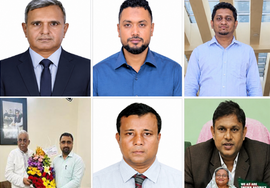
Questions have been raised over the roles of several officials, including Mojahidul Islam Alif, Jahedul Karim, Md Shahidul Islam, Md Abul Hashem Sardar and Sarwar Hossain.
However, the specific allegations against each individual, the relevant documentary evidence and their responses need to be examined separately before any conclusions can be drawn.
Inquiry Findings and Posting Decisions Raise Questions Over Mojahidul Alif
Mojahidul Islam Alif currently holds an important position in the EED's Dhaka Metro Zone. He has previously faced allegations of irregularities in payments related to construction projects. Some departmental officials have questioned his subsequent posting and continued responsibilities despite reported recommendations for disciplinary action.
According to information cited in a departmental inquiry, allegations of financial irregularities emerged in a project to construct a six-storey academic building at Kafrul Adarsha High School in the capital. The project was valued at Tk 4.43 crore.
The inquiry report reportedly stated that Tk 2.3341 crore was paid to the contractor on September 16, 2021, before the construction work had been completed.
During a site inspection on September 21, 2022, the inquiry committee reportedly found that work on the building's second floor remained incomplete, while the casting of the fourth-floor roof was under way.
According to information related to the inquiry, work worth approximately Tk 1.18 crore remained unfinished at the time. The circumstances surrounding the payment therefore raised questions about whether the contractor had been paid in violation of applicable procedures.
The departmental inquiry committee reportedly recommended disciplinary action against Alif and other officials concerned. However, the administrative measures taken, if any, following that recommendation need to be established through official records.
Alif has also faced allegations relating to a project worth approximately Tk 180 crore at the Arab University in Keraniganj, where a contractor was allegedly paid around Tk 20 crore in advance despite insufficient progress in the work. Verification of this allegation would require examination of the project's payment records, progress reports and audit documents.
Some EED officials and employees have further alleged that Alif was posted to the Dhaka Metro Zone to facilitate a preferred contractor in the tender evaluation process for a project worth approximately Tk 100 crore at the department's headquarters in Agargaon.
However, independently verified evidence supporting this allegation, as well as an official response from the authorities concerned, has not been established here. The matter therefore warrants further scrutiny rather than being treated as a proven instance of wrongdoing.
Jahedul Karim Allegedly Seeks Top Post
Jahedul Karim has also come under scrutiny over allegations of political influence and efforts to retain important positions within the department.
According to information cited in connection with the allegations, Karim was an executive member of the central convening committee of the Bangabandhu Engineers' Council announced on July 27, 2022. At the time, he was serving as executive engineer at the EED's Dhaka district office.
Complainants allege that Karim, who they claim benefited from political connections in the past, is seeking to retain an influential position following the political transition. They further allege that he has been actively pursuing the post of chief engineer, the department's highest position.
However, any claim of irregularities in the appointment process or attempts to secure the top post must be assessed against official appointment records, eligibility criteria and other relevant evidence. His political association or reported career ambitions alone would not establish misconduct.
Chief Engineer Faces Questions Over Accountability
The role of EED Chief Engineer Md Tarek Anwar Zahedi has also come under scrutiny amid allegations of irregularities, transfer-related dealings and questionable financial transactions within the department.
A section of departmental officials and employees alleges that adequate progress has not been made in resolving complaints against subordinate officials, investigating financial irregularities or ensuring transparency in tender evaluation.
They have also alleged administrative inaction in addressing allegations against controversial officials.
However, allegations that the chief engineer personally engaged in irregularities, protected officials accused of wrongdoing or influenced tender evaluations require specific documentary evidence and an examination of the relevant decision-making processes. His response to the allegations is also necessary to ensure a fair and balanced report.
The allegations raise broader questions about the department's internal oversight mechanisms, the implementation of inquiry recommendations and the effectiveness of administrative accountability.
Calls for an Impartial Investigation and Administrative Action
Officials and employees critical of the department's current situation have called for an impartial investigation into alleged financial irregularities, questionable transfers and postings, and the abuse of official authority.
They have demanded that anyone found responsible through a proper investigation face administrative or legal action in accordance with applicable laws and regulations.
They have also called for a review of payment records for the projects concerned, tender evaluation procedures, the implementation of departmental inquiry recommendations and the posting process for officials.
Ensuring transparency and accountability at the EED is particularly important because the department oversees public spending on infrastructure that directly affects students and educational institutions. Financial misconduct in such projects, if established, could lead not only to the misuse of public funds but also undermine the quality and safety of educational facilities.
The key question now is whether the department and the relevant authorities will investigate the allegations thoroughly, establish responsibility on the basis of evidence and take appropriate action where wrongdoing is proven.