

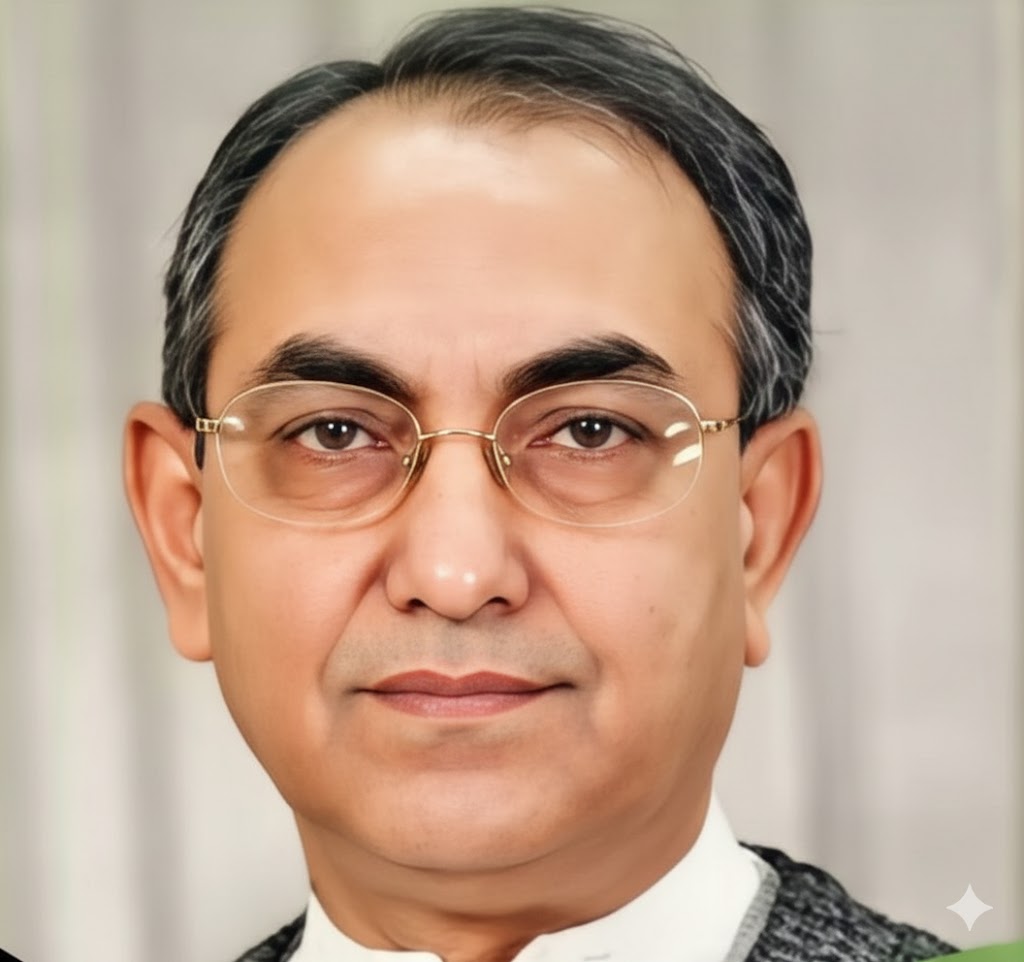
Wise people often say that those who become angry at injustice usually possess kind hearts. Anger that arises from witnessing wrongdoing reflects a strong sense of justice and moral responsibility. Mirza Abbas is such a person. His anger is not driven by personal interest, but by opposition to injustice, corruption, and abuse of power. As a human being, one of his defining qualities is loyalty—when he cares for someone, he does so sincerely and wholeheartedly.
In recent times, the disrespect and misleading propaganda surrounding Mirza Abbas have not only targeted an individual but have also undermined the dignity of political culture in Bangladesh. A veteran political leader with decades of experience, Mirza Abbas holds significant influence in Dhaka’s political landscape. His organizational strength and mass appeal have made him a recognizable and respected figure. Many believe that this popularity has become the source of political jealousy and intolerance among certain quarters.
Since August 5, 2024, signs of coordinated domestic and foreign conspiracies targeting both Mirza Abbas and the BNP have become increasingly visible. The objective appears clear: to weaken his political credibility and alienate him from public support. To achieve this, deliberate efforts have been made to demean him through false narratives, character assassination, and the spread of grave allegations. Even young individuals of his children’s age have been dragged into baseless accusations involving extortion, terrorism, and even murder—an apparent attempt to manufacture a “villain image” for political gain.
The reality, however, tells a different story. Despite immense pressure and adversity during the last fifteen years under the Awami League government, Mirza Abbas could not be diverted from his ideological position. His unwavering commitment to political principles has remained intact, and this steadfastness continues to be his greatest strength. Ironically, it is this consistency and public trust that seem to have made him a recurring target.
A recent incident further highlights the situation. Hadi, a candidate from the same constituency—whom Mirza Abbas regards with fatherly affection—was injured after being shot by criminals. Upon hearing the news, Mirza Abbas immediately rushed to Dhaka Medical College Hospital to inquire about his condition. This act of humanity, however, was followed by allegations that deliberate misinformation was spread at the hospital gate. Observers question whether these actions were part of a calculated attempt to portray Mirza Abbas as a criminal or to destabilize the electoral environment.
In this context, greater vigilance is required from the BNP and all concerned stakeholders. Conspiracies against popular political forces are not new, but countering them demands awareness, fact-based communication, and firm adherence to the rule of law. At the same time, it is crucial to identify those responsible for the attack on Hadi and to reveal the motives and individuals behind it. Once the truth is exposed, false propaganda will inevitably collapse.
In conclusion, Mirza Abbas may be a man of strong emotions, but his anger is rooted in resistance to injustice. He remains popular because he stands with the people. Political differences are natural in a democracy, but character assassination through lies and conspiracies against a veteran leader contradicts democratic values. Commitment to positive politics, humanity, and justice continues to define Mirza Abbas’s role in Bangladesh’s political arena.