Two acres of prime land in Dhaka’s Tejgaon Industrial Area, estimated to be worth around Tk 600 crore at current market rates, were transferred after the heirs of the original lessee paid just Tk 70.95 lakh in 2021 to settle five outstanding instalments dating back to the Pakistan period.
The land, comprising Plots 403 and 404, was originally allotted in 1955 by the then East Pakistan government to Messrs Rahman Metal Industries for the development of heavy industry. The allotment was made under relatively relaxed conditions as part of the government’s efforts to promote industrialisation in the area.
According to the allotment records, the lease price for the two acres was fixed at Tk 56,900 in Pakistani rupees, payable in 20 instalments. The lessee reportedly paid 15 instalments but subsequently defaulted and made no further payments for decades.
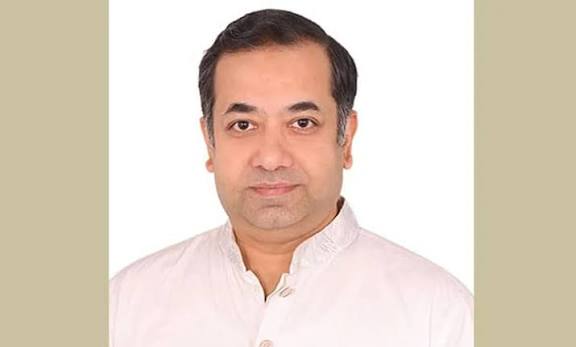
After a gap of about 66 years, five outstanding instalments were paid in 2021, with Tk 70.95 lakh deposited by Jakaullah Abdullah, an heir of the original lessee, Abdullah Solenkhi alias Abdullah.
The subsequent transfer of the two plots to Beximco Holdings Limited and Royal University of Dhaka has raised questions over whether the applicable government valuation, registration rules and original lease conditions were properly followed.
Two Plots, Two Transfers
On September 30, 2021, Jakaullah Abdullah applied to the Ministry of Housing and Public Works for permission to transfer the land.
On February 13, 2022, the ministry approved the transfer of Plot 403, measuring one acre, to Beximco Holdings Limited.
Another heir, Saifullah Abdullah Solenkhi, applied on September 11, 2022, to transfer Plot 404. On September 28 of the same year, the ministry approved the transfer of the one-acre plot to Royal University of Dhaka.
Thus, the two acres originally allotted to Messrs Rahman Metal Industries were transferred to the two institutions.
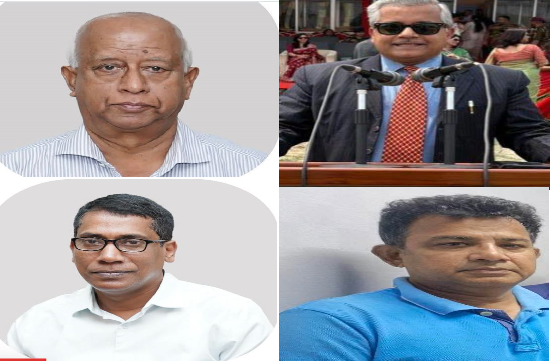
According to ministry documents, the heirs listed as transferors included Sabira Abdullah, Jakaullah Abdullah, Saifullah Abdullah Solenkhi, Sanaullah Abdullah, Hedayatullah Abdullah and another Saifullah Abdullah Solenkhi.
A Huge Difference in Land Value
The two plots are located in a prime area of Tejgaon Industrial Area.
According to the government-determined minimum mouza rates cited by officials familiar with the matter, land prices in the area generally range from Tk 1 crore to Tk 1.5 crore per katha. Actual market prices are considerably higher, with land reportedly changing hands at around Tk 3 crore to Tk 5 crore per katha.
As Plots 403 and 404 are located beside a road, calculating the value at Tk 5 crore per katha puts the estimated value of the two acres at around Tk 600 crore.
This creates a substantial disparity between the estimated present value of the land and the Tk 70.95 lakh paid in 2021 to settle the outstanding instalments.
What Is on the Land Now?
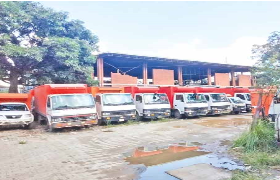
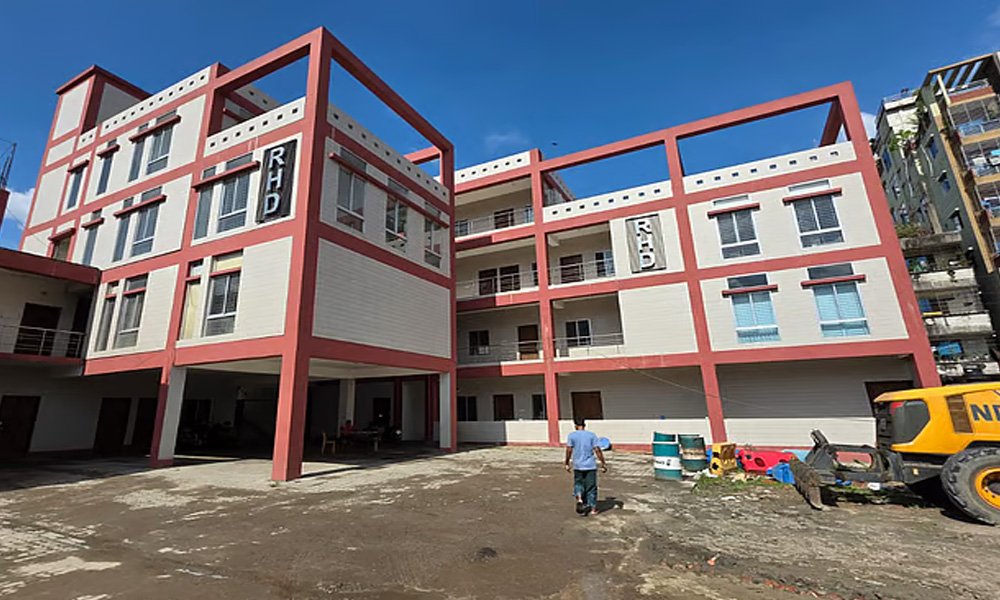
A visit to the sites found a two-storey steel-and-glass structure on Plot 403. The building is currently in a dilapidated condition and has reportedly remained in that state since August 2024.
The land is currently being used as a garage for Daraz vehicles.
Plot 404, meanwhile, is occupied by Royal University of Dhaka. The three-storey building has a steel structure, while part of the premises is reportedly being used by students as a playground.
There is currently no industrial facility operating on either of the two plots.
Questions Over Registration Rules
The original lease deed was executed on April 13, 1956, under Deed No. 5404 for a period of 99 years in favour of Messrs Rahman Metal Industries.
The lease agreement stipulated that an industrial facility had to be established and brought into operation within two years of the allotment. Failure to comply could result in cancellation of the lease.
Records reviewed for the report indicate that the original lessee did not fulfil the industrial-use condition within the stipulated period.
Officials concerned with the Ministry of Housing and Public Works have said that land cannot be acquired in present-day Bangladesh at prices applicable during the Pakistan period, given the substantial changes in land demand, currency value and economic conditions.
The Registration Act, 1908, as amended and effective from July 1, 2005, requires the value of land at the time of registration to be determined in accordance with the government-prescribed current mouza rate, or minimum market value.
Questions have therefore been raised over whether the registration and transfer of the two Tejgaon plots complied with the applicable provisions.
Different Treatment in Another Case
Records cited in the matter show that the government has previously applied updated valuations when settling long-outstanding payments involving industrial land.
In 1992, the Ministry of Housing and Public Works reportedly leased a newly created 10-katha plot in Tejgaon Industrial Area to Finland Bangladesh Industries Limited for Tk 8 lakh. The company initially paid Tk 2 lakh.
After nearly 28 years, in 2020, the company reportedly paid Tk 4.41 crore, calculated on the basis of the then-current rate and compound interest.
By contrast, in 2021, the five outstanding instalments relating to the two-acre Plots 403 and 404 were settled for Tk 70.95 lakh based on the old rates applicable to the Pakistan period.
This difference has prompted questions about whether the current government valuation and applicable charges were taken into account in the Tejgaon case.
Transfer to Influential Institutions
Following the transfer of Plot 403 to Beximco Holdings Limited, the company paid Tk 40,000 as mutation fees on May 29, 2023, according to ministry records.
The payment was made by Osman Kaiser Chowdhury, a director of Beximco Holdings Limited.
Beximco Holdings Limited’s vice-chairman was Salman F Rahman, who also served as a private industry and investment adviser to former Prime Minister Sheikh Hasina.
Plot 404 was transferred to Royal University of Dhaka. On behalf of the university, its vice-chairman Dr HBM Iqbal, also known as Hefzul Bari Mohammad Iqbal, was involved in the process, according to the records.
Dr Iqbal, who was a former Awami League lawmaker from the Dhaka-10 constituency and chairman of Premier Bank, also paid Tk 40,000 as the mutation fee for the one-acre plot.
30 Kathas Donated to a Trust
Ministry records show that one acre of Plot 403 was transferred to Beximco Holdings Limited on February 13, 2022.
Later, on June 7, 2023, Beximco Holdings Limited donated 30 kathas from the one-acre plot to the Bangabandhu Sheikh Mujibur Rahman Memorial Trust through a deed of gift.
The deed was executed by Salman F Rahman, vice-chairman of Beximco Holdings Limited and a former member of parliament.
Some officials and individuals familiar with the matter have questioned whether the subsequent donation was intended to provide additional legal or political protection to the transfer. Such claims could not independently be established from the documents reviewed.
Allegations of Breach of Lease Conditions
The original 1956 lease agreement contained several conditions governing the use and transfer of the land.
Under Clause 5, an industrial facility was required to be constructed and production started within two years. Clause 16 provided for cancellation of the lease in the event of non-compliance.
The records and information reviewed for this report indicate that no industrial facility was established on the plots in accordance with the original condition.
The land was subsequently divided into two plots and transferred to other entities.
Questions have therefore arisen as to why the lease was not cancelled and why the land was not taken back by the government following the alleged breach of the original conditions.
Allegations of Revenue Loss
According to officials concerned with the Ministry of Housing and Public Works, the use of historical rates to settle the outstanding instalments may have deprived the government of substantial revenue.
They also questioned why the lease was not cancelled despite the alleged failure to comply with the original industrial-use conditions.
A ministry official, speaking on condition of anonymity, alleged that an influential group used various administrative and legal mechanisms to obtain control of the valuable government land.
However, these allegations require verification through an independent investigation and review of the relevant government records.
No Comment from Beximco
Attempts were made to obtain a response from Beximco Holdings Limited regarding the transfer and current status of Plot 403.
Reporters visited the company’s Dhanmondi office on two occasions but did not receive an official response.
An employee named Shahjahan Mia said that he had received his salary in August 2025 and that Beximco had not paid salaries for 13 months. He also said he continued to visit the office but that no one was available to comment on the plot.
Expert Calls for Investigation
Touhidul Haque, an assistant professor at the University of Dhaka’s Institute of Social Welfare and Research, said political influence had allegedly been used in the Tejgaon land matter.
He called for a thorough investigation to identify those involved in the alleged irregularities and for appropriate legal action based on the findings.
He also said officials who may have facilitated any irregular transfer should be identified and dealt with under the applicable service rules.
Ministry Promises Investigation
Housing and Public Works State Minister Ahmed Sohel Manjur said the ministry would investigate whether any irregularities occurred in the settlement of the outstanding instalments relating to the two acres of land.
“Since the two acres were allotted during the East Pakistan period, we will investigate whether there were any irregularities in the payment of the outstanding instalments and take action accordingly,” he said.
The case raises broader questions about the management of long-term government leases, the application of updated land valuations, compliance with original industrial-use conditions and the potential loss of public revenue in the transfer of valuable government land.