

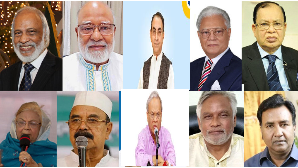
The formation of a new 49-member cabinet under the leadership of Prime Minister Tarique Rahman has triggered widespread discussion and political analysis across the country. Questions are being raised both inside and outside the Bangladesh Nationalist Party (BNP) regarding why many leaders who stood by the party during its most difficult times have been left out of the new cabinet. Many of these leaders had led movements, faced repression on the streets, and kept the party organization active during periods of political hardship. Their exclusion from the cabinet has sparked debate about the future role and recognition of long-serving party veterans.
Political observers believe the new cabinet reflects a shift toward younger leadership. However, the exclusion of many senior and experienced figures has also created a sense of unease and uncertainty within the party.
Dominance of New Faces
Among the 49 members of the newly formed cabinet, nearly 40 are new faces. Prime Minister Tarique Rahman himself has been elected as a Member of Parliament for the first time and is now leading the government.
The cabinet is widely seen as an attempt to promote young leaders and bring a new generation into governance. However, the omission of several experienced politicians has raised concerns among party members and supporters.
Many believe that the long-standing contributions and political experience of senior leaders have not been properly acknowledged in the cabinet formation.
Heavyweights Left Out
Several influential members of BNP’s highest policymaking body, the National Standing Committee, did not secure positions in the new cabinet.
Among those left out are Dr. Khandaker Mosharraf Hossain, Goyeshwar Chandra Roy, and Dr. Abdul Moyeen Khan. All of them had previously served as ministers during the government of former Prime Minister Khaleda Zia and have played significant roles in the party’s political journey.
Additionally, senior standing committee members Barrister Jamir Uddin Sircar and Selima Rahman were also absent from the list of ministers.
Political analysts note that during Tarique Rahman’s years in exile and Khaleda Zia’s imprisonment, these leaders played key roles in keeping the party active and organized. Their exclusion has therefore come as a surprise to many within the party.
Advisory Roles for Some Senior Leaders
Although they were not included in the cabinet, some senior BNP leaders have been appointed as advisers to the Prime Minister with ministerial status.
Mirza Abbas Uddin Ahmed, Nazrul Islam Khan, and Ruhul Kabir Rizvi Ahmed have been given such advisory roles.
Many observers see this as an attempt to balance the cabinet by ensuring that experienced leaders remain involved in governance. However, questions remain about how much practical authority these advisory positions will actually carry.
Moyeen Khan’s Reserved Reaction
Responding to his exclusion from the cabinet, BNP Standing Committee member and former minister Dr. Abdul Moyeen Khan offered a restrained reaction.
He said, “The decision regarding cabinet appointments is being handled by the party chairman. It is better for me not to comment on the matter.”
His statement reflects a cautious approach, suggesting that senior leaders are trying to maintain party discipline rather than publicly criticize the leadership.
Discontent Among Alliance Partners
The new cabinet has not only sparked discussion within the BNP but has also led to some dissatisfaction among allied parties.
Several political groups that had participated in the joint opposition movement alongside the BNP expected representation in the government. While leaders such as Zonayed Saki of Ganosamhati Andolon, Nurul Haque Nur of Gono Odhikar Parishad, and NDM chairman Bobby Hajjaj were included in the cabinet, many others were left out.
Among those excluded are Mahmudur Rahman Manna of Nagorik Oikya, Saiful Haque of the Revolutionary Workers Party, and Sheikh Rafiqul Islam Bablu of the Bhasani Janashakti Party.
Saiful Haque’s Criticism
Saiful Haque, General Secretary of the Revolutionary Workers Party, openly expressed disappointment over the cabinet formation.
He stated, “First of all, this is essentially a BNP government. Only two or three leaders from the joint movement have been included. In reality, BNP has formed the government largely excluding its movement partners.”
According to him, the cabinet formation reflects a tendency toward a “go-it-alone” policy and indicates a degree of political overconfidence.
He further added, “Those who stood by them during difficult times have been excluded from the government. The implications of this decision will become clear in the coming days.”
Controversy Over Khalilur Rahman
One of the most debated aspects of the new cabinet is the appointment of Khalilur Rahman as Foreign Minister.
Previously, he served as the National Security Adviser and High Representative on Rohingya issues to the chief adviser of the interim government.
He had been criticized by many BNP activists over controversial issues such as proposals to lease ports to foreign companies and the plan for a Rohingya humanitarian corridor.
Despite these criticisms, Khalilur Rahman was appointed to the key foreign ministry portfolio under the technocrat quota, even though he is not a Member of Parliament. His appointment has caused surprise among many within the party.
Others Who Missed Out
Several former ministers were widely expected to be included in the cabinet but ultimately did not receive positions. These include Mir Nasir Uddin, Altaf Hossain Chowdhury, Barkat Ullah Bulu, Lutfozzaman Babar, and Aman Ullah Aman.
Additionally, Habibun Nabi Khan Sohel, a joint secretary general known for his active role during the party’s difficult times, was also discussed as a possible technocrat minister but was not selected.
Possible Impact on Party Dynamics
Within the party, there are growing concerns that failing to properly recognize long-serving and loyal leaders may affect the morale of grassroots activists.
Many fear that party workers might begin to believe that even after enduring repression and participating actively in political movements, recognition or political reward is not guaranteed.
As a result, some activists may become less willing to take risks or participate in future political struggles. Others may gradually withdraw from active involvement in party programs.
Leadership Strategy
However, BNP’s top leadership maintains that the new cabinet reflects a strategic political decision.
A member of the standing committee stated, “Tarique Rahman has formed the cabinet according to his own political strategy. As Prime Minister, this is his constitutional and political prerogative.”
He also remarked, “Morning shows the day,” suggesting that the success or failure of the cabinet will become clearer with time.
Leaders Who Retained Their Positions
Despite the reshuffle, several senior BNP leaders have managed to retain important positions in the new cabinet.
These include BNP Secretary General Mirza Fakhrul Islam Alamgir, Amir Khasru Mahmud Chowdhury, Salahuddin Ahmed, Iqbal Hasan Mahmud Tuku, Dr. AZM Zahid Hossain, and Hafiz Uddin Khan.
Future Political Outlook
Political analysts believe the formation of this cabinet reflects Tarique Rahman’s attempt to build a new generation of leadership within the BNP.
However, they caution that overlooking experienced leaders could potentially affect party unity and morale.
On the other hand, if the new leaders perform effectively, the move could inject fresh momentum into the party’s political trajectory.
Overall, the new cabinet has created both political excitement and controversy. Whether this strategic shift will strengthen the BNP or create internal challenges remains to be seen in the coming months.