

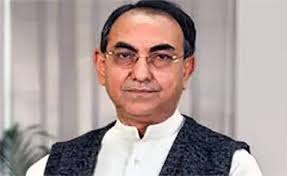
Recently, Nasir Uddin Patwary remarked that senior BNP leader Mirza Abbas allegedly has a record of more defeats than victories. His comment has sparked renewed debate and discussion in political circles. However, an analysis of political history, real-life experience, and grassroots-level assessments suggests that Mirza Abbas is neither a transient figure nor a politician who rose suddenly. Rather, he is a long-tested, dedicated, and combative leader in Bangladesh’s political landscape.
Leadership Forged in Street Politics
Mirza Abbas began his political journey on the streets. His entry into politics took place under the leadership of martyred President Ziaur Rahman. In 1977, he was elected as a commissioner, marking the formal beginning of his public life. From that point onward, he became actively involved in Dhaka’s urban politics.
Through strong public engagement, organizational skills, and consistent presence alongside ordinary citizens, Mirza Abbas quickly gained popularity. His early years were defined by grassroots activism rather than reliance on elite political privilege.
Role in the Anti-Autocracy Movement
During the 1990 anti-autocracy movement, Mirza Abbas emerged as a frontline organizer and activist. His visible and active participation in the street protests strengthened his position in Dhaka’s political arena. As a continuation of that movement, he was elected Mayor of Dhaka City Corporation, where he successfully carried out the responsibilities of administering the capital.
Parliamentary Entry and Electoral Success
In the 1991 general election, Mirza Abbas was elected Member of Parliament from the Dhaka-6 constituency. This marked his first entry into the national parliament. In that election, he secured 54.9 percent of the total votes cast, demonstrating strong popular support.
Notably, his opponent in that election was Abbas Ali, the then Amir of Jamaat-e-Islami. Mirza Abbas defeated him by a significant margin, reinforcing his image not merely as a party leader, but as a politician trusted by the electorate.
Ministerial Responsibilities and Contributions
In 2001, Mirza Abbas was re-elected by popular vote and subsequently appointed Minister for Housing and Public Works. During his tenure, several important and timely initiatives were undertaken in urban development, housing policy, and building regulations.
As Housing and Public Works Minister, he played a key role in revising building construction regulations and implementing laws to protect water bodies. His efforts to bring discipline and planning into urban development remain noteworthy, and many of his initiatives continue to be referenced in discussions on city governance.
Earlier, in 1991, he briefly served as State Minister for Youth and Sports. He also held the position of Land Minister for a short period in 1996. Across these roles, he demonstrated administrative competence and decisiveness in policymaking.
Active Politics Beyond Power
Mirza Abbas did not contest the general elections of 2008 and 2014 due to what his party described as a repressive political environment and strategic party decisions. Despite staying out of those elections, he never withdrew from politics. Instead, he remained actively engaged in street movements, party organization, and campaigns aimed at restoring democratic governance.
In 2015, he contested the Dhaka South City Corporation mayoral election, standing with the people despite widespread allegations of irregularities and controversy surrounding the polls. His decision not to boycott the election reflected political courage and a firm commitment to democratic participation.
Influence in Dhaka-8 and the Capital
Discussions with residents of the Dhaka-8 constituency indicate that many believe Mirza Abbas has a strong chance of victory in upcoming elections. Since August 5, his influence has extended beyond Dhaka-8, with growing recognition of him as a prominent and popular leader across the capital.
Despite facing propaganda, attempts to undermine his reputation, and sustained political attacks, the reality on the ground suggests that many people have benefited from his leadership. Numerous individuals have found social and political footing through his support. His organizational strength and personal networks continue to secure him a solid position in Dhaka’s political landscape.
A Firm Voice in Times of Crisis
Currently, Mirza Abbas serves as a member of the BNP National Standing Committee. During times of political crisis, he is known for speaking clearly and taking uncompromising positions. He does not shy away from street politics, and years of lawsuits, attacks, and political pressure have failed to silence him—arguably the defining feature of his political character.
Mirza Abbas believes politics is not merely about attaining power; rather, it is about protecting people’s rights, establishing democracy, and standing firmly against injustice. It is this belief that has kept him active on the streets for decades.
A review of Mirza Abbas’s political career makes it evident that he is not a politician driven by calculations of victory and defeat alone. Instead, he represents a politics rooted in struggle, sacrifice, and responsibility. Leaders with such resilience and commitment are increasingly rare in contemporary politics.
From street-level activism to national governance, Mirza Abbas has established himself as a tested, courageous, and people-oriented political leader. While political controversy and criticism are inevitable, history, lived reality, and grassroots experience continue to place him in a distinct and significant position within Bangladesh’s political sphere.