

Harmony is a subtle yet indispensable force—felt not through sight, but through the depth of conscience and the inner eye. It is more than silence or stillness; it springs from clarity of thought, ethical balance, mutual respect, and a profound sense of humanity. When trust, cooperation, and goodwill flourish among individuals, a true culture of harmony takes root—beginning within families, spreading through communities, and eventually becoming a nation’s global identity. As citizens envision the future of Bangladesh, they aspire to build a society rooted in unity, compassion, and social discipline. Yet today, that very path appears clouded with uncertainty. In this context, Begum Khaleda Zia—one of the country’s most prominent political figures and Chairperson of the Bangladesh Nationalist Party (BNP)—stands at the threshold of life and death. Her critical condition at Evercare Hospital in Dhaka mirrors the political divisions and fragile harmony of the nation. Her stature has become even more visible as her illness has drawn widespread concern both at home and abroad.
To many, she embodies the true spirit of a “Mother of the Nation”—a symbol of patriotism, integrity, unity, and political harmony.
Khaleda Zia's life has been defined by struggle and sacrifice. Soon after her marriage, the Liberation War of 1971 erupted. Her husband, then Major Ziaur Rahman, declared independence and joined the battlefield while she faced extreme uncertainty and the threat of death with her two young sons. This was the beginning of her long journey of hardship. The years following—the political shifts, the events of August 15 and November 7, 1975—brought further turbulence. In 1981, when President Ziaur Rahman was assassinated at the Chittagong Circuit House, she became a widow in a moment of national tragedy.
She not only endured personal grief but stepped forward to fill the political vacuum—taking on the responsibility of restoring democracy and preserving the ideals of national identity. During the nine-year movement against General Hussain Muhammad Ershad’s autocratic rule, her leadership became a symbol of unity and mass uprising. Following the successful pro-democracy movement of 1990, the 1991 national election brought the BNP to power under her leadership.
As the country’s first female prime minister, she introduced new avenues in women's education, healthcare, and universal primary schooling. Her administration oversaw significant economic progress, drawing global attention. Time magazine even featured her leadership under the headline “Bangladesh: An Emerging Tiger,” reflecting the country’s rising economic trajectory.
However, these achievements also attracted hostility from certain domestic and external quarters. A political movement—supported by the Awami League and Jamaat-e-Islami—fueled unrest. The “Janatar Mancha,” supported by segments of the civil bureaucracy, and the opposition’s resignation from parliament pushed the nation into a democratic crisis. To uphold national interest and constitutional continuity, the parliament approved the return of the caretaker government system in 1996—an important milestone for political harmony.
Tragically, this historic achievement was abolished in 2011 by the Awami League government. Since then, Bangladesh has drifted toward authoritarian rule, deepening political division. BNP leaders and activists have been subjected to persecution, enforced disappearances, killings, and arrests. Khaleda Zia herself was forcibly evicted from her Dhaka Cantonment residence—a home filled with four decades of memories. Her younger son, Arafat Rahman Coco, died abroad under alleged persecution, and her elder son Tarique Rahman has lived in exile in London for 17 years due to politically motivated cases.
Prime Minister Sheikh Hasina’s treatment of Khaleda Zia has been marked by unprecedented severity. After her forced eviction, a series of politically motivated cases led to her imprisonment on February 8, 2018. She was denied adequate medical care in prison, resulting in severe health complications. Even today, she remains critically ill at Evercare Hospital, fighting for her life without access to advanced treatment abroad.
Millions of people across Bangladesh and around the world are praying for her recovery, while medical specialists continue their relentless efforts. With faith in the Almighty, many still hope she will return to the nation she has served throughout her life.
Even from her hospital bed, she remains a symbol of dedication to the welfare of the country and its people. For this reason, she is regarded by her supporters as the true “Mother of the Nation.” Upholding the ideals she stood for—unity, harmony, and national welfare—has become more important than ever. The nation must now move forward together to build the Bangladesh envisioned under the BNP’s “31-Point” framework.
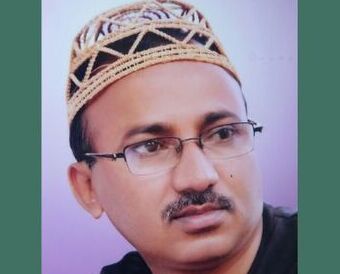
Shayrul Kabir Khan
Cultural Activist & Political Analyst