

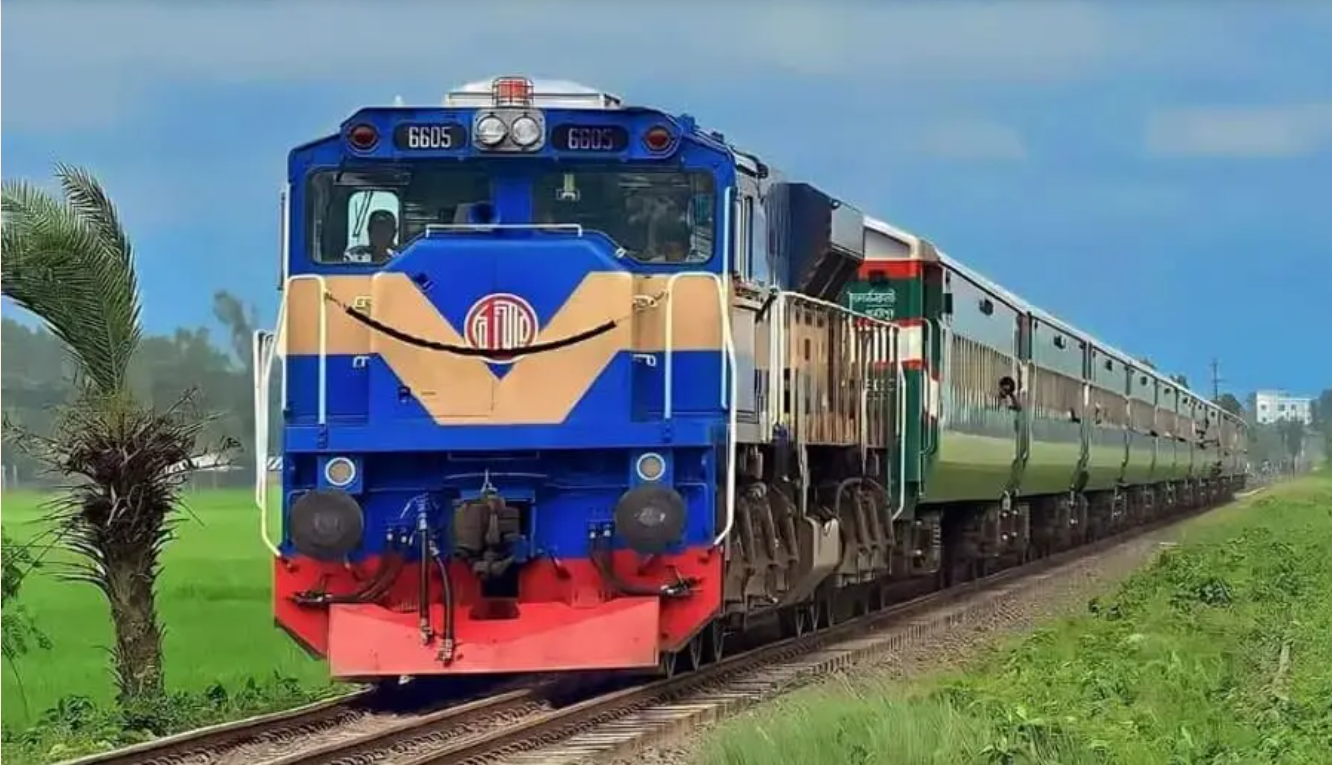
The government has taken an initiative to bring Magura and Jhenaidah districts under the railway network, aiming to improve regional connectivity, boost economic activities and facilitate passenger and freight transportation in the country's southwestern region.
The Ministry of Railways has approved a development project proposal (DPP) for conducting a feasibility study on establishing railway connectivity from Magura to the Darsana-Poradah section via Jhenaidah, according to Bangladesh Railway officials.
"We will appoint a project director (PD) within one month to conduct a feasibility study on this route at a cost of Taka 10.50 crore," Md Ahsan Jabir, Chief Engineer of Bangladesh Railway's Western Zone, told BSS.
He said that after receiving the feasibility study report, the process for implementing the main project would begin within eight months.
According to the Project Proposal for Feasibility Study (PFS), prepared by the Ministry of Railways in August 2026, the proposed project involves a new broad-gauge railway line of approximately 70 kilometres from Magura to the Darsana-Poradah section via Jhenaidah.
The proposal also includes examining a possible additional 21-kilometre railway connection from Jhenaidah to Mobarakganj.
The feasibility study will examine alternative railway alignments, including connections from Magura towards Poradah and Darsana junctions through Jhenaidah and Garaganj. The final alignment will be selected based on technical, economic, financial, environmental and social considerations.
The government has taken up the proposed railway connectivity initiative as part of its broader plan to bring all districts of the country under the railway network.
The Chief Engineer said the main railway project has an estimated cost of around Taka 1,017 crore.
Following completion of the feasibility study, land acquisition and other preparatory activities will be undertaken before construction begins.
The land acquisition process may take around one to one-and-a-half years, while the entire railway construction project could take five to six years to complete, he added.
Technical scope of the feasibility study
The PFS document outlines a comprehensive assessment of the proposed railway corridor, including detailed topographical, geotechnical and hydrographic surveys.
The consultants will identify three alternative alignments and recommend the most suitable route. They will also assess traffic demand, economic and financial viability, environmental and social impacts, and the requirements for land acquisition and resettlement.
The study will include engineering investigations at proposed bridge locations, hydrological and morphological surveys, and conceptual designs for railway tracks, stations, bridges, embankments, signalling systems and other associated infrastructure.
It will also prepare preliminary cost estimates, engineering drawings, technical specifications and tender documents required for subsequent implementation.
The feasibility study is expected to determine the locations of railway stations and identify appropriate engineering solutions for crossing rivers, roads and other existing infrastructure.
Connecting southwestern districts with the national railway network
Railway Ministry sources said that passenger and freight trains currently operate along the major railway corridors in the western region, but Magura remains outside the railway network. Similarly, a large portion of Jhenaidah district lacks direct railway connectivity.
The proposed railway corridor would connect Magura and Jhenaidah with the national railway network through Poradah and Darsana junctions.
According to the PFS document, the proposed Magura-Jhenaidah-Garaganj-Poradah corridor would improve connectivity with important regional centres and strengthen transportation links with major cities, including Dhaka, Khulna and other parts of the country.
Garaganj, located near Islamic University in Kushtia, has also been identified as an important potential railway station location. The proposed connection could provide convenient transportation for university students, teachers and employees, while helping reduce traffic congestion in Kushtia town.
The proposal also considers a possible connection from Jhenaidah to Mobarakganj railway station in Kaliganj, which could extend railway facilities to another important area.
Economic benefits and agricultural transportation
Jhenaidah and Magura are important agricultural regions, particularly known for producing vegetables, flowers and other agricultural commodities.
Stakeholders believe that improved railway connectivity will facilitate the transportation of agricultural products to major markets, reduce transportation costs and minimise post-harvest losses.
The proposed railway corridor is also expected to benefit local industries, traders and business owners by providing a more affordable and efficient means of transporting goods.
The PFS document estimates that the proposed 70-kilometre extension could bring railway facilities within reach of approximately 10 million people. The additional 21-kilometre connection towards Mobarakganj could potentially benefit another five million people.
The railway connection is also considered significant for cross-border trade, particularly through the Darsana border region, by facilitating the transportation of industrial and agricultural goods towards commercial centres and border trading points.
Link with ongoing railway expansion
Bangladesh Railway is expanding its network in the southwestern region in phases.
As the first step, a 19.90-kilometre broad-gauge railway line is being constructed from Madhukhali in Faridpur to Magura. Approximately 50.50 percent of the structural work on this project has already been completed, according to the information provided by railway officials.
The proposed Magura-Jhenaidah-Darsana-Poradah connection would extend this ongoing railway expansion and establish a new link between the southwestern region and the national railway network.
Once operational, the corridor is expected to make railway journeys from the western border areas to Dhaka easier by connecting with the railway network linked to the Padma Bridge.
Meanwhile, the government has recently approved a Taka 2,029-crore project for rehabilitating and improving the capacity of the western railway network.
Railway officials said that major junctions, including Poradah, would also require capacity enhancement to accommodate the anticipated increase in passenger and freight train movements.
The proposed railway corridor is expected to play an important role in promoting balanced regional development, improving transportation facilities, strengthening agricultural and industrial activities and creating new economic opportunities in the southwestern region of Bangladesh.