

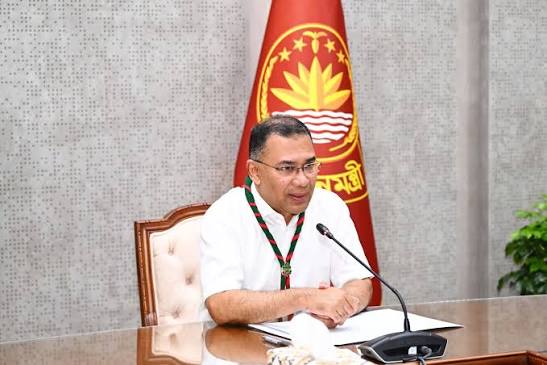
Dhaka, Nov 6: Prime Minister Tarique Rahman has called for upholding the revolutionary spirit of November 7, 1975, as the inspiration and guiding force for building a future Bangladesh based on national unity, democracy, independence and sovereignty.
He made the call in a message issued on the eve of the Historic National Revolution and Solidarity Day, to be observed tomorrow.
In his message, the Prime Minister said that on November 7, 1975, soldiers and people of Bangladesh united to thwart conspiracies against the country's independence and sovereignty.
Describing November 7 as a defining moment in the nation's history, Tarique Rahman said the events of that day clearly exposed the forces that stood for and against Bangladesh's national interests.
Referring to a saying that deserves particular consideration in discussions on the Liberation War and the country's historical milestones, he said, "Those who remain preoccupied with the past are blind in one eye, while those who forget the past are blind in both eyes."
He said it was neither appropriate to remain constantly absorbed in the past nor wise to ignore the lessons of history while charting the country's future course. Both approaches, he added, would amount to historical mistakes.
"I believe that November 7, 1975, was a defining date in determining Bangladesh's course," the Prime Minister said.
He said the patriotic soldiers and people had defeated those who sought to turn Bangladesh into a subservient state, deprive its citizens of their democratic and political rights, establish one-party authoritarian rule and undermine the glory and dignity of the armed forces, a symbol of the nation's valour, courage and honour.
Tarique Rahman said history bore witness to how the forces defeated on November 7, 1975, later united under the banner of the Grand Alliance and, through a prolonged conspiracy, turned the country into a subservient state.
He alleged that they were responsible for the planned massacre of military personnel at the BDR headquarters in Pilkhana, an incident that undermined the honour and dignity of the armed forces.
They also stripped people of their voting rights and democratic and political freedoms, paving the way for the establishment of a fascist regime, he said.
Ultimately, after more than a decade and a half, the country was liberated from fascism through a bloody mass uprising led by courageous students and people, at the cost of thousands of lives, the Prime Minister added.
"The War of 1971 was fought to achieve independence. The struggle of 2024 was to safeguard the independence of the country and its people," he said.
Drawing parallels between the two historic events, Tarique Rahman said that just as people from all walks of life took to the streets in 2024 to defend the freedom of the country and its citizens, soldiers and civilians had united in 1975 to thwart conspiracies against Bangladesh's independence and sovereignty.
"Our foremost commitment on this year's November 7 should be to ensure that no one can ever again deprive the country and its people of their rights or turn Bangladesh into a subservient state. National unity is essential to fulfil this commitment," he said.
Considering Bangladesh's socio-economic, geographical and political realities, the Prime Minister said, preserving national unity required embracing wholeheartedly the spirit of the November 7 revolution led by soldiers and people.
He observed that the Liberation War of 1971, the soldiers' and people's revolution of November 7, 1975, the anti-autocracy movement of 1990 and the anti-fascist mass uprising of 2024 had all been driven by a common aspiration.
That aspiration, he said, was to establish a self-reliant, secure and welfare-oriented state in an independent Bangladesh while ensuring all democratic and political rights of its people.
On the occasion, commemorating the November 7, 1975, revolution of soldiers and people against conspiracies targeting the country's independence and sovereignty and in defence of democratic rights, Tarique Rahman called for the patriotic and democracy-loving people to raise their voices with determination.
"Neither Delhi nor Pindi, nor any other country; Bangladesh comes first," he said.
The Prime Minister also wished every success to all programmes organised across the country to mark the historic day.