

The February 12 parliamentary election has sparked widespread debate and criticism across the country’s political arena. Although no major incidents of visible violence were reported, several candidates have alleged that they faced sustained psychological pressure and organized smear campaigns—forms of political hostility they claim can be more damaging than physical assault. Political observers note that prolonged mental harassment can, at times, inflict deeper harm than direct confrontation. In this election, such invisible pressure emerged as a significant point of discussion.
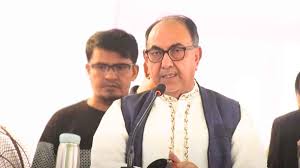
Similar allegations surfaced in Dhaka-8, a key constituency in the capital. The Bangladesh Nationalist Party (BNP) nominated Mirza Abbas, a member of the party’s Standing Committee, as its candidate for the seat. From the outset of the campaign, his supporters and several local voters alleged that he was subjected to extensive propaganda and coordinated criticism. According to them, he endured sustained psychological pressure for nearly two months. They further claim that political opponents adopted tactics designed to weaken him mentally, describing the impact as more devastating than direct physical violence.
Conversations with several voters in Dhaka-8 suggest that Abbas was repeatedly targeted through public commentary, social media narratives, and pointed political rhetoric. Supporters argue that the cumulative effect of these actions created a challenging environment for him to conduct his campaign. They maintain that daily allegations, repeated labeling, and personal criticism forced him to operate under constant stress throughout the electoral period.
Local voter Rahim Uddin stated, “Mirza Abbas has experienced many ups and downs in his political career. However, the level of psychological pressure he faced in this election was unprecedented. Over the past months, he was repeatedly labeled a ‘godfather’ and an ‘extortionist.’ We believe these remarks were deliberately circulated.” According to him, the repetition of such accusations appeared intended to socially discredit the candidate and erode public trust.
There are also allegations that negative content about Abbas was systematically disseminated across social media platforms. Individuals involved in his campaign claim that similar accusations were circulated repeatedly through Facebook pages and online commentary. They argue that rather than engaging in direct confrontation, certain actors attempted to weaken him through sustained reputational attacks aimed at undermining his electoral viability.
Another voter, Karim Musulli, commented, “One must appreciate his patience. It was not just political criticism; there were personal attacks and widespread misinformation. This confused ordinary voters and may have influenced the final vote count. Although he won, he appeared to secure fewer votes than in previous elections.” He suggested that continuous negative messaging could naturally affect voter perception.
In post-election remarks, Mirza Abbas himself alleged that the campaign against him was organized and deliberate. According to his statement, the objective was not physical harm but psychological attrition. He claimed that the scale of propaganda sought to exhaust him mentally and force him out of the electoral race. Abbas maintained that his political experience, resilience, and the support of voters enabled him to withstand the pressure and remain active until the final stage of the campaign.
Political analysts observe that in recent years, electoral competition has increasingly involved digital platforms, where narratives can spread rapidly and repeatedly. They note that sustained negative messaging—whether accurate or not—can shape public perception and influence voter attitudes. In this context, psychological pressure may emerge not from overt acts of violence but from persistent reputational challenges amplified online.
Some voters in Dhaka-8 reported that, in the weeks leading up to the election, new allegations or commentary surfaced almost daily. As a result, discussions about policy priorities, development initiatives, and local issues were often overshadowed by personality-centered debates. Analysts argue that when campaigns shift focus from policy to personal controversy, the quality of democratic discourse may suffer.
However, representatives of opposing political groups have rejected claims of organized smear tactics. They assert that electoral competition naturally includes criticism and scrutiny. According to them, robust debate and public examination of a candidate’s record are integral to democratic practice. They contend that not all criticism constitutes propaganda and that voters ultimately decide a candidate’s credibility.
The post-election environment has raised broader questions about how psychological pressure and sustained negative campaigning should be evaluated. While physical violence is clearly identifiable under existing legal frameworks, defining and regulating mental harassment or coordinated misinformation is more complex. Tracking the origin and intent of digital content presents additional challenges, making accountability difficult to establish.
Observers suggest that clearer guidelines regarding digital campaigning and personal attacks could help ensure a more balanced electoral environment in future contests. Enhanced transparency in online political communication and greater responsibility from political actors may reduce the spread of misleading narratives. Experts argue that as digital engagement becomes central to elections, regulatory frameworks must evolve accordingly.
Supporters of Mirza Abbas believe that despite what they describe as coordinated attempts to weaken him, he remained in the race due to his organizational strength and longstanding political experience. Critics, however, maintain that allegations and counter-allegations are part of electoral culture and caution against one-sided interpretations of events. They emphasize that intense competition is common, particularly in high-profile constituencies.
Overall, the February 12 election in Dhaka-8 illustrates a broader shift in electoral dynamics. While overt violence may not have dominated the campaign, allegations of psychological pressure and reputational targeting have become central to post-election discussions. The experience has reignited debate about the boundaries between legitimate political criticism and harmful propaganda.
Although the official results have been declared and the immediate electoral tensions have subsided, the broader questions remain. Will future political competition prioritize policy-driven engagement, or will personality-focused attacks continue to shape campaign strategies? Strengthening democratic culture may require a renewed commitment to responsible communication, tolerance, and fact-based discourse. The events surrounding Dhaka-8 serve as a reminder that the health of democratic practice depends not only on the absence of physical violence but also on the integrity of political dialogue.