

The United Nations' highest court has ruled that Myanmar committed genocide against the Rohingya Muslim minority during a military crackdown in 2017, in a landmark judgment that marks a major victory in the Rohingya community's long struggle for justice.The International Court of Justice (ICJ), based in The Hague, delivered its verdict on Thursday (November 19), finding Myanmar responsible for genocide in northern Rakhine State by a majority of nine judges to six.
Reading out the judgment, ICJ President Judge Yuji Iwasawa said Myanmar had violated its obligations under the 1948 Genocide Convention.
The court found that Myanmar's security forces killed approximately 10,000 Rohingya during military operations in 2017, carrying out widespread sexual violence, brutal attacks on children and indiscriminate killings of civilians.
The judges also found that Myanmar's military executed men and boys, systematically destroyed Rohingya villages and attacked civilians attempting to flee to neighbouring Bangladesh.
In a significant legal finding, the court concluded that the scale and pattern of atrocities demonstrated an intention to destroy a substantial part of the Rohingya population.
The judges said the evidence established that Myanmar's military had acted with genocidal intent, rejecting the country's argument that its operations were a legitimate response to attacks by Rohingya insurgents.
The court also found that Myanmar had violated its obligation to prevent genocide.
The ruling marks the first time the ICJ has held a state directly responsible for committing genocide.
Myanmar ordered to ensure Rohingya's safe return
The court said Myanmar must allow Rohingya displaced by the military operations to return safely and with dignity to their homes, while also ensuring the reunification of separated families.
It also found that Myanmar must provide reparations for the violations committed against the Rohingya, with the amount of compensation to be determined later.
The judgment is final and legally binding, although the court has no direct mechanism to enforce compliance.
Seven-year legal battle
The case was brought by The Gambia in November 2019, with the backing of the Organisation of Islamic Cooperation (OIC), which accused Myanmar of violating the Genocide Convention through its military campaign against the Rohingya.
Myanmar maintained that its operations were launched in response to attacks by the Arakan Rohingya Salvation Army (ARSA) on security posts in Rakhine State.
However, the court rejected Myanmar's defence, finding that the evidence established a deliberate campaign targeting the Rohingya population.
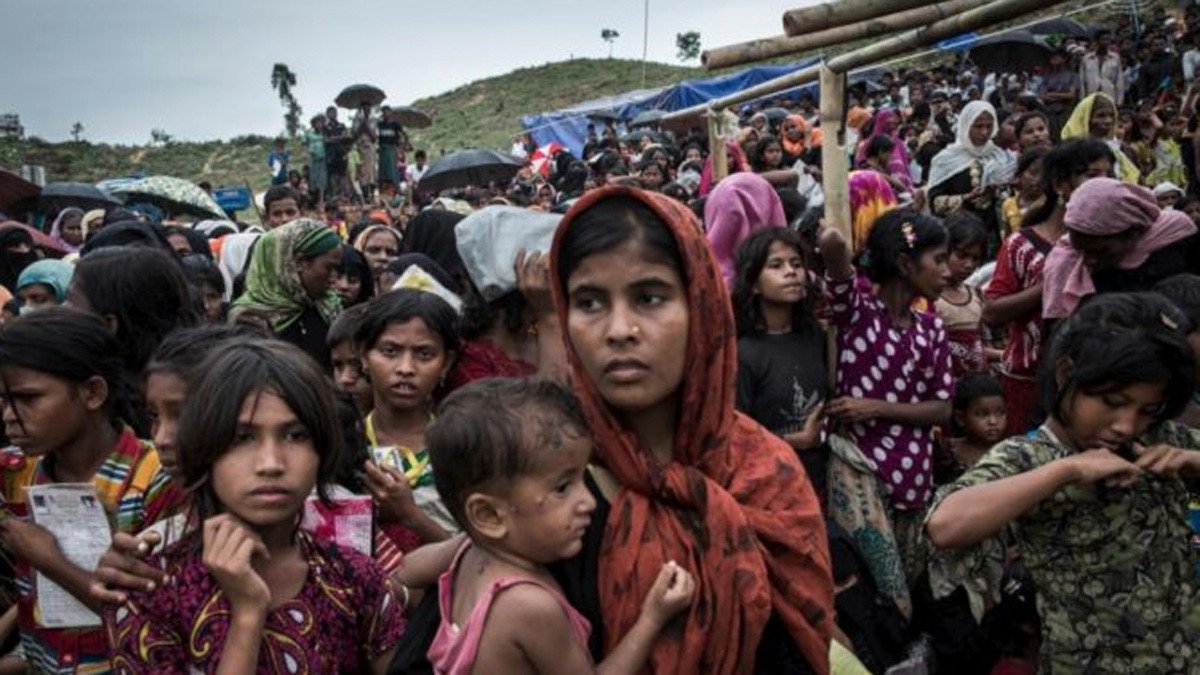
More than 730,000 Rohingya fled to Bangladesh following the military crackdown in August 2017, bringing accounts of mass killings, sexual violence and the destruction of entire villages.
Bangladesh currently hosts approximately 1.2 million Rohingya refugees, most of them living in overcrowded camps in Cox's Bazar.
The historic ruling represents a major legal development for the Rohingya, although its implementation and the prospects for their safe return to Myanmar remain uncertain.
Source: Agencies