

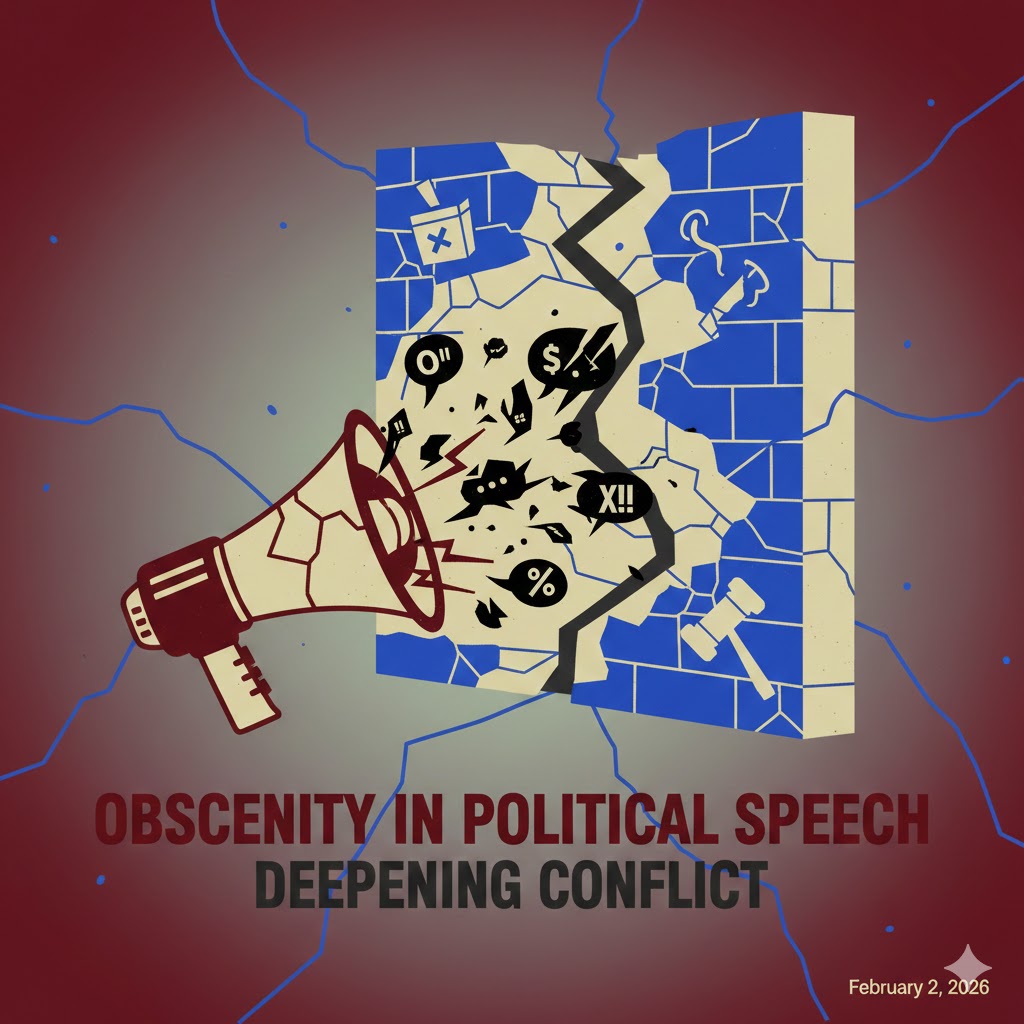
The language of mutual criticism among political parties has increasingly turned obscene and vulgar, triggering growing concern among ordinary citizens. Analysts note that while political discourse once centered on principled debate, ideological differences, and respectful criticism, that culture has largely eroded in recent times. In particular, the public use of obscene remarks, slogans, and comments involving senior leaders of major political parties has further inflamed the political atmosphere. Political observers warn that this trend is not only undermining political decorum but also increasing the risk of violence ahead of the upcoming national election.
Origin of the Controversy and Social Media Reaction
The latest wave of political tension erupted following allegations that an offensive social media post targeting women was made from the Facebook account of Jamaat-e-Islami Ameer Dr. Shafiqur Rahman. After the allegation surfaced, widespread debate and criticism erupted across social media platforms. Several political parties and civil society organizations protested the incident, while rallies and demonstrations were held in different parts of the country.
Shortly after the controversy emerged, Jamaat Ameer Dr. Shafiqur Rahman denied the allegation, claiming that his Facebook account had been hacked and that he did not post the content himself. According to his statement, hackers deliberately carried out the act to spread misinformation.
However, a significant section of the public and opposition political parties have expressed skepticism regarding this explanation. Many believe the hacking claim is being used as a convenient excuse to evade political responsibility—an argument that has surfaced in similar controversies in the past.
Blame Game and Counter-Allegations
Jamaat and Islami Chhatra Shibir leaders and activists have indirectly blamed the BNP for spreading the controversy, alleging that elements within the party deliberately amplified the issue for political gain. The BNP, however, has officially denied any involvement in the matter.
The situation has since grown more complicated. In a counterreaction, some Jamaat and Shibir activists have been seen chanting obscene and offensive slogans targeting BNP Acting Chairman Tarique Rahman. Such slogans were reportedly heard during processions and rallies in various locations, sparking strong reactions across the political spectrum.
According to political analysts, this cycle of blame and the use of vulgar language are deepening political divisions and escalating mutual hostility.
Erosion of Political Decorum
Veteran politicians and civil society representatives argue that there was once an unwritten rule in political culture to maintain respect when referring to senior leaders or party chiefs. While criticism was common, it remained within acceptable limits. That boundary, they say, has now collapsed.
Reckless remarks by some leaders and activists of major political camps, irresponsible statements on social media, and obscene slogans in public demonstrations are increasingly calling political ethics into question. As a result, public frustration and distrust toward politics are growing.
A senior political analyst based in Dhaka said,
“Differences of opinion are natural in politics. But personal attacks, vulgar language, and obscene slogans weaken democratic practices. Ultimately, the entire state suffers from this decline.”
Fears of Election-Centered Violence
Experts warn that if the current tension is not brought under control, it could lead to serious clashes surrounding the upcoming election. Once political hostility turns violent, it rarely remains confined to a single area and may spread nationwide.
Such a scenario would significantly increase the risk to lives and property. Past experience shows that ordinary citizens are often the primary victims of political violence.
Government’s Position and Measures
In response to the unfolding situation, the government has taken steps to maintain stability. Authorities have held multiple meetings with political parties, urging restraint and tolerance. Law enforcement agencies have also been placed on high alert to respond swiftly to any untoward incidents.
A senior government official, speaking on condition of anonymity, said,
“Political differences are a part of democracy. However, violence and indecent behavior are unacceptable under any circumstances. We are fully prepared to maintain law and order.”
The Way Forward
Political analysts emphasize that responsibility ultimately lies with the political parties themselves. Party leadership must take firm action to restrain inflammatory rhetoric by leaders and activists alike. Ensuring responsible behavior on social media is also critical.
According to analysts, failure to defuse the tension at an early stage could lead to a far more serious crisis, affecting not only the election but also the country’s overall political stability.
Overall, the growing obscenity and hostility in political discourse pose a serious threat to Bangladesh’s democratic environment. If restraint and responsibility are not restored in time, the cost may ultimately be borne by the nation as a whole.