

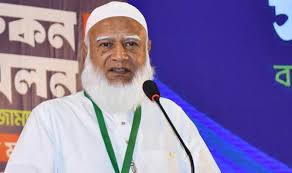
Bangladesh Jamaat-e-Islami Ameer Dr. Shafiqur Rahman has said that a seat-sharing agreement among an 11-party alliance contesting the 13th National Parliamentary Election is expected to be finalized within the next one or two days.He made the remarks on Monday (12 January) while speaking to journalists after a meeting with the Head of the European Union Election Observation Mission and Member of the European Parliament, Evarist Eizabs, in the Bashundhara area of the capital.
Formation of the 11-Party Alliance
Over the past several months, eight political parties held multiple rounds of formal and informal discussions to reach a seat-sharing arrangement ahead of the upcoming election. These parties include:
-
Bangladesh Jamaat-e-Islami
-
Islami Andolan Bangladesh
-
Bangladesh Khilafat Majlish
-
Khilafat Majlish
-
Bangladesh Khilafat Andolan
-
Bangladesh Nezam-e-Islam Party
-
Jatiya Ganatantrik Party (JaGPa)
-
Bangladesh Development Party (BDP)
Later, three more parties—National Citizen Party (NCP), Liberal Democratic Party (LDP), and Amar Bangladesh Party (AB Party)—joined the alliance, bringing the total number of parties to eleven.
Nomination Figures and Seat Allocation Tensions
While discussions on seat-sharing were still ongoing, Jamaat-e-Islami submitted nomination papers in 276 constituencies, and Islami Andolan Bangladesh in 268 constituencies. In addition, the following parties submitted nominations:
-
National Citizen Party (NCP): 47 seats
-
Amar Bangladesh Party (AB Party): 53 seats
-
Bangladesh Khilafat Majlish: 94 seats
-
Khilafat Majlish: 68 seats
-
Liberal Democratic Party (LDP): 24 seats
-
Bangladesh Khilafat Andolan: 11 seats
-
Nezam-e-Islam Party: 6 seats
-
Jatiya Ganatantrik Party (JaGPa): 3 seats
-
Bangladesh Development Party (BDP): 2 seats
Discontent over seat allocation led to speculation that Islami Andolan Bangladesh might withdraw from the alliance. However, following further negotiations, the parties have largely agreed to contest the election under a coordinated seat-sharing formula.
“Within the next one or two days, the seat-sharing arrangement among the 11 parties will become visible,” Dr. Shafiqur Rahman said.
Foreign Policy and Electoral Vision
Dr. Shafiqur Rahman said that if Jamaat-e-Islami comes to power, it would maintain friendly relations with neighboring countries based on mutual respect and equality.
“We will pursue friendship with all neighboring countries on the basis of equality,” he said.
Expressing full confidence in the electorate, the Jamaat Ameer said women voters across the country would also support his party in the upcoming election.
“The people of this country will ensure good governance through this election,” he said. “We have complete faith in the people. All we want is a free, fair, and neutral election.”
Commitment to Democracy and Media Freedom
He further stated that Jamaat-e-Islami would respect the outcome of a credible election, even if another party were to win.
“If the people choose another party through a fair election, we will cooperate with them,” he said. “We will stand with those who support anti-corruption measures, judicial independence, and necessary reforms.”
Warning about the stakes of the election, Dr. Shafiqur Rahman added, “If this election slips out of the hands of the people, we do not know when they will regain their voting rights again.”
He also accused sections of the media of showing bias in recent times.
“Some media outlets are leaning toward a particular political group, just as they did during the uprising,” he said. “We want the media to operate independently. If the media voluntarily wear the chains of subservience, it will amount to deceiving the people.”
He concluded by saying that both the role of the administration and the conduct of the media are being closely observed and remembered by the public.