

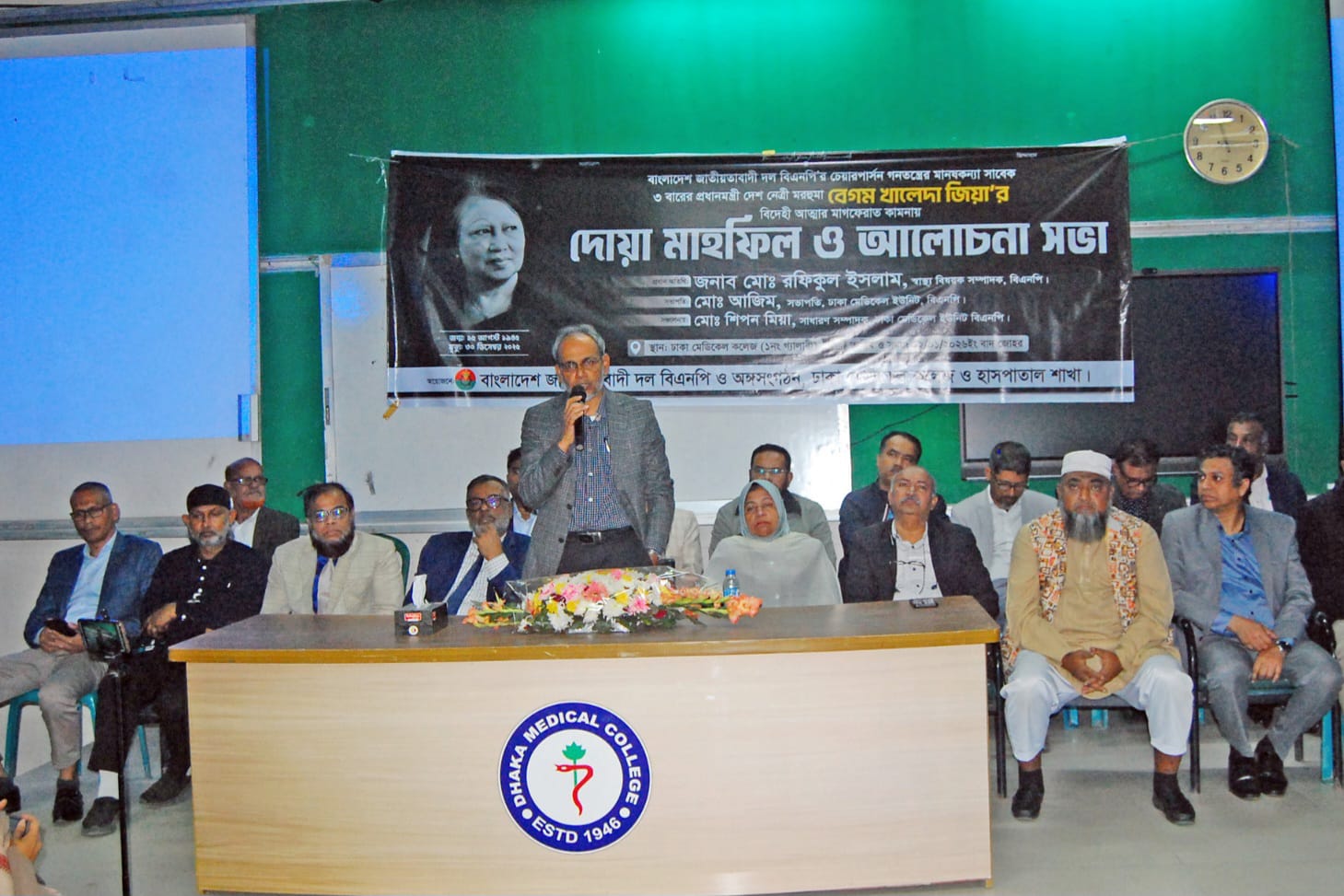
Bangladesh Nationalist Party (BNP) Health Affairs Secretary Dr. Md. Rafiqul Islam has said that democracy in Bangladesh is still not fully secure, warning that a certain force is continuing its attempts to seize power through “backdoor methods” and undermine democratic values. He made the remarks on Monday while speaking at a prayer meeting held at Dr. Milon Auditorium of Dhaka Medical College. The event was organized by the Dhaka Medical College and Hospital units of BNP and its affiliated organizations, seeking eternal peace for the departed soul of former Prime Minister Begum Khaleda Zia.
“Democracy is still under threat. A group is trying to destroy democracy by coming to power through the backdoor,” Dr. Rafiqul said. “The struggle for democracy is not over yet. Only when true democracy is established through the people’s verdict will we be able to enjoy the fruits of this long struggle.”
Call for Vigilance
Dr. Rafiqul emphasized the need for constant vigilance, saying that people must remain alert to prevent any attempt to dismantle democracy.
“A force is still trying to figure out how it can rule the country by destroying democracy through undemocratic means,” he said. “If we remain united and alert, only then will it be possible to fulfill the vision of our leader Begum Khaleda Zia.”
Remembering Khaleda Zia’s Struggles
Recalling the struggles of Begum Khaleda Zia during what he described as a period of fascist rule, Dr. Rafiqul said she was harassed with numerous false cases and regularly appeared before courts in Old Dhaka.
“We, along with many party leaders and activists, used to escort her motorcade when she went to attend court hearings,” he said. “She was not only a leader of BNP; she was a trusted democratic leader for people across political parties.”
He also highlighted her stance during the One-Eleven political crisis, stating that despite conspiracies to force her into exile, Khaleda Zia chose to remain in the country.
“She refused to leave the country, prioritizing the soil and people of Bangladesh. She breathed her last on this land,” he said.
Contributions to Nation-Building
Dr. Rafiqul Islam noted that Begum Khaleda Zia’s contributions to women’s education, healthcare, and social development remain unforgettable.
“The Dr. Milon Auditorium of Dhaka Medical College itself is a contribution of her government,” he said. “She ensured healthcare services reached the doorsteps of ordinary people.”
Prayer Meetings Nationwide
Referring to nationwide prayer gatherings, Dr. Rafiqul said mosques, madrasas, and religious institutions across the country held prayers for Begum Khaleda Zia.
“Even after her passing, people across the country prayed for the forgiveness of her soul,” he said. “I sincerely thank the leaders and activists of the Dhaka Medical College unit for organizing today’s prayer meeting.”
Call for Unity in Democratic Struggle
Calling for unity to restore democracy, Dr. Rafiqul urged party members to work collectively to reclaim people’s voting rights.
“Our chairperson Tarique Rahman is now in the country,” he said. “We must strengthen his leadership and work together. Only then will democracy be restored in Bangladesh.”