

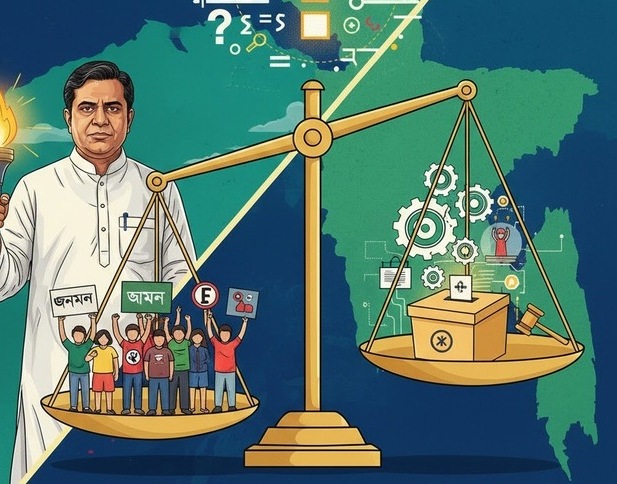
The return of BNP Acting Chairman Tarique Rahman to Bangladesh after 17 years in exile has generated renewed momentum and widespread discussion in the country’s political arena. He returned from London on December 25, and his homecoming has energized BNP leaders and activists while also intensifying debate over alliances, leadership, and political strategy ahead of the upcoming 13th National Parliamentary Election.
With the Awami League’s activities currently banned, BNP is now regarded as the country’s largest and most organized political party. In this context, political analysts believe Tarique Rahman’s return has not only strengthened the party organizationally but has also had a significant psychological impact. According to party sources, Tarique Rahman may contest the upcoming election from Bogura-6 and Dhaka-17 constituencies.
Election Timeline and Alliance Dynamics
According to the schedule announced by the Election Commission, the 13th National Parliamentary Election is set to be held on February 12, 2026. As a result, political parties now have limited time to finalize alliance decisions. Against this backdrop, reports that the newly formed National Citizen Party (NCP) is moving toward an alliance with Bangladesh Jamaat-e-Islami have sparked intense political discussion.
Many observers believe a Jamaat–NCP alliance could create a new polarization within opposition politics. However, internal divisions within NCP over the alliance have become increasingly visible. The party’s Senior Joint Member Secretary, Dr. Tasnim Jara, has recently resigned. In addition, at least 30 central committee leaders reportedly sent a letter to party Convener Md. Nahid Islam expressing opposition to the proposed alliance with Jamaat.
Leadership Tensions and Internal Challenges
These internal disagreements have raised questions about NCP’s future political direction. On one hand, the party presents itself as a reform-oriented force advocating a new political approach. On the other, critics argue that an alliance with Jamaat may contradict that stated position, fueling debate within the party.
Explaining the party’s stance, NCP Member Secretary Akhtar Hossain said,
“Within the Consensus Commission, differences of opinion with BNP were evident on reform issues. On several reform points, NCP, Jamaat, and some other parties naturally found common ground. Our primary consideration in forming electoral alliances or understandings is the commitment to state reform and rebuilding the country’s political structure.”
Tarique Rahman and Nahid Islam: Two Leadership Paths
Following Tarique Rahman’s return, several international media outlets have described him as a potential future prime minister. Despite spending many years abroad, his international recognition, experience in party leadership, and influence within BNP have positioned him as a central figure in national politics.
In contrast, Nahid Islam—who emerged from grassroots political movements—has become a symbol of youthful leadership for a new generation. With the Jamaat–NCP alliance reportedly taking shape, discussions are underway suggesting that Nahid Islam could emerge as the alliance’s spokesperson. Some political observers even speculate that he could assume the role of leader of the opposition in Parliament following the election.
A Shifting Electoral Landscape
According to political analysts, the combination of a strengthened BNP under Tarique Rahman’s leadership and the potential rise of a Jamaat–NCP alliance could significantly alter electoral dynamics in the upcoming polls. However, the success of alliance politics will ultimately depend on internal unity, candidate selection, and the ability to gain voter trust.
Overall, Tarique Rahman’s return, NCP’s alliance strategy, and Nahid Islam’s growing prominence together signal the beginning of a new chapter in Bangladesh’s political landscape. As the election draws closer, these emerging alignments and leadership equations are expected to become increasingly clear, observers say.