

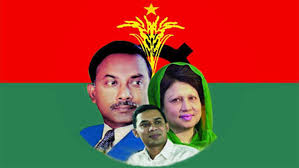
Bangladesh is currently passing through a complex yet significant political period, where the dynamics of the ruling party, opposition politics, grassroots activists, and public expectations are shaping a new political reality. Recently, political discussions intensified after supporters publicly chanted “These” slogans against several influential ministers of the BNP-backed government. Political analysts believe this was not merely an isolated emotional reaction; rather, it reflected long-standing political deprivation, frustration among dedicated grassroots activists, unmet expectations, and the growing distance between party leadership and ordinary workers.
The Bangladesh Nationalist Party (BNP), one of the country’s largest political parties, has endured nearly one and a half decades of difficult political circumstances. Despite facing lawsuits, arrests, enforced disappearances, political repression, violence, and imprisonment, the party has managed to survive organizationally due largely to the sacrifice, patience, and ideological commitment of its grassroots activists. According to political observers, BNP did not collapse during years of political suppression because ordinary workers remained loyal and continued to hold the party structure together. Public emotional attachment to the party’s founder, former President Ziaur Rahman, and former Prime Minister Begum Khaleda Zia has also remained one of the party’s strongest political foundations.
Political analysts say that when a party finally comes to power after a prolonged political struggle, grassroots activists naturally expect recognition for their sacrifices. They hope for greater communication with leadership, political inclusion, and respectful treatment. However, when they begin to feel disconnected from the leadership, frustration gradually transforms into public resentment. Many observers believe the recent slogan protests are a direct manifestation of this accumulated dissatisfaction.
According to political observers, many activists who spent years on the streets during anti-government movements, faced criminal cases, endured imprisonment, or lost their livelihoods and family stability now feel neglected. They believe the relationship between the party’s top leadership and grassroots workers has weakened significantly since the party entered power. As a result, frustration is increasingly being expressed publicly.
Ataur Rahman, a BNP activist from Goalanda in Rajbari district, said, “After the party came to power, it became almost impossible to approach our leaders. We cannot even get an opportunity to discuss important issues. Those who were active during the movement now feel ignored.”
Similar complaints have emerged from Dhaka’s Demra area. Local BNP worker Rahman stated, “Before the election, our leaders maintained regular contact with us. But after the election defeat in our area, they became unreachable. I tried several times to meet my leader but had to return without seeing him. It feels like ordinary workers no longer matter.”
Political sociologists argue that the real strength of any political party lies within its grassroots organization. Regardless of how popular the top leadership may be, if grassroots activists become alienated, the party eventually faces organizational weakness. Bangladesh’s political history repeatedly demonstrates that major political transformations were driven primarily by ordinary activists working at the field level.
Discussions are also ongoing regarding the leadership qualities of Prime Minister Tarique Rahman. A section of his supporters believe he is attempting to view citizens not merely as subjects to govern but as political partners and collaborators. In recent months, despite facing criticism, hostile remarks, and political pressure, the government has responded relatively cautiously, which some consider a sign of political tolerance. However, questions are also being raised about whether certain groups within or outside the party are intentionally exploiting this tolerance to embarrass the government and party leadership.
Analysts argue that for a ruling party, the greatest challenge is often not the opposition but internal dissatisfaction. Political parties that come to power after long struggles face enormous pressure from within. Competition over party positions, administrative influence, political recognition, and economic opportunities intensifies significantly. In such circumstances, if dedicated activists feel excluded, the situation can evolve into a major political crisis in the future.
Karim Ullah, a BNP activist from Rangpur, said, “I have been involved with BNP for more than a decade. During the movement years, there was regular communication with leaders. But after the party came to power, many leaders distanced themselves from ordinary activists. We no longer even get a chance to speak with them. This has created deep frustration among many workers.”
Political analysts also point out that Bangladesh’s political culture remains heavily centered around personality-based leadership. However, long-term political stability cannot be maintained solely through the popularity of top leaders. To sustain public support, grassroots organizations must remain active, respected, and politically engaged. Otherwise, public confidence gradually declines. Recent events are being viewed as a warning sign of that reality.
Another major issue is the social and economic condition of political activists. Many grassroots workers lost jobs, businesses, and even family stability during years of political struggle. They believe they deserve at least moral recognition and basic security after political change. But when they see limited opportunities within the new power structure, frustration deepens further. This frustration is now being expressed through social media posts, public gatherings, and protest slogans.
Madhu Mia, a local BNP supporter from Narayanganj, said, “After such a long time, BNP finally came to power. We thought the lives of ordinary workers would improve. But now it has become difficult even to meet our leaders. Many leaders themselves are frustrated for not receiving important positions, and because of that they no longer maintain contact with grassroots workers.”
Experts believe the BNP leadership must now strengthen direct communication with grassroots activists. The current situation cannot be managed only through speeches from central leaders or administrative decisions. Rather, the leadership must listen to complaints from field-level workers, acknowledge their sacrifices, and involve them in decision-making processes. At the same time, maintaining party discipline is equally important. If internal dissatisfaction becomes uncontrollable, it could create opportunities for opposition forces and damage the government’s image.
Political analysts believe the current situation is not only a warning sign for the government but also a test of political maturity. Criticism of the government is a natural part of democracy. However, a culture of personal humiliation, public insults, and emotionally charged political reactions may contribute to long-term instability. On the other hand, ignoring public frustration and emotional grievances can also be dangerous. Therefore, building a balanced relationship among the government, party leadership, and grassroots activists has now become an urgent necessity.
Political history repeatedly shows that the organizational strength of a party depends not only on central leadership but also on the sacrifice, trust, and participation of ordinary workers. Street movements, public mobilization, and political resistance have always been driven by grassroots activists. Therefore, ignoring or undervaluing them sends a negative political message. Ensuring their dignity, recognition, and political participation is essential for long-term party stability.
In conclusion, the recent “These” slogan incidents are not merely temporary emotional outbursts. Rather, they represent a deeper political message. That message reflects both the frustration of grassroots activists and their expectations from the leadership. If BNP wants to strengthen and sustain its current political position, the party must stand beside the very people who formed the backbone of its political struggle — the ordinary activists. Because history repeatedly proves that political power ultimately rests upon public trust, sacrifice, and participation.