

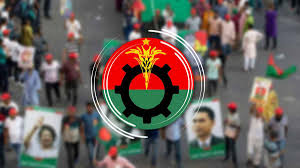
Politics in Dhaka has always remained the epicenter of Bangladesh’s national political landscape. Whether it is political tension, mass movements, or shifts in power, the strongest reflections are often seen in the capital city. For this reason, the leadership of the Dhaka Metropolitan unit—particularly Dhaka North BNP—has consistently been a subject of discussion within the party as well as among grassroots supporters. In recent times, one of the most discussed and criticized figures in BNP politics has been Aminul Islam, the convener of Dhaka North BNP and former State Minister for Sports.
In the history of Bangladeshi football, Aminul Islam is undoubtedly a celebrated figure. As one of the country’s finest goalkeepers, he represented Bangladesh with distinction for many years. Building upon the popularity and recognition he earned during his sporting career, he later emerged as a familiar face in politics. His appointment as State Minister for Sports under the technocrat quota further elevated his profile at the national level. However, questions regarding his effectiveness as a political organizer—particularly in managing a complex and strategically important unit like Dhaka—have persisted within party circles for quite some time.
A recent incident surrounding the visit of the Prime Minister, the Home Minister, and the Law Minister to the residence of child victim Ramisa has once again brought this debate into the spotlight. Alongside Dhaka North administrator Shafiqul Islam Khan Milton, Aminul Islam was also present as a BNP representative. However, political controversy erupted after slogans such as “fake, fake” were reportedly directed at the Home Minister following the event. The incident raised serious questions: how could such a situation occur in the presence of the country’s top political leadership and senior state officials?
Critics argue that this was not merely an isolated slogan incident; rather, it exposed organizational weaknesses and a lack of field-level control. According to them, if outsiders or so-called “bot groups” were able to enter and chant slogans during such a highly sensitive state event, it reflected a failure in security coordination and political management by the responsible organizational unit. Party activists, especially in a politically sensitive region like Dhaka, expect stronger leadership, stricter control, and more effective organizational discipline from those in charge.
Supporters of Aminul Islam, however, see the matter differently. They argue that in the current political climate, planned provocations and attempts to create confusion by opponents are not uncommon. In their view, it would be unfair to judge an entire organizational leadership solely on the basis of one unexpected incident. They also claim that despite political pressure, legal challenges, and organizational limitations, Aminul Islam has played a role in keeping BNP’s activities functional and active in Dhaka.
Nevertheless, the reality remains that Dhaka politics cannot be managed solely through personal popularity or symbolic gestures of politeness. It requires the ability to make quick decisions, maintain field-level control, demonstrate organizational strength, and handle massive crowds under pressure. Many observers believe that while gestures such as offering one’s chair to the president of the Tennis Federation may project humility and goodwill, such symbolic acts alone are insufficient to establish effective political leadership in the harsh realities of Dhaka’s political arena.
Within the BNP, discussions have reportedly begun regarding whether ministers and state ministers should continue holding influential party positions. In that context, many believe changes could also come to the position of convener of Dhaka North BNP. A section of party leaders and activists argue that the capital requires a leader who is organizationally skilled, widely accepted at the grassroots level, and capable of mobilizing massive public support at a moment’s notice.
According to political analysts, BNP’s greatest challenge now is organizational restructuring and maintaining balance within its leadership. Relying solely on personal image or public recognition is unlikely to ensure political success in Dhaka. What the party needs are leaders who can simultaneously maintain discipline among party workers, understand administrative realities, and respond effectively during moments of political crisis.
The recent discussions surrounding Dhaka North BNP, therefore, are not merely about criticism of a single leader. Rather, they reflect broader questions regarding BNP’s future organizational strategy and leadership selection process. If the party hopes to strengthen its position in the capital, there appears to be no alternative to building dynamic, active, and field-oriented leadership. Which direction BNP ultimately chooses—and what decisions it makes regarding leadership—will be crucial in shaping the party’s political future in Dhaka.