

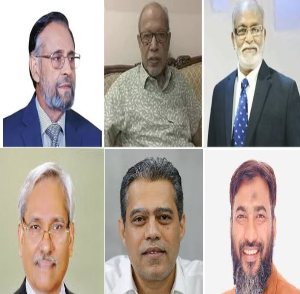
Party defections, internal divisions, and leadership conflicts have long been a part of Bangladesh’s political culture. In particular, the political future of leaders who leave major parties often becomes a subject of public debate. In recent times, renewed discussions have emerged regarding the political standing and popularity of several former BNP leaders who either left the party or were expelled. A section of BNP supporters and political analysts believe that many of these leaders ultimately failed to establish themselves politically after distancing themselves from the party and gradually faded from public attention.
Former BNP leader Shahjahan Omar once publicly stated that “a political party cannot be run by remote control.” He had also expressed doubts about the future of BNP. However, according to BNP supporters, political realities have since changed significantly. They argue that BNP has once again become a major force in national politics and that Tarique Rahman is now serving as the country’s Prime Minister. On the other hand, they claim that Shahjahan Omar’s political influence has weakened considerably and that he is gradually disappearing from mainstream political relevance.
Similarly, former minister and Liberal Democratic Party (LDP) President Colonel Oli Ahmed had long criticized BNP and the Zia family. He also took a different stance regarding the declaration of Bangladesh’s independence. Yet, in the current political landscape, questions have emerged over his popularity and political influence. BNP supporters claim that he has failed to retain strong public support even in his own constituency and is slowly losing relevance in active politics.
Political observers also point to former President A. Q. M. Badruddoza Chowdhury as one of the most prominent leaders to leave BNP and form a separate political platform. After leaving the party, he established Bikalpa Dhara Bangladesh and attempted to position himself as an alternative political force outside the Zia family’s influence. However, over time, his political impact declined significantly. Many members of the younger generation are now largely unfamiliar with his political legacy, according to political discussions in the country.
In the same way, Taimur Alam Khandaker joined another political party after being expelled from BNP, but his political activities have since diminished considerably. BNP activists argue that sustaining political relevance outside the identity and organizational structure of a major party is often extremely difficult.
Recently, remarks made by former BNP leader Ishaq Sarkar have also sparked debate in political circles. Several viral posts on social media claimed that ignoring BNP’s long political history, grassroots strength, and role in political movements while making personal attacks could prove politically damaging. The posts further argued that many leaders achieved national recognition through BNP, but lost influence after distancing themselves from the party.
These discussions also brought up the name of former Prime Minister Sheikh Hasina. According to BNP supporters, repeated attempts to politically corner BNP over the years ultimately failed to weaken the party’s organizational strength. However, these views are largely being interpreted as partisan opinions expressed by BNP-affiliated activists and supporters.
Political analysts say that while personality-driven leadership remains important in Bangladeshi politics, long-term political survival depends more on organizational strength and grassroots support. Leaders who leave major political parties often struggle to maintain their popularity independently because a party’s ideology, network, and activist base play a vital role in sustaining political influence.
Analysts further believe that although internal divisions and defections may create temporary political discussions, public support ultimately determines which leaders and parties remain influential over time. Despite differing opinions about BNP’s current leadership and political position, the party continues to be regarded as one of the country’s major political forces.
Jubo Dal leader Gias Uddin Mamun said BNP is a party built upon a strong political ideology. He stated that both Ziaur Rahman and Khaleda Zia were highly popular among the people of Bangladesh. According to him, the departure of a few leaders would not weaken the party; rather, those who leave BNP are the ones who eventually fade away politically.
Various political comments circulating on social media suggest that while individuals may change, the ideology of “Bangladeshi nationalism” and BNP’s political identity will continue to survive in the future. Political observers say that only time will determine which leaders endure politically and which ones disappear from the national stage.