

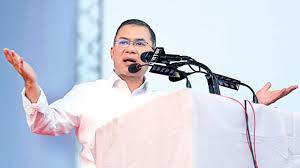
Fresh discussions have emerged in Bangladesh’s political arena regarding the position of the Bangladesh Nationalist Party (BNP), its leadership style, and its approach to political tolerance as the ruling party. Political analysts and observers are particularly focusing on the behavior of the party’s top leadership, its stance toward opposition voices, and its strategy for handling the country’s evolving political situation. In this context, a section of BNP supporters and political analysts have positively highlighted the leadership, patience, and political tolerance of Prime Minister Tarique Rahman.
The Bangladesh Nationalist Party (BNP) has long played a significant role in the country’s national politics as one of the largest political parties in Bangladesh. The party was founded by former President Ziaur Rahman in the post-independence period based on the ideology of Bangladeshi nationalism. According to political analysts, Ziaur Rahman gained immense popularity among ordinary people because of his personal integrity, patriotism, and firm approach to state leadership. His political philosophy is still considered one of the core foundations of BNP’s organizational strength.
Following the assassination of Ziaur Rahman, former Prime Minister Khaleda Zia assumed leadership of the party. Throughout her long political career, she played an important role in anti-authoritarian movements, the restoration of democracy, and strengthening the party’s organizational structure. BNP leaders and activists claim that her uncompromising stance on democracy and voting rights led to repeated political hardships. Supporters also view the massive public participation in her funeral prayers as a reflection of her popularity among the people.
Currently, Tarique Rahman is serving as the Prime Minister of Bangladesh. BNP leaders and activists claim that despite enduring 17 years of political crises, legal battles, political repression, attacks, and exile, he managed to preserve and strengthen the party’s leadership structure. According to them, even after assuming power, there has been no visible sign of political revenge in his conduct. Instead, they describe his leadership style as patient, polite, and politically tolerant.
A section of political observers believe that Bangladesh’s political culture has often favored strong and authoritative leadership. In the past, there were numerous allegations of lawsuits, arrests, and political harassment against opposition activists. However, BNP supporters argue that Tarique Rahman’s leadership style differs significantly from previous political trends. They claim he is attempting to maintain a tolerant attitude toward opposing political opinions and has refrained from taking retaliatory measures against critics and political opponents.
Within a short time of assuming office, the current government has faced political criticism, hostile commentary on social media, and multiple administrative challenges. Despite these pressures, BNP leaders claim that Tarique Rahman has handled the situation with patience and restraint. They argue that governing a politically divided and economically pressured country after a prolonged period of crisis is not an easy task. According to them, the government is trying to maintain public confidence despite economic difficulties, institutional weaknesses, and political polarization.
BNP leaders further claim that during previous governments, opposition activists often faced lawsuits and arrests even for minor criticism. Compared to that period, they argue that the current administration is demonstrating greater political tolerance and a more democratic attitude. In their view, political coexistence and tolerance are essential for maintaining a healthy democratic environment, and the present leadership is trying to establish that culture.
Political analysts say that in Bangladesh, long-term political success depends not only on organizational strength but also on the personal conduct and temperament of political leaders. Citizens generally prefer leaders who can handle crises with patience and choose dialogue and coexistence over revenge and confrontation. For this reason, discussions surrounding Tarique Rahman’s political behavior and leadership style are increasing, while his popularity among sections of the public is also reportedly growing.
Analysts also believe that strengthening democratic culture and political tolerance requires responsible behavior from both the government and opposition parties. Even amid political disagreements, mutual respect and constructive dialogue can contribute to a more stable political environment.
Overall, in the current political reality of Bangladesh, the leadership of BNP—particularly the patience, tolerance, and political strategy demonstrated by Tarique Rahman—has become a major topic of discussion in political circles. Political observers believe that only time will determine how lasting an impact this leadership will have on the future of Bangladesh’s politics.