

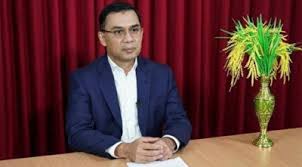
Prime Minister Tarique Rahman has taken an active role in establishing discipline, accountability, and a renewed work culture in the administration since assuming office. His punctuality, surprise inspections, and direct messaging have already sparked discussion among government officials and political observers. On his very first day in office, the Prime Minister arrived at his workplace before the scheduled time of 9:00 AM, catching senior officials off guard. For many who had long been accustomed to arriving late, this served as a clear warning. Since then, several officials have reportedly begun arriving earlier than scheduled.
This emphasis on punctuality is not merely symbolic; it conveys a deeper message about responsibility and professionalism. The Prime Minister has made it clear that he will not tolerate negligence or complacency in official duties.
Continuing this approach, he has recently initiated unannounced visits to various ministries and government offices. Through these surprise inspections, he is directly observing officials’ performance and providing necessary instructions. According to insiders, these actions have already contributed to an increased sense of responsibility and improved work pace among officials.
The Prime Minister has also clearly stated that he is not interested in a “cat-and-mouse game” with government কর্মকর্তারা. In other words, he does not want officials to hide inefficiencies or promise improvement only after being caught. Instead, he expects every office to function responsibly and efficiently on its own.
In conversations with individuals involved in different sectors, a consistent message has emerged: the Prime Minister places trust in his কর্মকর্তারা and expects tangible results in return. He is often quoted as saying, “I trust you—now prove it through your work.” To those closer to him, he has reportedly added, “I have placed this trust carefully; honor it.” These remarks are seen as both motivational and morally binding for those entrusted with responsibilities.
The Prime Minister is not only issuing directives but also leading by example. A recent incident at the National Parliament building illustrates this clearly. After a meeting with ruling party Members of Parliament, he was leaving the premises when several officials were seen waiting at the gate—some offering greetings, others recording videos. Such gestures are often perceived as a way to please higher কর্তৃপক্ষ.
However, the Prime Minister expressed clear dissatisfaction. He reportedly remarked, “Do they have no work to do?” questioning why officials had abandoned their duties to stand there. This reaction sent a strong message within the প্রশাসন: unnecessary formalities and flattery are unacceptable; fulfilling দায়িত্ব is what truly matters.
Observers believe this stance signals a significant shift in administrative culture. It reflects a move away from long-standing practices of sycophancy toward a more merit-based and performance-driven system.
A similar দৃশ্য was observed after the Eid break, when the National Parliament session resumed. On the first day, the Prime Minister arrived five minutes before the scheduled time. However, most Members of Parliament were not yet present. Many later arrived late and appeared visibly embarrassed upon seeing the Prime Minister already seated.
He was seen sitting fully prepared, with all necessary documents neatly organized. His readiness and punctuality were widely interpreted as a message to lawmakers as well.
Relevant sources believe that such আচরণ may inspire positive changes among ministers and Members of Parliament. It is expected that in subsequent sessions, many will arrive on time—or even early—and come fully prepared.
Political analysts suggest that Prime Minister Tarique Rahman aims to move away from traditional political practices and introduce structural reforms. His vision appears to center on building a meritocracy-based administrative and political system, where competence and performance take precedence over personal loyalty.
They also caution that such transformation will not happen overnight. Changing entrenched habits and দীর্ঘদিনের সংস্কৃতি requires time. However, if the Prime Minister continues these efforts consistently, there is strong potential for improved discipline, efficiency, and accountability within the administration.
Overall, through punctuality, direct oversight, and a firm stance against unnecessary formalities, the Prime Minister is striving to establish a new work culture in governance—one that is expected to yield visible results in the near future. Ultimately, these changes are anticipated to benefit both the country and its people.