

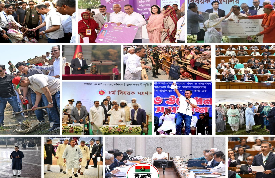
A new chapter has begun in Bangladesh’s recent political landscape under the leadership of Tarique Rahman. Combining long political experience, patience, and strategic thinking, he has, within just one month of assuming responsibility for governing the state, set a remarkable example of dynamic leadership, according to political analysts, intellectuals, and the general public. His tireless efforts are seen not only as a demonstration of administrative efficiency but also as a clear reflection of accountability to the people.
Tarique Rahman is also maintaining a cooperative and non-retaliatory political stance toward opposition parties, a move widely praised by political observers as a positive and constructive example in governance.
After being elected through a direct vote of the জনগণ and forming the government under the banner of the Bangladesh Nationalist Party (BNP), he has been devoting nearly 16 hours a day to state affairs with a calm and well-planned approach. Alongside governing the country, he remains actively engaged in strengthening his party organizationally. His frequent presence at the party office in Nayapaltan and direct communication with grassroots leaders and activists have revitalized the party structure.
Public Expectations and Reflections of Leadership
Within the first month of governance, Tarique Rahman has undertaken a series of initiatives that are already creating positive impacts across multiple sectors—social protection, economy, education, health, agriculture, administration, and security. His efforts have generated optimism among the জনগণ and a sense of satisfaction among political analysts.
Below are some of the key initiatives undertaken within this short period.
Social Protection and Humanitarian Support
From the outset, humanitarian considerations have been prioritized. Under the “Family Card” program, 37,567 families are receiving a monthly allowance of BDT 2,500. The implementation of this initiative within just 21 days reflects the government’s efficiency and commitment.
To promote religious harmony and inclusivity, allowances have been introduced for religious leaders across different faiths, including imams, muezzins, priests, Buddhist monks, and church pastors. This initiative is expected to strengthen communal harmony.
Additionally, relief and gift distribution during Eid and the initiative to institutionalize zakat are expected to contribute to economic balance and social welfare.
Agriculture and Rural Economy
Recognizing agriculture as the backbone of the economy, the government has taken significant steps to strengthen this sector. The introduction of farmer cards for around 27,000 farmers and the waiver of loans for approximately 1.2 million small and marginal farmers will encourage renewed agricultural productivity.
The nationwide canal excavation program, covering 20,000 kilometers and already launched in 54 districts, is expected to improve irrigation, reduce waterlogging, and create employment opportunities in rural areas.
Administrative Reform and Good Governance
Efforts to ensure administrative efficiency include the Prime Minister himself working on Saturdays and enforcing punctuality among officials. These measures aim to instill discipline within the প্রশাসন.
The reduction of VVIP protocols has eased public inconvenience, while the cancellation of special privileges for Members of Parliament is expected to reduce state expenditure and restore public trust.
Economy and Market Stability
Effective market monitoring during Ramadan and Eid has helped stabilize prices. To address energy challenges, spot LNG procurement has ensured uninterrupted electricity supply.
Policy reforms to simplify foreign investment procedures have sent a positive signal to investors. At the same time, ensuring timely payment of wages and bonuses for workers and reviving struggling industries are injecting new momentum into the economy.
Education and Human Resource Development
Key reforms in education include the abolition of re-admission fees and changes to the admission system, ensuring greater transparency and fairness.
Financial support for higher education abroad, recruitment of new teachers, and sports development programs are expected to contribute to building a skilled and capable young generation.
Health and Public Welfare
The introduction of e-health cards aims to make healthcare services more accessible. The planned recruitment of 100,000 healthcare workers, with a strong emphasis on female participation, is expected to transform the health sector.
Weekly cleanliness drives to combat dengue are playing a vital role in protecting public health.
Law, Order, and Security
Strict action against extortion and prompt law enforcement responses have been prioritized to maintain order. Initiatives such as the introduction of “pink buses” for women and measures to prevent cyberbullying are timely steps toward ensuring safety and security.
State Discipline and Values
Measures to reduce government expenditure and conserve electricity include limiting official iftar programs and promoting energy-saving practices in offices.
The eviction of illegal establishments in Cox’s Bazar and the declaration of “National Martyred Army Day” are significant steps toward strengthening state discipline and historical awareness.
Infrastructure and Technological Advancement
Efforts to expedite the launch of the third terminal at Hazrat Shahjalal International Airport are expected to enhance the country’s connectivity.
The introduction of free internet services at airports and on trains signals progress toward building a more digitally advanced Bangladesh.
A New Horizon of Possibilities
The initiatives undertaken within the first month of governance reflect the strong leadership, dedication, and accountability of Tarique Rahman. His approach goes beyond administrative competence, representing a broader vision of building a coordinated and humane state.
According to political analysts, if this momentum continues, it could make a significant contribution to the country’s overall development and stability. জনগণ are becoming increasingly hopeful, and the younger generation is beginning to envision a brighter future for the nation.
His slogan—
“Together we will work, build the nation, Bangladesh first”—
is no longer just a political statement, but an emerging national commitment echoed by people across the country.