

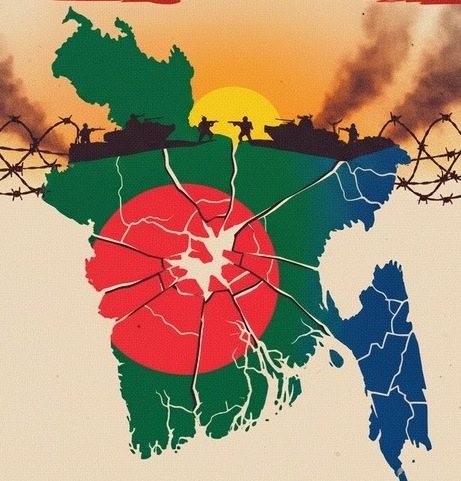
Tensions between Bangladesh and India have intensified in the wake of a series of security, diplomatic, and political incidents, raising concerns over a potentially sensitive bilateral situation. However, neither country has officially escalated the matter to a military level.The situation grew more complex following allegations that individuals involved in the attack on activist Sharif Abdul Hadi fled to Assam, India. According to Bangladeshi sources, the suspects crossed the border shortly after the incident. In response, Dhaka has sought New Delhi’s cooperation to ensure the suspects are held accountable. Indian authorities have not yet officially confirmed these claims.
Political sources indicate that Bangladesh’s former Prime Minister, Sheikh Hasina, who is currently a fugitive, is reportedly staying in India’s capital, New Delhi, though the matter has not been officially acknowledged due to its diplomatic sensitivity.
Military Movements and Border Security
Unverified reports suggest that an Indian Army battalion, previously deployed during Bangladesh’s 1971 Liberation War, has recently been redeployed to Tripura. While the Indian Ministry of Defence has not issued an official statement, the deployment has drawn attention in Dhaka given the heightened sensitivity along the border.
The security situation was further complicated when an Indian Border Security Force (BSF) personnel, Bipin Kumar (35), was critically injured by gunfire while on duty near the Maheshpur border area. Hospital officials reported that the jawan sustained two gunshot wounds. Although his condition is critical, it is currently stable. The source of the gunfire remains under investigation.
Diplomatic Developments
Diplomatic tensions heightened following violent protests outside the Bangladesh High Commission in New Delhi. Hindu nationalist organizations, including the Vishva Hindu Parishad (VHP) and Bajrang Dal, organized demonstrations alleging attacks on minority communities in Bangladesh. Protesters reportedly breached security barricades and attempted to enter the High Commission premises.
In response, Bangladesh temporarily suspended consular and visa services in India, and the Ministry of Foreign Affairs summoned Indian High Commissioner Pranay Verma to lodge a formal protest over what it described as “planned violence and intimidation” targeting its diplomatic missions. A Bangladesh visa center in Siliguri was also reportedly vandalized, prompting further concern in Dhaka.
India’s Ministry of External Affairs, however, downplayed the incidents, stating that the earlier protests involved small groups and did not constitute a serious security threat. Bangladesh has rejected this assessment, emphasizing that the events reflect a failure to uphold diplomatic protection obligations under international conventions.
Communal Tensions and Domestic Implications
The developments come against the backdrop of heightened communal tensions, including the killing of a Hindu garment worker in Bhaluka, Mymensingh. While initial reports suggested religious motivation, the Bangladesh police later stated that there was no evidence indicating religious intent. Nevertheless, extremist groups have reportedly used the incident to inflame tensions.
Bangladesh’s Chief Election Commissioner, A. M. M. Nasir Uddin, has urged law enforcement agencies to prioritize communal harmony and remain vigilant against potential provocations ahead of the upcoming national elections. He emphasized that maintaining the rule of law is critical both for domestic stability and Bangladesh’s international credibility.
Current State of Bilateral Relations
Although there is no formal military standoff, a combination of border incidents, militant allegations, diplomatic security breaches, and communal narratives has created a sensitive situation. Analysts note that any miscalculation could further strain relations between the two neighboring countries, which share one of the world’s longest international borders.
Both governments face mounting pressure to de-escalate tensions through diplomatic engagement, transparent investigations, and coordinated security measures to prevent the situation from escalating into a wider regional crisis.