

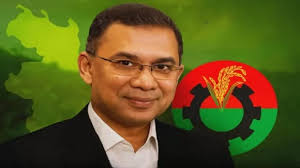
The BNP is prepared to once again lead a national fight against corruption if entrusted with responsibility by the people, said the party’s Acting Chairman Tarique Rahman. He made the remarks in a post published on his verified Facebook page on Tuesday (9 December) at around 10:30am.
In his statement, Tarique Rahman said:
“One does not need to look far to understand how corruption is crippling Bangladesh. Speak to a graduate struggling to find a merit-based job; look at a farmer who waits months for a basic government service; listen to a family suffering in a hospital; or watch entrepreneurs forced to pay bribes simply to keep their businesses alive.”
He added:
“Why do food prices rise? Why is quality education not accessible? Why do roads feel unsafe? The answer is the same—corruption. It suffocates the daily lives of millions.”
“BNP has a proven record in reducing corruption”
Tarique Rahman wrote that the fight against corruption in Bangladesh is not new, but has been a long-standing national conversation. He said International Anti-Corruption Day serves as a reminder of this struggle, as well as the period when the country made “genuine progress”—which he attributed to previous BNP-led governments.
According to him:
-
President Ziaur Rahman restored administrative discipline, improved public services, and introduced economic reforms that reduced irregularities and misuse of power.
-
During the tenure of Prime Minister Khaleda Zia, state institutions underwent modernization. This included new procurement rules, stricter financial laws, stronger audit systems, and clearer oversight mechanisms.
-
A major step, he said, was the establishment of the Anti-Corruption Commission (ACC) in 2004 as an independent body, designed to operate without interference from the government. International agencies including the World Bank and ADB praised the initiative as a significant improvement in accountability.
He also noted that surveys conducted by Transparency International Bangladesh (TIB) reflected improvements in corruption levels between 2002 and 2005.
BNP Highlights Its Previous Reforms
Tarique Rahman wrote that the BNP can take pride in several major reforms introduced during its time in office:
-
Stronger financial governance: Improved budgeting, auditing, banking regulations, and anti–money laundering laws.
-
Transparent procurement: Competitive bidding and rule-based public purchasing, which helped lay the foundation for future transparency measures.
-
Market liberalization: Reforms in telecom, media, and air transport increased competition and reduced corruption while expanding public access to services.
-
Decentralization of power: Less bureaucratic complexity and greater accountability to citizens.
According to him, BNP is the only political party with a consistent record of reducing corruption.
Future Anti-Corruption Agenda Outlined
Tarique Rahman outlined several steps the BNP intends to take to strengthen the anti-corruption campaign if it returns to power:
-
Institutional independence: Freeing the judiciary, ACC, Election Commission, and public services from political pressure.
-
Full transparency: Open tender processes, mandatory asset declarations, real-time audits, and a strengthened Right to Information framework.
-
Judicial and law-enforcement reform: Professional policing, faster case disposal, and enhanced use of digital evidence.
-
E-governance expansion: Moving licensing, land services, and payments online to reduce bribery opportunities—potentially cutting corruption by 30–60% based on global benchmarks.
-
Whistleblower protection: Ensuring security for individuals who expose wrongdoing.
-
Ethics education: Incorporating integrity training into school and college curricula.
-
Stronger financial oversight: Digital expenditure tracking, independent audits, and tighter parliamentary scrutiny.
He acknowledged that after years of mismanagement, the fight against corruption will be difficult, but Bangladesh’s history proves that change is possible with “honest leadership, discipline, and public support.”
Tarique Rahman concluded:
“If the people entrust us with responsibility, the BNP is ready to lead this fight again.”
In his post, he also shared a chart based on Transparency International’s corruption indicators covering the period 2001–2006, during the BNP-led four-party coalition government.