

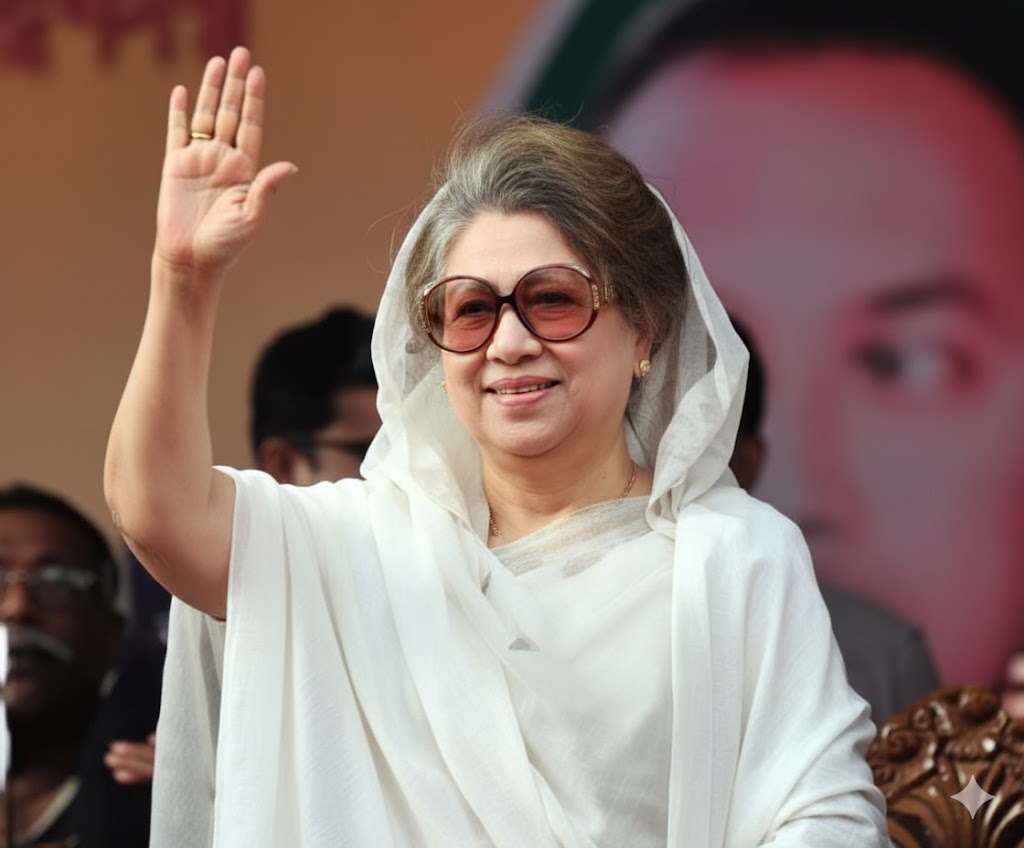
Begum Khaleda Zia, three-time former Prime Minister of Bangladesh and Chairperson of the Bangladesh Nationalist Party (BNP), is widely regarded as one of the most significant and historic figures in the country’s political landscape. She has played a long and active role in establishing democratic rights and political freedoms. Many view her as a symbol of national unity and a leading figure in Bangladesh’s pro-democracy movements.
National Concern as She Remains Hospitalised
The 81-year-old leader is currently undergoing treatment at Evercare Hospital in Dhaka’s Bashundhara area with lung infections and several other complications. A medical board comprising local and foreign specialists is supervising her treatment.
Her illness has created an unusual sense of unity across the political arena. Leaders from the government, political parties of all ideologies, cultural organisations, and citizens from all walks of life are expressing prayers and well-wishes for her recovery. Special prayers are being held in mosques, temples, churches, and pagodas across the country.
Family Presence: Zubaida Rahman and Sharmila Rahman by Her Side
Party leaders, supporters, and well-wishers have gathered outside Evercare Hospital, anxiously waiting for updates. Inside, Khaleda Zia is being closely accompanied by her two daughters-in-law—Dr. Zubaida Rahman and Sharmila Rahman.
International Reactions
Her illness has drawn attention beyond Bangladesh’s borders as well. According to relevant sources, Indian Prime Minister Narendra Modi expressed concern on social media, highlighting her long-standing contributions to democracy and assuring all necessary support for her treatment.
Meanwhile, specialist medical teams from China and the United Kingdom have joined the local doctors in Dhaka. An air ambulance has also been kept ready in case she needs to be shifted abroad for advanced medical care.
Political Journey
Khaleda Zia’s political career began after the assassination of her husband, President Ziaur Rahman, in 1981. She joined the BNP as a primary member in 1982 and soon rose to a key leadership position.
In 1984, she was elected Chairperson of the BNP and has since been re-elected to the post through several national party councils.
She played a crucial leadership role during the anti-Ershad movement. Under her leadership, the pro-democracy agitation intensified and eventually led to the fall of the Ershad regime in 1990.
Following the 1991 parliamentary elections, in which the BNP secured a majority, Khaleda Zia became the country’s first woman Prime Minister. She was again elected Prime Minister in 1996 and 2001.
Political Responsibilities and Achievements
Khaleda Zia served twice as Chairperson of SAARC. One of her most remarkable political records is winning all 23 parliamentary seats she contested in different national elections—an achievement widely seen as a testament to her political popularity.
Arrests, Legal Struggles, and Challenges
Throughout her political career, Khaleda Zia has faced multiple arrests and legal challenges. During the 2007 caretaker government period and afterward, numerous cases were filed against her. While she was acquitted of several charges, she was convicted in one case and had to serve prison time.
Despite medical advice to seek treatment abroad, political complexities prevented her from doing so. Nevertheless, she repeatedly asserted:
“I have no home outside my country.”
Views from Analysts
Political analyst Dr. Mahbub Ullah describes Khaleda Zia as one of the central figures in Bangladesh’s struggle for democracy.
“Begum Khaleda Zia risked her life for the people of this country,” he said. “Her presence continues to inspire the pursuit of democracy in Bangladesh.”