

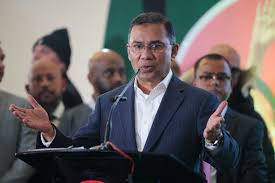
The Bangladesh Nationalist Party (BNP) has expressed its intention to assume state power through the upcoming national election with the objective of building a modern, democratic, and discrimination-free Bangladesh. Under the leadership of party Chairman Tarique Rahman, the BNP has pledged to restore the rule of law, ensure judicial independence, and reestablish citizens’ fundamental rights.
Central to this vision is the party’s declared 31-point reform agenda, which BNP leaders describe as a comprehensive framework for future state governance. According to the party, the agenda reflects the political ideals of the late President Ziaur Rahman and former Prime Minister Begum Khaleda Zia, and represents Tarique Rahman’s effort to translate those ideals into contemporary policy priorities.
Political Leadership from Abroad
Despite residing in the United Kingdom for more than a decade, Tarique Rahman has remained a central figure in Bangladesh’s political discourse. Party officials state that he continued to play an active and influential role in shaping BNP’s strategies, political movements, and policy decisions during his time abroad.
Political analysts view his return to Bangladesh in late 2025 and his formal assumption of the BNP chairmanship in early 2026 as more than a routine leadership transition. Instead, they describe it as the beginning of a new phase for the party, marked by renewed organizational cohesion and momentum among grassroots supporters.
Family Background and Political Legacy
Tarique Rahman was born on November 20, 1965. He is the eldest son of President Ziaur Rahman, a key figure in Bangladesh’s independence and a former head of state, and Begum Khaleda Zia, who served three terms as Prime Minister.
While his entry into politics is often viewed through the lens of family legacy, BNP leaders emphasize that his political standing has been shaped by organizational skills, sustained political engagement, and years of grassroots involvement rather than lineage alone.
Education and Early Life
Tarique Rahman began his education at BAF Shaheen College in Dhaka. After completing secondary and higher secondary education, he enrolled in the Department of International Relations at the University of Dhaka. He later withdrew from formal studies before completing his degree and became involved in business ventures in the textile and inland shipping sectors.
Observers note that his continued interest in international politics, development models, and systems of governance influenced his later political thinking, contributing to a more strategic and modern outlook.
Entry into Active Politics
Tarique Rahman’s political activities became visible in the early 1990s. During the 1991 national election, he participated in nationwide campaigning alongside Begum Khaleda Zia, marking his direct engagement with grassroots politics.
His role became more structured following the 2001 general election, after which he gained recognition within the party as an effective organizer. In 2002, he was appointed Senior Joint Secretary General of the BNP. In this role, he focused on strengthening the party’s organizational structure, expanding grassroots outreach, and engaging directly with district- and upazila-level leaders.
Legal Challenges and Exile
Following the political changes of 2007, Tarique Rahman was arrested and faced multiple legal cases related to corruption and abuse of power. The BNP has consistently described these cases as politically motivated.
During his detention, allegations of physical and psychological abuse drew attention from both domestic and international human rights groups. After his release in 2008, he traveled to the United Kingdom for medical treatment and remained there for an extended period. While often described as being in exile, party leaders maintain that he continued to direct and influence BNP politics remotely.
Role in the 2024 Political Movement
Although not physically present in Bangladesh during the 2024 democratic movement, Tarique Rahman is regarded by party officials as one of its key strategic leaders. Through virtual meetings, video messages, and organizational directives, he contributed to shaping the movement’s objectives and methods.
Analysts note that his emphasis on peaceful protest, public participation, and international engagement reinforced his position as a central decision-maker during a period of political uncertainty.
Return to Bangladesh and Leadership Assumption
Following changes in the political landscape and judicial decisions resolving cases against him, Tarique Rahman returned to Bangladesh on December 25, 2025, accompanied by his wife, Dr. Zobaida Rahman, and their daughter, Zaima Rahman. His return was met with large gatherings of party supporters.
On January 9, 2026, he formally assumed the position of BNP Chairman. Party leaders view this development as an opportunity for organizational renewal and strategic restructuring.
Electoral Engagement
After taking office, Tarique Rahman became actively involved in electoral politics. He announced his intention to contest the upcoming parliamentary election from constituencies in Dhaka-17 and Bogura. His campaign speeches have focused on economic reform, employment generation, democratic governance, and institutional accountability.
Observers note a shift toward more measured language and a greater emphasis on policy substance in his recent public engagements.
Personal Life
Tarique Rahman married Dr. Zobaida Rahman in 1994. She is a medical professional and the daughter of former Navy Chief Rear Admiral Mahbub Ali Khan. The couple has one daughter, Zaima Rahman. Party associates often describe family support as a significant source of strength throughout his prolonged political struggle and years abroad.
Tarique Rahman remains a polarizing figure in Bangladesh’s political landscape—viewed by supporters as a symbol of leadership and resilience, and by critics as a controversial personality. Nevertheless, his long political journey, years in exile, and recent return have reshaped his public role.
The success of BNP’s organizational reforms, the implementation of its 31-point agenda, and its performance in the electoral arena will largely determine the future trajectory of his leadership. Political observers broadly agree, however, that his return has initiated a significant new chapter in Bangladesh’s contemporary politics.