

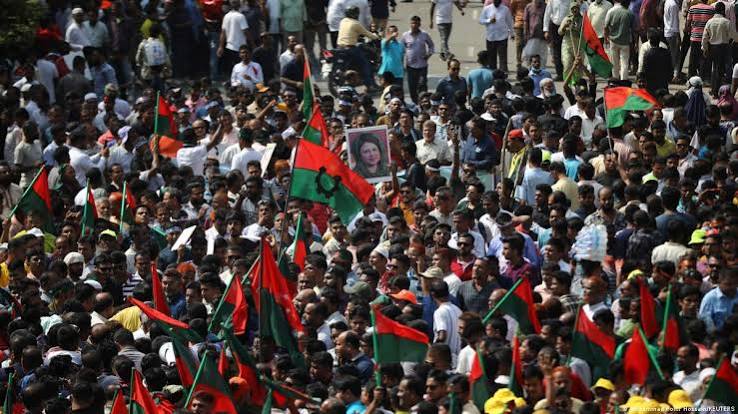
In the current political context of Bangladesh, a stagnation in the organizational activities of the Bangladesh Nationalist Party (BNP)—both in the capital city of Dhaka and across the country—along with a sense of unease at the grassroots level, is clearly noticeable. Frustration and despair are brewing within the organization as veteran and dedicated leaders, who have endured long struggles and movements, still lack proper evaluation or opportunities. Concurrently, due to various national crises that have made public life unbearable and a series of policy decisions by the government, the BNP faces a multi-faceted political challenge.
1. Political Reality Amid National Crisis and Public Discontent
The daily life of ordinary citizens has become extremely critical in the present time. Several visible factors lie behind this:
Economic and Social Crisis: The hike in fuel prices, power shortages, unbridled increases in the prices of essential commodities, and announcements regarding salary hikes for government employees have shattered the purchasing power of common people.
Health and Law & Order Situation: Diseases like dengue and measles have spread epidemically, causing numerous fatalities every day. Additionally, the deterioration of the law and order situation and the prevalence of extortion in various parts of the country have created a sense of insecurity among the public.
Public Anger and Political Calculus: Although public anger has been generated by these multi-faceted crises, the BNP is often being placed in the dock by the public as an opposition party. Efforts are underway by opponents and other political groups to question the BNP's credibility among the people.
Stagnation of Local Leadership: Political analysts attribute the sluggishness of party activities across the country to the non-cooperation of local leaders, the inactivity of local public representatives, and grassroots complaints regarding the inability to meet ministers and their tendency to neglect party workers.
According to political analysts, if this negative public sentiment persists, there is a risk of the party facing a debacle in the upcoming local elections. Therefore, immediate and effective steps are imperative to overcome this crisis.
2. Division of Responsibilities and Evaluation in Dhaka Metropolitan and National Leadership
In accordance with the directives of the party high command and considering the current organizational reality, distributing specific area-based responsibilities among top and prominent leaders in Dhaka and evaluating them to revitalize grassroots politics is the need of the hour. In particular, those who have played a tested role in the party's bad times and good times in the past but have not received desired positions or opportunities need to be entrusted with more robust responsibilities.
Area-based and Strategic Responsibilities of Key National Leaders:
Ruhul Kabir Rizvi (Senior Joint Secretary General / Acting Secretary General): Alongside central office management and central coordination of movements, he needs to be placed in the primary role of overall policymaking and grassroots supervision to restore organizational discipline nationwide.
Mirza Abbas and Gayeshwar Chandra Roy: These two veteran and influential leaders possess long-standing experience in Dhaka's politics. Mirza Abbas can be assigned the core coordinator role for the Dhaka South City Corporation area, while Gayeshwar Chandra Roy can be entrusted with energizing party activities in the surrounding districts of Dhaka and the northern fringe of Dhaka.
Amir Khasru Mahmud Chowdhury and Nazrul Islam Khan: Alongside economic and labor-related policy formulation, they should be assigned special responsibilities in key commercial and labor-concentrated areas within the Dhaka metropolitan region.
Dr. Abdul Moyeen Khan and Salahuddin Ahmed: Besides formulating intellectual and strategic plans, they should be tasked with ensuring legal and organizational security for party activists in the districts surrounding Dhaka.
Tested and Prominent Grassroots Leadership in Dhaka:
Amanullah Aman: A long-time tested leader in Dhaka's politics and included in the standing committee in 2026, he should be given the primary responsibility for the overall political coordination of the Dhaka division.
Habib-un-Nabi Khan Sohel: Joint Secretary General and a familiar face in Dhaka's politics. He should be given the responsibility to organize the youth and younger generation in every ward and police station of Dhaka metropolitan.
Aminul হক (Aminul Haque), Rafiqul Alam Mojnu, Tanvir Ahmed Robin, and Ishraque Hossain: To invigorate the core organizational structures of Dhaka North and South, direct grassroots responsibilities must be delegated to these four young and militant leaders. Their past sacrifices and courage must be evaluated to rebuild ward committees under their leadership.
3. Evaluation of Grassroots and Pathways to Crisis Resolution
A large section of the party has long felt that the tested leaders who fell victim to imprisonment, oppression, and torture during adverse times often did not receive proper evaluation. To break out of this situation, specific steps can be undertaken:
Evaluation of Dedicated Leaders: Dedicated leaders across various levels in Dhaka—including Saiful Alam Nirob, Mostafizur Rahman Segun, S M Jahangir, Ferdousi Ahmed Misty, A B M A Razzak, Aktar Hossain, Ataur Rahman, Gazi Rezaunul Hossain Riaz, Tuhirul Islam Tuhin, M Kofil Uddin, Afaj Uddin, Haji Md. Yusuf, Shah Alam, Mahbubul Alam Montu, and Mostofa Zaman—must be integrated into direct organizational responsibilities and policy-making processes.
Integrated Initiatives: Similarly, in coordination with Rafiqul Alam Mojnu and Tanvir Ahmed Robin, devoted workers such as Harunur Rashid Harun, A.N.M. Saiful Islam, Liton Mahmud, Abdus Sattar, Mosharraf Hossain Khokon, Saidur Rahman Mintu, Mokbul Hossain Sardar, Farukul Islam, Arifa Sultana Ruma, and Anwar Parভেজ Badal must receive proper recognition and evaluation from the ward level up to the center.
Increasing Public Engagement: Rather than engaging merely in the politics of power, the party must reach out to every doorstep through public welfare activities, peaceful movements protesting the skyrocketing prices of essential commodities for common people, and dengue prevention awareness programs.
In the present political juncture, to survive and regain public trust, the BNP cannot afford complacency. By shedding divisions, properly evaluating tested and dedicated leaders, and distributing specific area-based responsibilities, the party must be restructured in a new light. Only by aligning themselves with the fundamental problems of the people and creating a people-oriented political stream will the BNP be able to capitalize on the multi-faceted failures of the government and reclaim its lost glory and popularity.