

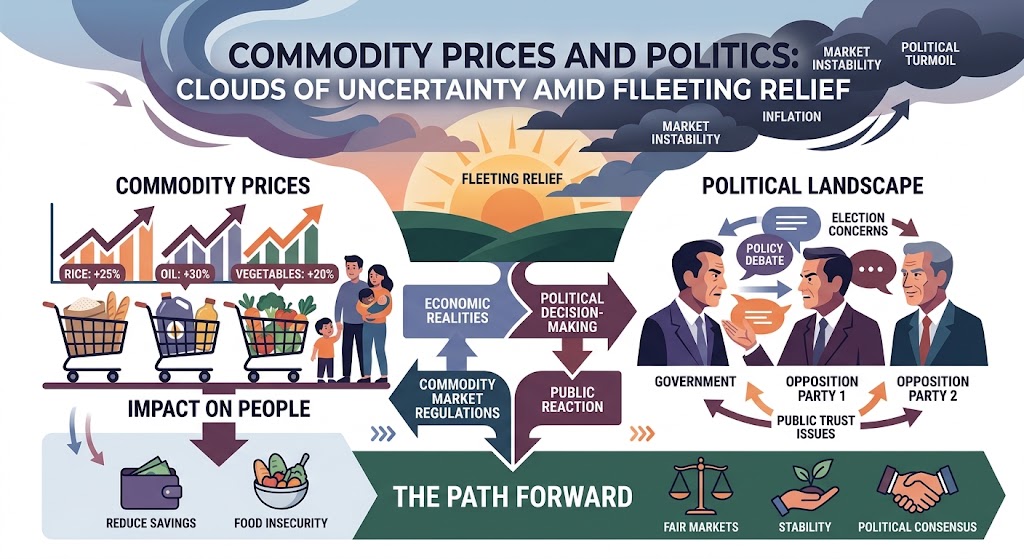
Even seven months after the formation of the government, desired relief remains elusive in the daily lives of ordinary people. While BNP's field-level leaders and activists have felt temporary respite due to the lifting of fears regarding cases and arrests, the crisis for grassroots and marginalized communities remains as severe as ever. Dilapidated infrastructure, unchecked commodity prices, and a lack of tangible improvement in the law and order situation have bred widespread disappointment and frustration. On top of this, political analysts believe that the deepening three-way turmoil in the political arena is pushing the nation's stability toward an uncertain future.
Rural Infrastructure and Severe Public Suffering
Despite the government's attempts to accelerate administrative momentum, the benefits have yet to reach the village level. The condition of roads across most towns and villages remains extremely deplorable. Even after the monsoon season, sluggish renovation efforts continue to cause immense distress to the public. Meanwhile, although there have been minor temporary improvements in gas and electricity supplies, they remain grossly inadequate compared to demand, disrupting industrial production and stalling domestic and agricultural activities.
Soaring Market Prices and Law-and-Order Concerns
Public outrage over the price of essential commodities has reached a boiling point. From vegetables to fish and meat, prices have escalated beyond the purchasing power of common citizens, leaving low- and fixed-income families in severe distress. Government market monitoring has failed to yield effective results at the grassroots level.
Compounding this distress is a growing public distrust regarding law and order. Although security forces have shown visible activity in a few areas, incidents of theft, robbery, mugging, and political violence continue unchecked across most regions. Without a guaranteed sense of security, fear and anxiety persist among the populace.
Internal Controversy and Image of BNP
While BNP holds a strong position in governance and field politics, allegations have surfaced regarding untoward incidents in various places involving individuals using the party's identity. Unwanted acts such as extortion, land grabbing, and local dominance struggles are putting the party's positive image at risk. Although top leadership maintains that strict disciplinary action will be taken, the impact on the ground has not been fully controlled.
Three-Way Crisis and Political Uncertainty
The country's political landscape now stands at a complex three-way junction. On one side, BNP faces internal pressure to maintain organizational discipline while evaluating government performance. On the other side, active political programs and strategies by other political parties, including Jamaat-e-Islami and the Bangladesh Nationalist Movement (BNM/NCP), are keeping field politics volatile.
Adding to this tension are widespread discussions regarding the former Prime Minister and Awami League chief's potential return to the country in December. This development has created palpable suspense across political circles. Combined with the positioning and strategies of opposition camps, the political field grows hotter by the day.
Return of Past Fears?
This overall climate has raised deep apprehensions among the general public. Observing the combination of soaring commodity prices, deteriorating law and order, and a heated political arena, many are questioning whether the country is sliding back into an era of political instability and conflict.
According to analysts, if the government wishes to win the hearts of ordinary citizens at this seven-month mark, it must prioritize market control, infrastructure development, and visible improvements in law and order. Otherwise, public discontent alongside political heat could spark a much larger crisis.