

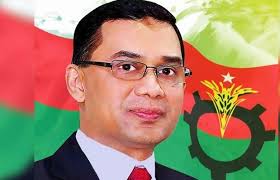
Political analysts, party leaders, activists, and ordinary well-wishers have expressed growing concern over the security of current Prime Minister Tarique Rahman. According to them, in Bangladesh’s present political reality, the security of national leadership is no longer merely a personal matter; rather, it is deeply connected to state stability, democratic continuity, and national security.
The political history of South Asia has repeatedly demonstrated that attacks, conspiracies, and political violence targeting popular leaders are not new phenomena in the region. Power struggles, political rivalries, and the rise of extremist groups have claimed the lives of many prominent statesmen over the decades. History has shown that even minor lapses in security can lead to devastating political consequences.
Tarique Rahman is currently regarded as one of the country’s most influential political figures. Through years of political struggle, controversies, and challenges, he has emerged at the center of national leadership. As his political importance has increased, so too have potential security risks. His tendency to interact closely with ordinary citizens, unexpectedly enter crowds, and maintain a relaxed security posture has raised concerns among many observers.
South Asian history offers several tragic examples where inadequate security measures resulted in catastrophe. The assassination of former Indian Prime Minister Rajiv Gandhi remains one of the most brutal examples. In 1991, during an election rally in Tamil Nadu, a suicide bomber approached him under the pretext of offering a flower garland. Within seconds, a powerful explosion killed Rajiv Gandhi along with several others. Investigations later revealed that the attacker was linked to the Sri Lankan separatist organization LTTE. The incident forced not only India but the entire region to rethink political security protocols.
History also bears witness to the assassinations of Mahatma Gandhi, Indira Gandhi, Liaquat Ali Khan, and Benazir Bhutto. None of them died naturally; each fell victim to political violence. These assassinations were not only personal tragedies but also events that significantly altered the political trajectory of their respective nations. For this reason, the security of political leadership can never be treated lightly.
Bangladesh’s own political landscape has long been marked by confrontation, revenge-driven politics, and violence. The country has witnessed attacks on political rallies, bomb blasts, and targeted assaults over the years. Such experiences demonstrate that the threat of political violence cannot be entirely dismissed. Therefore, concerns regarding the security of the current Prime Minister are viewed by many as both realistic and justified.
Political analysts argue that the greatest strength of a popular leader lies in direct engagement with the people. Many believe that Tarique Rahman represents such a political culture. He appears eager to remain close to ordinary citizens and break through rigid political barriers in order to understand public sentiment firsthand. While this approach may generate positive political goodwill, it can also create significant security risks. Excessive openness for a head of government can sometimes lead to dangerous situations.
Popularity in politics can be both a blessing and a source of vulnerability. Alongside public admiration, threats may emerge from political opponents, extremist groups, or individuals driven by personal hostility. In today’s digital age, social media has further complicated the situation. Misinformation, hate campaigns, and provocative content spread rapidly online and may influence real-world security threats. As a result, there are growing calls for more modern, intelligence-based, and technologically advanced security systems.
Many within the ruling party also believe that the Prime Minister’s movements should be governed by a more disciplined and organized security structure. International-standard security protocols are considered essential during public rallies, political programs, and spontaneous public interactions. Around the world, heads of state are protected through multi-layered security systems involving intelligence surveillance, technological screening, trained personnel, and emergency response coordination. Security experts argue that Bangladesh should further strengthen such professional and modern systems.
However, increasing security does not necessarily mean isolating a leader from the people. Through advanced technology, professional security management, and strategic planning, it is possible to maintain close public engagement while ensuring safety. Many democratic nations have successfully maintained this balance, allowing leaders to remain accessible while operating within highly secure environments.
According to one security expert, “The political reality of South Asia has always been complex. Threats can emerge from political rivals, extremist organizations, or personal hostility. Therefore, ensuring the Prime Minister’s security is important not only for the individual but also for the interests of the state and its people. The life of a head of government is closely tied to national stability, administrative continuity, and broader national interests.”
Political observers further argue that Tarique Rahman is no longer merely the leader of a political party; he has become an important component of the country’s broader political landscape. Consequently, ensuring his security is not solely the responsibility of law enforcement agencies but also a matter of national interest. Any attack on political leadership or resulting instability could affect the country’s economy, governance, investment climate, and international relations.
The harsh lesson of South Asian political history is that negligence or excessive confidence can demand a devastating price. Many nations in the region have already paid that price in blood. Therefore, amid political enthusiasm and public popularity, maintaining the highest level of security awareness remains essential.
The expectation of ordinary citizens is that Prime Minister Tarique Rahman will remain close to the people, listen to their concerns, and continue to provide political leadership. At the same time, many hope he will become more cautious regarding his own security. Because the life of a political leader is not merely a personal matter; in many cases, it is deeply intertwined with a nation’s political stability, democratic continuity, and future.