

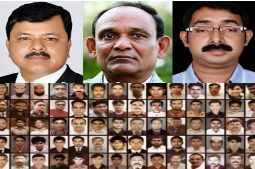
The return of 251 people who had remained missing for prolonged periods following allegations of enforced disappearance has sparked fresh political and social debate. While some view their return as a source of humanitarian relief, others say it is important to properly assess the circumstances they endured during their years of disappearance.
Various reactions have emerged on social media over the issue. Some critics fear that instead of giving due importance to the experiences of those who have returned, attempts may be made to portray the incidents as political drama, entertainment, or staged events.
One comment circulating on social media said, “Thankfully, these 251 people did not return from enforced disappearance. If they had, we would have heard today that they were acting, or that they had gone away to enjoy themselves.”
The comment highlights concerns over the sensitivity with which the experiences of people who were allegedly subjected to enforced disappearance should be treated.
The families of those who have returned after long periods of disappearance are arguably in the best position to understand what they went through. Years of waiting, uncertainty, fear, and hope for the return of loved ones can leave a profound impact that is difficult for outsiders to fully comprehend.
Those familiar with the issue say that listening carefully to the accounts of the returnees and their families and providing them with appropriate support should be regarded as both a humanitarian and social responsibility.
Questions Over BNP’s Role
The role of the Bangladesh Nationalist Party (BNP) has also come under scrutiny in connection with the issue.
Critics allege that during the interim government period, the BNP did not launch sufficiently strong movements or sustained programmes demanding the whereabouts and return of its leaders and activists who had allegedly gone missing, nor did it adequately highlight the demands of their families.
According to the critics, had the BNP launched a sustained campaign demanding the return of its missing leaders and activists, the issue could have received greater national attention. The suffering of the families of the missing individuals and the years they spent waiting for their loved ones could also have received greater public focus.
Another criticism is that the BNP failed to adequately highlight the sacrifices and alleged persecution faced by its own activists.
According to those raising the criticism, incidents involving alleged persecution, disappearance or enforced disappearance of political activists should not be viewed solely through the lens of partisan politics. Such allegations also raise broader questions concerning democracy, human rights and the rule of law.
Calls for Investigation and Accountability
Alongside the political debate over allegations of enforced disappearance and prolonged missing periods, calls have also emerged for impartial investigations.
A comprehensive examination of the statements of the returnees, accounts provided by their families, their whereabouts during the periods of disappearance, and the circumstances surrounding the incidents could help establish a clearer picture of what actually happened.
Human rights advocates say that allegations of enforced disappearance should be investigated transparently and independently, regardless of the political identity of the individuals involved.
They also emphasize the need to consider the safety, psychological well-being and access to justice of the alleged victims and their families.
Ultimately, the return of 251 people represents more than a statistic. Behind each case lies a family, years of waiting, uncertainty and, in many instances, profound emotional distress.
For that reason, the experiences of the returnees should be assessed not only as part of a political debate but also from humanitarian and legal perspectives.
At the same time, political parties should critically examine their own past roles, shortcomings and limitations. Meaningful accountability and constructive self-reflection, observers say, are essential to ensuring that the suffering of victims and their families is neither forgotten nor reduced to a political talking point.