

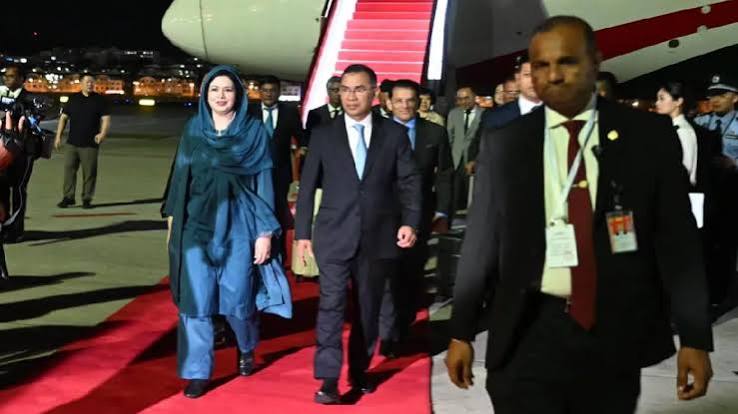
The recent visit of Bangladesh’s Prime Minister Tarique Rahman to China has generated significant discussion in Bangladesh’s political and diplomatic circles. Reports and public discussions surrounding the visit have highlighted the special protocol and red-carpet reception reportedly extended to him upon arrival in China, prompting various interpretations from political analysts, diplomats, and the general public.
In international diplomacy, the manner in which foreign leaders and high-profile guests are received is often viewed as carrying symbolic and political significance. Such ceremonial gestures can reflect the nature of bilateral relations, economic cooperation, regional security considerations, trade interests, and future strategic partnerships between countries.
China, one of the world’s leading economic and political powers, has significantly expanded its engagement with South Asian nations over the past decade. Through cooperation in infrastructure development, trade, investment, technology, and regional connectivity, Beijing has strengthened its presence across the region. Bangladesh has emerged as an important partner in this broader framework of cooperation.
According to analysts, Bangladesh has increasingly established itself as a significant economic player in South Asia. Its strategic geographic location, growing domestic market, expanding infrastructure, and access to key maritime routes have enhanced its importance to major global powers. As a result, maintaining strong relations with Bangladesh’s leadership has become an important aspect of the foreign policies of countries such as China.
Many observers view Tarique Rahman’s visit as a symbol of the evolving relationship between Bangladesh and China. Reports suggest that discussions during the visit focused on expanding bilateral trade, increasing investment, strengthening infrastructure development, enhancing energy cooperation, and promoting technological partnerships. Experts believe that greater collaboration in these sectors could contribute to Bangladesh’s continued economic growth and development.
At the same time, diplomatic analysts caution against interpreting ceremonial receptions or special protocol arrangements as definitive indicators of political influence or regional leadership. International relations are generally shaped by long-term strategic interests, mutual benefits, and geopolitical realities rather than by symbolic gestures alone. Consequently, drawing far-reaching political conclusions from a single diplomatic event may be premature.
Meanwhile, some political observers argue that high-level international visits can help strengthen Bangladesh’s global standing. Through active diplomacy, balanced foreign relations, and expanded economic cooperation, Bangladesh has the opportunity to play a more influential role in regional and international affairs.
Bangladesh occupies a strategically important position in South Asia, where major powers including China, India, and the United States continue to pursue their respective political, economic, and security interests. In this complex geopolitical environment, maintaining a balanced foreign policy while prioritizing national interests remains crucial for Bangladesh.
Political commentators emphasize that the country’s long-term strength will depend primarily on sustainable economic development, good governance, infrastructure advancement, educational progress, and technological innovation. These factors also play a central role in determining a nation’s international reputation and influence. The popularity or international acceptance of any political leader is most meaningful when it contributes positively to national development and public welfare.
The reception accorded to Tarique Rahman during his visit to China has undoubtedly attracted attention from political and diplomatic observers. However, experts stress that such events should be evaluated through the lens of factual evidence, diplomatic context, and long-term international relations rather than through emotional reactions or partisan perspectives.
The true significance of the visit will ultimately be measured by its long-term impact on Bangladesh-China relations and its contribution to Bangladesh’s economic and strategic interests. Future developments will determine whether the discussions and engagements initiated during the visit translate into tangible outcomes for both countries.
Overall, Bangladesh’s growing international importance and its expanding relationships with major global partners represent positive developments for the nation. At the same time, maintaining an objective, fact-based, and balanced approach when assessing political events remains essential in a democratic society. Such an approach enables informed public discourse and supports a more nuanced understanding of the evolving dynamics of international relations.