

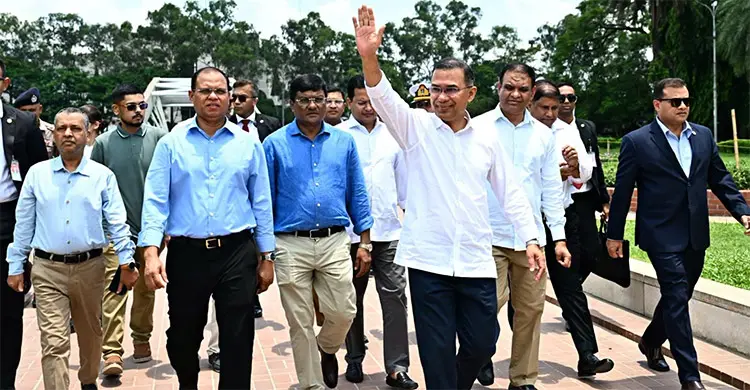
Following the national parliamentary elections, Bangladesh's political focus has now shifted to the upcoming local government elections. While the Election Commission continues its preparations, political parties have intensified their organizational activities. For the ruling Bangladesh Nationalist Party (BNP), the polls represent far more than another electoral exercise. They are widely viewed as the first major political test of the government's public support, grassroots organizational strength, and the credibility of its local leadership.
According to senior BNP policymakers, the local government elections will serve as an important indicator of how the public evaluates the government's performance during its initial period in office. As a result, many within the party are describing the election as an "acid test." Party insiders, reports published in mainstream media, and discussions with both central and grassroots leaders indicate that the BNP is prioritizing five key areas ahead of the polls: maintaining party unity, selecting credible candidates, preventing rebel candidacies, strengthening grassroots organization, and formulating an effective strategy for elections to be held without party symbols.
Non-Party Symbol Elections Reshaping Political Dynamics
Political analysts believe that local government elections without party symbols could significantly alter the nature of electoral competition. In such a system, voters are expected to place greater emphasis on a candidate's personal popularity, social acceptance, public engagement, integrity, and long-standing record of public service rather than formal party affiliation.
BNP Standing Committee member Begum Selima Rahman has stated that the local government elections will be held without party symbols and that the party will discuss its strategy when the election schedule is announced.
Meanwhile, BNP Senior Joint Secretary General Ruhul Kabir Rizvi argued that the previous system of party-symbol-based local elections had contributed to social divisions at the local level. He expressed hope that removing party symbols would create a healthier political environment and encourage more constructive electoral competition.
Why the Election Matters for the BNP
Unlike parliamentary elections, where national issues and central leadership dominate public opinion, local government elections are generally influenced by candidates' personal reputation, development initiatives, public service, and close relationships with local communities.
Several BNP leaders believe the election will provide the clearest indication of how citizens perceive the government's performance, the effectiveness of the party's grassroots organization, and the level of public confidence in local leadership.
Political analysts argue that a strong performance would reinforce public confidence in the government and demonstrate the BNP's organizational strength. Conversely, weaker-than-expected results could raise fresh questions about grassroots leadership, coordination, and party organization.
One Candidate Per Position to Prevent Vote Splitting
Past local elections have shown that multiple candidates from the same political camp often divided votes, resulting in avoidable defeats. Learning from those experiences, the BNP is expected to adopt a more cautious approach to candidate selection.
Party sources say decisions will be based on district, metropolitan, upazila, and union-level organizational reports, local opinions, candidates' popularity, public acceptance, and overall electoral viability.
A senior BNP leader noted that while party identity remains important, personal credibility often determines the outcome in local elections. Therefore, the party intends to prioritize candidates with the strongest prospects of victory.
Debate Over the Role of Members of Parliament
The role of local Members of Parliament (MPs) in selecting candidates has also become a subject of internal discussion within the party. Many grassroots leaders argue that political sacrifice, organizational competence, long-term public engagement, and popularity should receive greater consideration than the preferences of MPs.
According to party insiders, many leaders who played active roles during years of political struggle now consider themselves deserving candidates. In several areas, prospective chairmen and mayoral candidates have been active in local politics longer than the sitting MPs. Consequently, relying solely on MPs' recommendations could generate dissatisfaction among grassroots activists.
Mohammad Selim, a prospective councillor from Ward 31 of Chattogram City Corporation, believes the influence of local power groups will become more evident as the election approaches. He emphasized that maintaining party discipline will be essential to preventing internal divisions.
Rebel Candidates Remain a Major Concern
One of the BNP's biggest challenges is the possibility of rebel candidates contesting independently after failing to receive party endorsement. Such candidacies could divide votes and weaken the party's overall electoral prospects.
To minimize this risk, the party is emphasizing early consultations with prospective candidates, local-level negotiations, and stronger organizational coordination.
The BNP's leadership remains mindful of previous parliamentary elections in which rebel candidates significantly affected electoral outcomes.
However, BNP Vice Chairman Shamsuzzaman Dudu has expressed a different perspective. He argued that since the elections will not be held under party symbols, multiple candidates entering the race should be viewed as a natural part of democratic competition rather than a cause for concern.
Nevertheless, party sources indicate that as the election draws nearer, local realities, public support, and candidates' chances of victory will be carefully assessed to reduce vote splitting through negotiation and coordination.
Rival Political Parties Are Also Preparing
The BNP is not alone in strengthening its organizational preparations. Other political parties are also becoming increasingly active ahead of the local government elections.
According to relevant sources, Bangladesh Jamaat-e-Islami, the National Citizen Party (NCP), and Islami Andolan Bangladesh are working toward fielding single candidates in many areas.
Political analysts suggest that while the BNP faces the complex task of balancing internal coordination and candidate selection, its rivals' comparatively organized preparations could make contests in many constituencies more competitive.
Grassroots Campaigning Has Already Begun
Potential candidates across the country have already started public outreach campaigns.
In Roumari Upazila of Kurigram District, Mohammad Omar Faruk, a prospective chairman candidate for Shaulmari Union and a local Jubo Dal leader, said he has been visiting villages and wards while continuing various social welfare initiatives.
Similarly, Nur Alam Khan Hero, a prospective chairman candidate for Bandaber Union and Joint Convener of the Upazila BNP, said he has maintained regular public engagement since the parliamentary elections and remains optimistic because of his long-standing involvement in community service.
Potential candidates in Bhola, Kushtia, Lakshmipur, Chattogram, and several other districts have also become increasingly active. Many believe that political commitment, organizational capability, and public acceptance will ultimately determine the party's support.
Challenges Ahead
Political analysts identify several major challenges facing the BNP before the local government elections. These include preserving party unity, selecting credible candidates, managing rebel contenders, addressing grassroots dissatisfaction, avoiding controversy over MPs' influence, and maintaining organizational coordination under the non-party-symbol electoral system.
At the same time, the growing preparations of rival political parties, the emergence of strong independent candidates, and evolving local political dynamics could significantly influence the outcome.
Ultimately, the local government elections are about much more than electing local representatives. They are expected to serve as a key measure of public confidence in the government, the BNP's organizational capacity, the credibility of its local leadership, and the future direction of Bangladesh's politics. For that reason, many political observers believe the election will indeed be the BNP's first major political litmus test since assuming office. The outcome is likely to have far-reaching implications for both the party and the country's broader political landscape.