

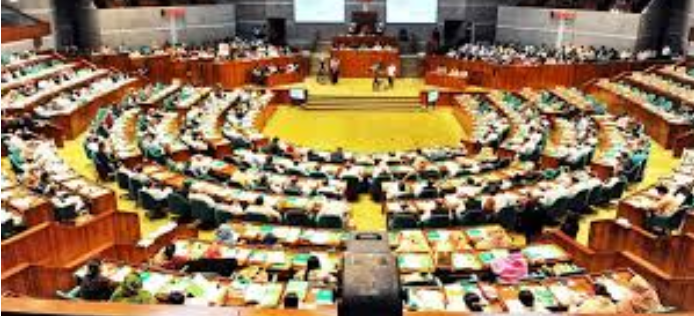
Most Members of Parliament (MPs) in the country were elected on the basis of party affiliation, personal popularity, and promises made to voters during election campaigns. They secured public support by pledging development projects, infrastructure improvements, and better educational and religious institutions in their respective constituencies. However, many MPs are now experiencing a gradual decline in popularity due to the lack of visible development activities following their election. Discussions with several MPs, local political activists, and voters from different constituencies indicate that their acceptance is declining not only among party workers but also among the general public.
Political analysts argue that in Bangladesh's political context, one of the most effective ways for an MP to maintain public support is through visible development work in the constituency. Voters often evaluate their elected representatives based on their ability to improve local infrastructure, provide public services, and address community concerns. When an MP fails to deliver tangible development outcomes, public confidence and support naturally begin to diminish.
According to sources familiar with constituency-level politics, previous governments maintained various development allocation schemes that allowed MPs to play an active role in local development. Special block grants were often provided for educational institutions, religious establishments, social infrastructure projects, rural road construction, and welfare initiatives for disadvantaged communities. Programs such as Food for Work and allocations for schools, colleges, madrasas, mosques, temples, and pagodas enabled MPs to respond directly to local demands and strengthen their relationships with constituents.
However, many MPs claim that since the formation of the current government, they have not received any significant development allocations during the past several months. As a result, initiating new projects or even carrying out small-scale development activities has become increasingly difficult. This situation has not only hindered the fulfillment of public expectations but has also created frustration among elected representatives themselves.
Party activists in various constituencies say they are facing difficult questions from voters regarding the implementation of election promises. Local residents continue to approach their MPs with demands for road repairs, educational improvements, development of religious institutions, and other community projects. Yet, due to the absence of sufficient government funding, many of these demands remain unaddressed.
In many constituencies, observers note that although MPs continue to maintain contact with local residents, the lack of visible development initiatives has weakened those relationships. Citizens generally expect to see concrete results in the form of roads, bridges, culverts, schools, healthcare facilities, and other public welfare projects. When such improvements fail to materialize, dissatisfaction among voters tends to grow. Political observers warn that prolonged public dissatisfaction could have long-term consequences for the political standing of elected representatives.
Sources close to several MPs also suggest that many first-time lawmakers lack extensive experience in navigating the administrative processes required to implement development projects. Procedures related to project proposals, coordination with ministries, budget acquisition, and bureaucratic approval often require significant expertise. Without adequate institutional support and guidance, many MPs find it challenging to transform their development plans into reality.
Meanwhile, frustration is also growing among grassroots party workers. In the past, local political activists were often involved in development activities and community-based projects, allowing them to maintain close connections with residents. Today, however, limited development opportunities have reduced their ability to engage effectively with the public. Some activists complain that their interactions with MPs are now largely confined to formal meetings and ceremonial events, with few opportunities to participate in meaningful community initiatives.
A similar sentiment is increasingly evident among ordinary citizens. Many voters believe that the pace of implementation has fallen far short of the promises made during election campaigns. They expected development projects to begin soon after the elections, but in many areas there has been little visible progress. Consequently, public expectations are gradually giving way to disappointment.
Although MPs receive government salaries and allowances, many argue that these funds are largely consumed by personal and official expenses. They maintain that such resources are insufficient for financing substantial public welfare or infrastructure projects. Consequently, many lawmakers believe that special block grants or constituency development funds are necessary to effectively serve their voters.
According to stakeholders and policy observers, reinstating dedicated development allocations for MPs could significantly improve constituency-level governance. Such funding would help address local problems more quickly, support small and medium-scale infrastructure projects, improve educational institutions, enhance religious facilities, and expand social welfare initiatives. It could also strengthen the relationship between elected representatives and their constituents while restoring public confidence in the political process.
Despite these concerns, there has been no clear indication of a government decision or policy initiative regarding the reintroduction of such allocations. As a result, many MPs remain uncertain about their ability to deliver meaningful development outcomes in the near future. They hope that the government will soon introduce financial and policy support mechanisms to accelerate constituency development efforts.
Political analysts emphasize that the success of any elected representative in a democratic system depends largely on their ability to meet public expectations. Achieving that goal requires adequate funding, administrative support, and realistic development planning. Without these essential elements, the gap between elected officials and the people they represent may continue to widen, potentially creating new political challenges in the future.
For this reason, many observers believe that establishing an effective development support framework for MPs is essential. Without such measures, stagnation in local development could not only damage the popularity of elected representatives but also undermine public trust and political engagement at the grassroots level.