

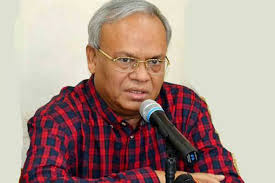
In the political landscape of Bangladesh, there are certain leaders whose identities are defined not merely by positions or titles, but by their dedication, sacrifice, and unwavering presence beside their party during times of crisis. Ruhul Kabir Rizvi Ahmed is one such political figure, widely regarded as one of the most dependable faces of the Bangladesh Nationalist Party (BNP) throughout its most difficult years.
Despite more than sixteen and a half years of political repression, lawsuits, arrests, and organizational challenges, Rizvi played a crucial role in keeping BNP’s central office operational. At times when silence prevailed at the party’s Nayapaltan headquarters in Dhaka, and many leaders and activists went into hiding due to fear of police crackdowns, Rizvi remained visibly present at the office. Although the party had many senior and responsible leaders, it was Rizvi who was most consistently found standing beside distressed and persecuted party activists during those difficult years.
Whether it involved legal cases, arrests, political attacks, or organizational uncertainty, he continuously provided guidance, encouragement, and support to party members while ensuring that the central office remained active. Political analysts believe that this uninterrupted presence during times of crisis established him as BNP’s “leader of difficult times.”
Even after the recent political transition in the country, with BNP now leading the government, Rizvi’s lifestyle and political activities have changed very little. He still regularly attends the party office, supervises organizational activities, and maintains constant communication with grassroots leaders and activists. At the same time, he is serving in an important capacity as a political adviser to Prime Minister and BNP Chairman Tarique Rahman. According to party sources, Rizvi also remains actively involved in coordinating important political decisions with the party’s top leadership.
Rizvi’s political journey began through student politics. While studying at Rajshahi Government College, he served as the General Secretary of the Revolutionary Student Union. Later, he joined Jatiyatabadi Chhatra Dal and became the General Secretary of the Rajshahi University unit. In 1989, he was elected Vice President (VP) of the Rajshahi University Central Students’ Union (RUCSU).
His involvement in the anti-autocracy movement marked a significant chapter in his political life. During the movement, he was shot and seriously injured while actively participating in protests against military rule. The memory and physical consequences of that incident still remain with him today. Due to the injuries caused by gunfire during the movement, Rizvi continues to suffer occasional health complications.
After entering mainstream politics, Rizvi gradually strengthened his position within BNP through organizational efficiency, grassroots-oriented leadership, and loyalty to the party. Among party activists, his greatest identity has been his constant visibility. During moments of political crisis, he was consistently seen at the forefront—holding press conferences, issuing statements, announcing programs, and motivating leaders and activists.
Particularly during the tenure of the Awami League government, BNP’s central office frequently remained under heavy surveillance and pressure from law enforcement agencies. Even under such circumstances, Rizvi refused to abandon the party office. Despite anticipating police raids or arrests, he often stayed there, resulting in repeated arrests, harassment, and interrogations. For this reason, many within political circles came to describe him as a “tested leader.”
During the politically volatile period of 2023, following clashes and violence surrounding BNP’s Nayapaltan office, many senior BNP leaders were arrested. At that time, Rizvi went into strategic hiding but continued to issue video messages directing party activists and calling for movements against the government. His continuous political statements became widely discussed among BNP’s grassroots supporters. Although leaders of the then-ruling Awami League mocked his activities, Rizvi remained firm in his political stance.
Political observers believe that Rizvi’s greatest strength lies in his organizational presence and direct communication with activists. A small room inside BNP’s Nayapaltan office has almost become symbolic of his political life. A simple bed, stacks of documents, and endless political activities defined much of his daily existence there. According to party activists, anyone facing political cases, attacks, or organizational difficulties could always find Rizvi at Nayapaltan.
Leaders of BNP’s associate and affiliated organizations believe Rizvi is not merely a spokesperson, but also a symbol of courage and trust for party workers. Leaders from the women’s wing, student wing, and farmers’ wing of the party often describe him as a protective figure who stood beside activists during the party’s hardest years. Many young activists consider his political life an example of sacrifice, commitment, and responsibility.
Like any political figure, Rizvi has also faced criticism. However, even critics acknowledge that his strong grassroots acceptance stems from his sacrifices and consistent activism during BNP’s most difficult times.
His unwavering loyalty to former BNP Chairperson Khaleda Zia and the current party leadership has further strengthened his position within the party. During periods of leadership crises, organizational weakness, and political setbacks, Rizvi continuously stood beside the central leadership and worked to keep the party organized and active.
Bangladesh’s political history has seen very few leaders who remained so consistently active and visible while their party stayed out of power for such a long period. Ruhul Kabir Rizvi is one of those rare politicians who may not always be considered the most popular mass leader, but who undoubtedly established himself as one of the most visible, dependable, and resilient faces of BNP during its most difficult years.
Road movements, Nayapaltan headquarters, press briefings, arrests, imprisonment, and unwavering party loyalty—these words collectively summarize the political life of Ruhul Kabir Rizvi. BNP leaders and activists now hope that his years of sacrifice and struggle will receive even greater recognition within the party in the future.