

The government has taken initiatives to observe November 7 with due dignity and significance, considering its historical importance in the nation's political life. Various programmes will be organised at the national level, while instructions have been issued to hoist the national flag at government, semi-government, autonomous and private buildings across the country. The day has also been declared a public holiday.
The government's move to formally observe National Revolution and Solidarity Day at the state level after a long interval is being viewed as significant from both political and historical perspectives.
According to a notification issued by the Cabinet Division, the national flag of Bangladesh must be hoisted at all government, semi-government, autonomous and private buildings across the country on November 7 to mark the occasion. Bangladesh's diplomatic missions abroad will also hoist the national flag.
The notification was issued on Sunday (November 1), referring to a decision taken at a Cabinet meeting held on October 5. It also stated that the government had decided to declare November 7 a public holiday every year on the occasion of National Revolution and Solidarity Day, in accordance with the relevant provisions governing the responsibilities of the Ministry of Public Administration.
Earlier, the Ministry of Public Administration issued a notification on October 7 declaring November 7 a public holiday.
The government's initiative has created a fresh opportunity to commemorate the historical events of November 7 at the state level and highlight the significance of the day.
November 7, 1975: A Turbulent Chapter in Bangladesh's History
November 7, 1975, remains one of the most significant and widely debated dates in Bangladesh's political history. Just four years after independence, the country was passing through a period of political instability, military coups, counter-coups and intense power struggles.
Following the assassination of Bangabandhu Sheikh Mujibur Rahman and most members of his family on August 15, 1975, the country's political and military landscape underwent rapid changes. A government led by Khondaker Mostaq Ahmad assumed power, while divisions and rivalries within the armed forces gradually intensified.
On November 3, 1975, a military coup led by Brigadier Khaled Mosharraf took place. In the aftermath, then Army Chief Major General Ziaur Rahman was placed under house arrest, triggering further tension within the military.
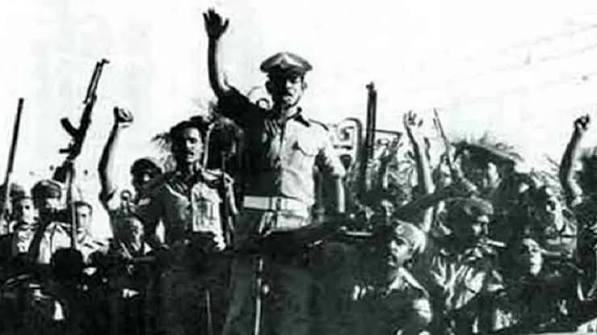
Amid the volatile situation, an uprising broke out among soldiers at Dhaka Cantonment in the early hours of November 7. Various historical accounts also refer to the participation of civilians alongside military personnel in the uprising.
The events led to the release of Ziaur Rahman from house arrest. However, the developments of November 7 extended far beyond the release of a military officer. They brought significant changes within the armed forces.
During the coup and counter-coup that unfolded around this period, Brigadier Khaled Mosharraf, Colonel Khondaker Nazmul Huda and Colonel A.T.M. Haider were killed. Subsequently, Ziaur Rahman emerged as a central figure in the country's political and state leadership.
Naming of the Day and Its Political Significance
The events of November 7 have been interpreted and assessed differently by various political parties in Bangladesh.
The Bangladesh Nationalist Party (BNP) observes the day as 'National Revolution and Solidarity Day'. According to the party, the unity between soldiers and civilians on November 7, 1975, played an important role in safeguarding the country's independence and sovereignty. The BNP considers the events a significant example of national unity and solidarity in Bangladesh's political history.
On the other hand, the Jatiya Samajtantrik Dal (JSD) has, at different times, described the day as 'Sepoy-Janata Uprising Day', highlighting the role of Colonel Abu Taher.
The Awami League and various other political groups associated with the Liberation War have offered different interpretations of the events. Some of these groups observe the day as 'Freedom Fighters and Soldiers Killing Day', placing particular emphasis on the killings of military officers following the uprising.
Thus, the events of the same day have given rise to multiple interpretations, memories and political positions in Bangladesh. As a result, November 7 is not merely a historical date but also an important subject of political debate in the country.
State Recognition and the Decision to Declare a Public Holiday
For many years, the BNP and its affiliated organisations have observed November 7 through various political and commemorative programmes.
However, during the Awami League government's tenure after 2009, the day was no longer observed at the state level in the same manner and was also removed from the list of public holidays. The BNP, however, continued to observe the day through its own programmes every year.
Following the political changeover on August 5, 2024, the country's political landscape underwent another transformation.
At a Cabinet meeting held on April 16, 2026, the government decided to reinstate November 7 as National Revolution and Solidarity Day for official observance and to declare it a public holiday. On April 21, a circular issued by the Cabinet Division included the day in the 'A' category of national days.
As part of the implementation of the decision, the Cabinet meeting held on October 5 approved the declaration of November 7 as a public holiday. Subsequently, the Ministry of Public Administration issued a notification on October 7.
In its latest notification issued on November 1, the Cabinet Division instructed all government, semi-government, autonomous and private buildings, as well as Bangladesh's diplomatic missions abroad, to hoist the national flag on the occasion.
BNP Announces Seven-Day Programme
The BNP has announced a seven-day programme from November 5 to 11 to mark National Revolution and Solidarity Day.
According to the party's announced schedule, national and party flags will be hoisted at 6:00 am on November 7 at the BNP's central office in Nayapaltan and at party offices across the country.
At 11:00 am, party Chairman and Prime Minister Tarique Rahman, accompanied by senior national leaders, will pay tribute and offer prayers at the graves of Shaheed President Ziaur Rahman and former Prime Minister Begum Khaleda Zia.
At 3:00 pm, a colourful procession is scheduled to begin from in front of the BNP's central office in Nayapaltan. Similar processions will also be organised at district and metropolitan levels across the country.
The party has also planned programmes at the thana and upazila levels on November 8.
Historical Assessment and the Question of National Unity
For historians and political analysts, the significance of November 7 is multifaceted. The events surrounding the day had far-reaching consequences for the armed forces, political leadership and the course of state governance in Bangladesh.
The developments of 1975 have also remained an important subject of discussion in assessing the subsequent establishment of the BNP under Ziaur Rahman's leadership, the evolution of multiparty politics and changes in the country's political structure.
However, a comprehensive assessment of November 7 requires consideration not only of the Sepoy-Janata uprising but also of the killings of military officers, internal conflicts within the armed forces and the subsequent redistribution of political power.
A thorough understanding of the day's historical significance requires fact-based research, examination of different historical accounts and recognition of diverse political perspectives.
With the government's decision to observe the day officially, November 7 is once again expected to receive renewed attention in public discourse and historical studies.
The occasion could also provide an important opportunity to familiarise the younger generation with the events of 1975, the political circumstances of that period and the challenges faced by Bangladesh in the early years after independence.
Overall, the government's decision to observe November 7 at the state level, hoist the national flag, declare a public holiday and facilitate commemorative programmes by political parties has given the occasion renewed significance.
However, honouring history requires a commitment to objective historical research, respect for differing opinions and the promotion of national unity beyond political divisions.