

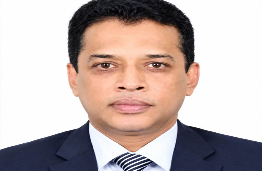
Amid Bangladesh’s ongoing gas crisis, Titas Gas Transmission and Distribution PLC Managing Director Shahnewaz Parvez is facing renewed allegations of corruption, bribery, irregularities and questionable recruitment practices. Some of the allegations have reportedly been examined by an investigation committee. However, Parvez has offered explanations and differing accounts regarding several of the allegations against him.
According to the complaints, Parvez was appointed Managing Director of Titas Gas by the Ministry of Power, Energy and Mineral Resources after serving as Managing Director of Gas Transmission Company Limited (GTCL). His appointment reportedly triggered dissatisfaction and protests among sections of Titas employees. He is also alleged to have assumed office under security arrangements involving members of the armed forces.
One of the most serious allegations concerns Parvez’s recruitment into Petrobangla. According to the complaints, he was appointed as an Assistant Engineer (Petroleum) in 1999 without taking a written examination and was selected through an oral examination. Questions have also been raised over his BTech degree from the Indian School of Mines, Dhanbad, and whether the required equivalency or accreditation certificate was submitted when he joined the service.
A three-member investigation committee was formed to examine the allegations. The committee reviewed relevant records and documents, as well as written statements and explanations from the concerned parties, before submitting its report. According to information cited in connection with the report, it found that Parvez had been recruited on the basis of an oral examination rather than a written test. Questions were also raised over whether his foreign degree had been formally assessed for equivalency at the time of his appointment.
Parvez, however, has disputed the suggestion that his recruitment was inherently irregular. He said the Petrobangla recruitment notice provided for a written and/or oral examination and that eligible candidates were subsequently invited to participate in an oral examination. He has also maintained that his four-year BTech degree in Petroleum Engineering is equivalent to a BSc in Engineering.
Questions have also been raised about his long tenure in Petrobangla’s Contract Department. Complainants allege that he worked in the department for around 23 years and, during that period, developed an influential network. Allegations have also been made concerning offshore bidding, contractual arrangements and alleged preferential treatment for certain foreign companies. These claims would require verification against official records and procurement documents.
After taking charge at Titas, Parvez faced further allegations. Complainants claim that irregularities and alleged bribery were involved in approximately 150 new gas connections and load increases for industrial establishments in Savar, Gazipur and Narayanganj, allegedly generating illicit gains of around Tk750 crore. There are also allegations that approximately 1,500 illegal connections generated at least Tk30 crore per month.
The financial figures cited in these allegations have not been independently established in the material presented and therefore require verification through financial records, connection documents and other relevant evidence.
There are further allegations that illegal bypass lines were being used at various industrial establishments under Titas and that gas pressure was manipulated in exchange for financial benefits. According to the complaints, gas pressure was allegedly reduced at some facilities while being increased at others. There are also allegations that financial considerations influenced decisions to allow customers with outstanding gas bills to pay their arrears in instalments.
Parvez has provided a different explanation regarding the instalment arrangements. He said Clause 8.5.2 of the Gas Marketing Policy 2014 allows, in certain circumstances, customers with outstanding bills to pay their arrears in instalments. According to him, such arrangements are made on a case-by-case basis upon application by customers, primarily to recover outstanding bills and avoid labour unrest when factories remain closed.
In addition, a total of 16 allegations were reportedly submitted against Parvez by officials and employees of Petrobangla and its affiliated companies. The allegations include irregularities in his recruitment, alleged violations of seniority, questionable industrial gas connections, irregularities in awarding contracts, alleged harassment of officials and the assignment of multiple important responsibilities to individual officials.
A further written complaint was reportedly submitted to the Energy and Mineral Resources Division on March 11, 2026. Additional allegations included the recovery of compensation through liquidated damages, alleged overpayment to a foreign company, gas theft allegedly concealed as system loss, manipulation of gas rationing, assigning multiple important positions to the same official, instalment arrangements for outstanding gas bills and alleged collection of money through the suspension of service lines.
The allegations have emerged at a time when Bangladesh is experiencing significant pressure on its gas supply. Shortages relative to demand have affected both residential consumers and industrial establishments. Residents in several areas under Titas’s distribution network have reported low gas pressure for substantial periods of the day. Aging pipelines, leakage, illegal connections and system losses have also been cited as factors contributing to the difficulties.
Claims have also been made that several previous complaints and investigations involving Parvez failed to result in publicly visible administrative action. Parvez has acknowledged that various complaints have been submitted against him and that investigations were conducted. However, he has said he does not know what action, if any, the ministry took following those investigations.
The allegations against Parvez therefore raise questions that can ultimately be resolved only through documentary evidence and due process. Relevant recruitment records, financial transactions, gas-connection files, procurement documents and previous investigation reports should be examined to establish what is supported by evidence and what remains unsubstantiated.
Given Titas Gas’s importance to Bangladesh’s energy supply, the allegations have significant public-interest implications. Any further action should be based on verified evidence, an impartial examination of the records and the right of the accused to respond to the allegations. Until such verification is completed, the financial and corruption-related claims should remain treated as allegations rather than established facts.