

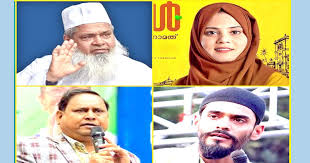
Muslim representation in India’s recent assembly elections across five states has reached a new milestone. A total of 107 Muslim candidates have been elected in the legislative assembly elections held in West Bengal, Kerala, Assam, Tamil Nadu, and Puducherry. According to political analysts, this is considered one of the most significant examples of Muslim political representation in recent times, out of a combined total of 824 assembly seats across these regions. An analysis of the election results shows that nominations by various political parties, along with regional political dynamics, played a crucial role in the success of Muslim candidates. In particular, West Bengal and Kerala witnessed comparatively higher Muslim representation than the other states.
West Bengal recorded the highest number of elected Muslim representatives. A total of 40 Muslim candidates won seats in the state assembly. In several minority-dominated constituencies, candidates from the Trinamool Congress and other opposition parties secured victories by notable margins. Political observers believe that West Bengal’s political culture and the active participation of minority voters were among the key factors behind this success.
Kerala also demonstrated strong Muslim political representation, with 35 Muslim candidates winning assembly seats. The state has a long history of close political engagement between the Muslim community and parties such as the Indian Union Muslim League, as well as alliances led by the Left Democratic Front and the Congress. As a result, Muslim representation has consistently remained an important feature of Kerala’s political landscape.
The election outcome in Assam has also drawn significant attention. Of the 19 Congress candidates elected in the state, 18 are Muslims. Analysts suggest that the large concentration of Muslim voters in several constituencies, combined with local political equations, greatly influenced the results.
Meanwhile, a number of Muslim candidates also won in Tamil Nadu and Puducherry. Although Muslim representation in these regions was lower compared to West Bengal and Kerala, their victories are still being viewed as a reflection of India’s political diversity and inclusive democratic structure.
Another major point of discussion surrounding the elections is that India’s ruling party, the Bharatiya Janata Party (BJP), did not nominate any Muslim candidates in any of these five states. The issue has sparked debate and criticism in political circles across the country. Opposition parties argued that the absence of minority representation in the BJP’s candidate list does not align with India’s pluralistic political tradition.
However, BJP leaders stated that the party selects candidates based on political strategy and organizational strength rather than religion. According to political analysts, this stance has generated mixed reactions in different parts of the country.
Experts believe that the outcome of these elections will remain a significant example of Muslim political participation in India. At the same time, the results demonstrate that regional politics and social realities continue to play a major role in shaping electoral outcomes in the country.
The election results are also expected to influence future national politics. In particular, discussions regarding minority representation, political inclusion, and the role of regional parties have gained renewed attention. Political observers argue that, in order to ensure broader participation of all communities within India’s democratic framework, political parties need to adopt more inclusive policies in the future.