

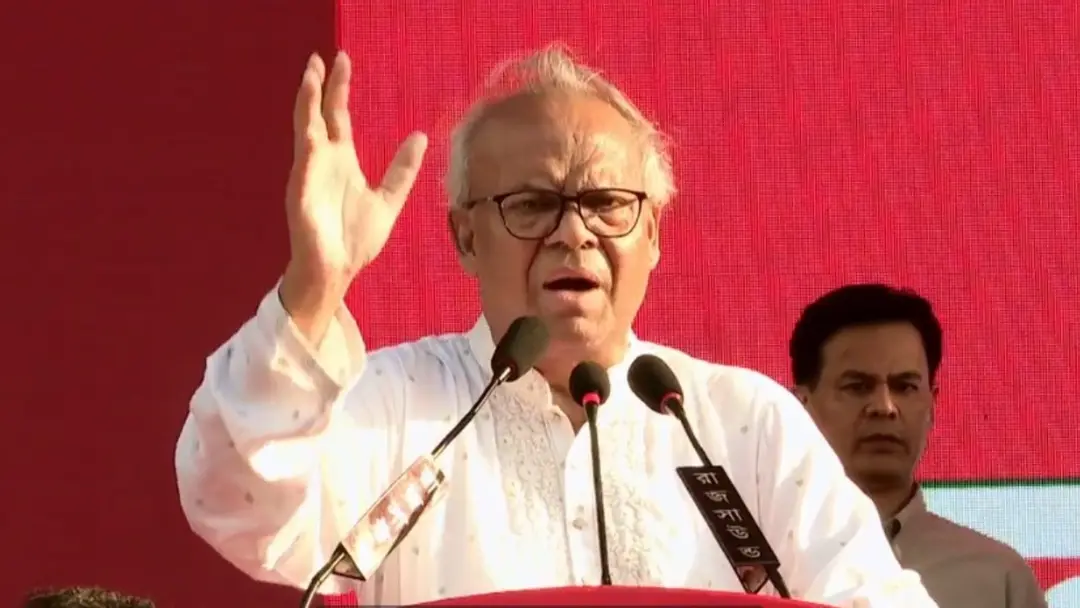
Ruhul Kabir Rizvi, Senior Joint Secretary General of the Bangladesh Nationalist Party (BNP) and Political Adviser to the Prime Minister, has stated that although minimum wages are implemented in various forms in the country, a standardized national minimum wage has not yet been established.He made these remarks on Friday (May 1) while addressing a workers’ rally organized by the Jatiyatabadi Sramik Dal in front of the party’s central office in Nayapaltan, Dhaka. Rizvi said that around 130 years ago, German Chancellor Otto von Bismarck first introduced the concept of minimum wage. Since then, numerous labor movements and struggles for workers’ rights have taken place worldwide. However, Bangladesh still lacks a clearly defined national standard minimum wage.
He added that he had read about this issue in newspapers as well. According to him, Tarique Rahman, described as a “son of a worker,” would give due importance to the matter. While minimum wages exist in different sectors, a unified and standardized national framework is still absent.
Rizvi also highlighted that approximately 27,500 cases involving workers are currently pending in labor courts and tribunals, with little to no resolution. He questioned whether workers should spend their time pursuing legal battles or working in factories. Emphasizing the importance of labor, he stated that the wheels of civilization turn through the sweat, labor, and sacrifice of workers, and therefore ensuring their minimum wage is essential.
He further suggested that the government should consider reopening closed jute mills through a national policy. This, he said, could create employment opportunities for hundreds of thousands of workers within the country by utilizing national resources effectively.
In addition, Rizvi claimed that during the tenure of Khaleda Zia, power plants with capacities of 210 MW near Adamjee Jute Mills and 80 MW in Gazipur were established. He alleged that these plants were deliberately shut down during the tenure of Sheikh Hasina as part of a conspiracy to favor expensive quick rental power projects for close associates.
He concluded by expressing his belief that the Prime Minister would take these issues into consideration and act in the interest of the workers.