

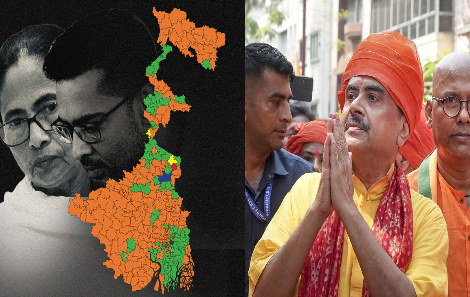
The recent political developments in West Bengal have sparked intense debate among analysts regarding the shifting fortunes of the ruling Trinamool Congress (TMC). The party, led by Mamata Banerjee, is facing a complex crisis rooted in internal dissent, strategic maneuvers by the opposition, and significant shifts in traditional vote banks. This report outlines the primary factors contributing to the current political volatility in the state.
2. Internal Dynamics and Leadership Crisis
A primary catalyst for the TMC's struggle is the growing friction within its organizational structure:
Marginalization of Veterans: There is a palpable sense of discontent among senior leaders who feel sidelined. Observers note that decision-making has become centralized within a narrow circle.
The Rise of Abhishek Banerjee: The increasing prominence of Abhishek Banerjee has reportedly alienated a section of the veteran leadership, creating an internal rift that the opposition has successfully exploited.
The "Anti-Incumbency" Factor: Over a decade of power has led to allegations of arrogance and detachment among local cadres, creating a vacuum between the party and the common electorate.
3. Opposition Strategy and "Vote Engineering"
The Bharatiya Janata Party (BJP) has implemented a highly organized and multi-pronged strategy to challenge the TMC's hegemony:
Fragmentation of the Minority Vote: Historically, the Muslim vote bank has been a decisive factor for the TMC. However, the emergence of the Indian Secular Front (ISF) led by Naushad Siddiqui, the Am Janata Party under Humayun Kabir, and AIMIM (Asaduddin Owaisi) has fragmented this unified support.
Religious Polarization: Analysts highlight a "dual strategy"—consolidating the Hindu vote through religious identity while simultaneously ensuring the division of minority votes.
Influence and Resources: Allegations of "vote engineering" through significant financial expenditure and the poaching of influential local leaders have been raised by the TMC leadership against the BJP.
4. Internal Factionalism: A Case Study
The lack of cohesion is not just at the top but also at the grassroots. Open conflicts between influential local leaders, such as Saokat Molla and Arabul Islam, have caused confusion among supporters and weakened the party's organizational grip in crucial districts.
5. Post-Election Violence and Social Implications
The political transition has been marred by reports of communal and political violence:
Attacks on Communities: Reports of arson, vandalism, and physical assaults on specific communities have raised serious concerns about law and order.
Regional Stability: Experts warn that if this violence is not contained, the repercussions could extend beyond state borders, potentially affecting regional stability in South Asia.
Administrative Responsibility: There is an urgent call for the administration to take neutral and decisive action to restore public confidence and protect social harmony.
6. Conclusion
The political landscape of West Bengal is at a crossroads. The combination of TMC’s internal vulnerabilities and the BJP’s aggressive tactical maneuvering has created a new reality. The future of the state’s governance will depend on whether the ruling party can reform its internal culture and whether the administration can uphold the democratic fabric by preventing communal division and violence.
Key takeaway: For the survival of a healthy democracy in West Bengal, the focus must shift from divisive rhetoric to administrative accountability and social cohesion.