

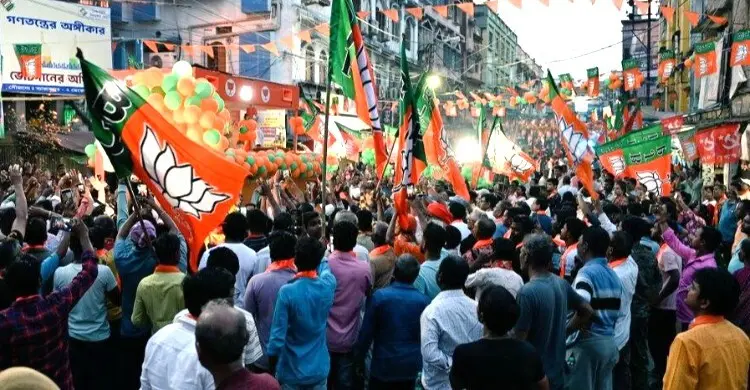
The Bharatiya Janata Party (BJP) secured a sweeping victory in the West Bengal Assembly elections, winning 207 out of 294 seats and achieving a two-thirds majority. The result has been described as a major political shift in the state. However, after the election results were announced, a fresh controversy emerged surrounding the voter list revision process, particularly the Special Intensive Revision (SIR). According to political analysts, in many of the seats won by the BJP, the number of voters removed from the electoral rolls exceeded the party’s margin of victory. This has sparked intense debate over how much the revision process may have influenced the final outcome.
Ahead of the elections, a statewide voter list revision drive was conducted over nearly six months under the supervision of the Election Commission. According to various analyses, around 9.1 million voters were removed from the electoral rolls during the process, representing nearly 12 percent of the state’s total electorate. Among them, at least 2.7 million voter-related objections and appeals are still pending before tribunals. Opposition parties had repeatedly alleged that a large number of legitimate voters were removed unfairly, while the BJP defended the exercise as a necessary step to ensure a clean and accurate voter list.
Post-election analyses revealed that in at least 105 of the 207 seats won by the BJP, the number of deleted voters was greater than the party’s winning margin. More significantly, the BJP had never won 86 of those 105 constituencies in previous elections. Political observers believe this raises serious questions about whether the voter revision process altered the electoral equations in several constituencies.
Experts argue that the large-scale removal of voters may have disproportionately affected the traditional support base of opposition parties. In many constituencies, the victory margins were relatively small, while the number of deleted voters was several times higher.
The Indas Assembly constituency in Bankura district is being cited as a key example in this debate. In the 2024 Lok Sabha elections, the Trinamool Congress had led the constituency by around 9,000 votes. However, during the voter list revision process, 7,515 voters were removed from the rolls. In the subsequent Assembly election, the BJP won the seat by just 900 votes. Opposition parties argue that the result could have been different had those voters been allowed to cast their ballots.
A similar pattern was observed in the Jadavpur constituency in South Kolkata. Traditionally considered a stronghold of the Left and the Trinamool Congress, more than 56,000 voters were removed from the electoral list there during the revision process. Eventually, the BJP won the seat by nearly 27,000 votes. Political commentators say the removal of such a large number of voters has naturally led to serious questions.
One of the most discussed outcomes came from Chief Minister Mamata Banerjee’s Bhabanipur constituency. More than 51,000 names were reportedly deleted from the voter rolls in the constituency during the revision exercise. In the election, Mamata Banerjee lost to BJP candidate Suvendu Adhikari by approximately 15,105 votes. Bhabanipur has long been considered a Trinamool Congress stronghold, making the result particularly significant in the state’s political landscape.
Not only the Chief Minister, but several senior ministers of the Trinamool government also lost their seats. Minister Aroop Biswas, who had represented the Tollygunge constituency for nearly two decades, was defeated by 6,013 votes. Yet, 37,889 voters were removed from the constituency’s electoral rolls during the revision process. Similar trends were observed in the constituencies of prominent leaders such as Shashi Panja, Siddiqullah Chowdhury, Moloy Ghatak, and Snehasis Chakraborty, where the number of deleted voters far exceeded their margins of defeat.
The analysis was reportedly based on data compiled by the Kolkata-based public policy research organization “Sabar Institute.” According to the institute’s findings, the voter list revision process may have played a decisive role in the final results in several constituencies. However, the Election Commission has not yet issued any official response to these claims.
The BJP has strongly rejected the allegations made by opposition parties. Party leaders maintain that the voter list revision was a standard administrative process aimed at removing duplicate and fake voters. According to the BJP, the election results reflected a strong public desire for political change in West Bengal. The party also pointed to anti-incumbency sentiment, allegations of corruption, and voter fatigue with the long-ruling government as major factors behind its victory.
On the other hand, the Trinamool Congress and other opposition parties have accused the authorities of deliberately removing opposition supporters from the voter rolls under the guise of electoral revision. They claim that many legitimate voters were denied their democratic right to vote. Opposition leaders have indicated that they may pursue legal action and intensify political protests over the issue.
Political analysts believe that while maintaining an accurate voter list is essential in a democracy, it is equally important to ensure that no legitimate voter is disenfranchised. The West Bengal election has once again brought this issue into sharp focus. The controversy has become particularly intense in constituencies where the number of deleted voters exceeded the winning margin.
Overall, while the BJP’s landslide victory has reshaped West Bengal’s political landscape, the voter list revision process has also triggered serious debate over electoral transparency and fairness. Whether the removal of such a large number of voters significantly influenced the election outcome remains a matter of political and legal discussion. Nevertheless, the election has reignited concerns over the credibility and inclusiveness of the democratic process in the state.