

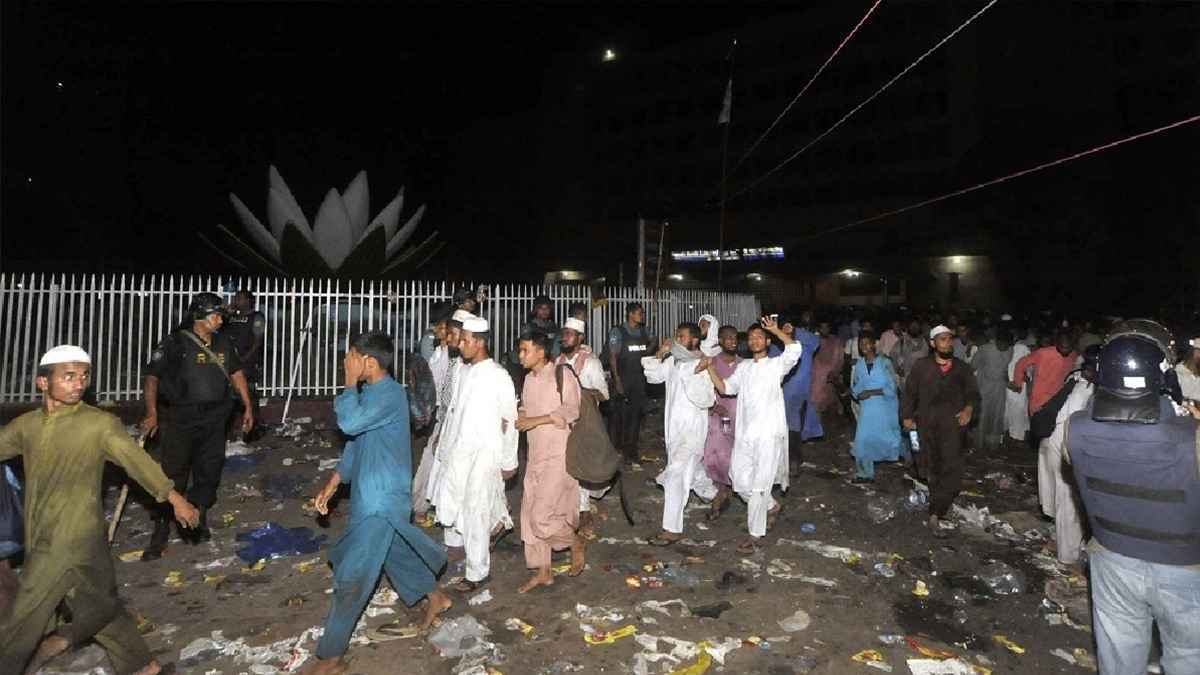
DHAKA – The investigation into the 2013 crackdown on Hefazat-e-Islam’s rally at Shapla Chatuar in Motijheel is in its final stages. Aminul Islam, the Chief Prosecutor of the International Crimes Tribunal (ICT), revealed on Sunday that evidence of at least 32 killings has been uncovered within Dhaka alone.Speaking to journalists on Sunday afternoon (May 3), the Chief Prosecutor stated that while 32 deaths have been confirmed so far, the final death toll cannot be definitively established until the investigation concludes.
Key Developments in the Investigation
-
Submission Deadline: The investigation report is scheduled to be submitted by June 7.
-
High-Level Involvement: Authorities are gathering evidence against senior government officials and police personnel involved in the operation.
-
Financial & Organizational Links: Evidence has emerged regarding individuals providing financial assistance for the crackdown. Members of the Chhatra League and Jubo League are also being brought under the scope of this investigation.
Background of the Case
The formal complaint regarding the decade-old massacre was filed by Hefazat-e-Islam leader Azizul Haque on behalf of leaders Maulana Junaid Al Habib and Maulana Mamunul Haque. The complaint names 21 individuals, including former Prime Minister Sheikh Hasina, as accused parties.
On April 5, a two-member judicial panel led by Justice Md. Golam Mortuza Majumdar, Chairman of the International Crimes Tribunal-1, granted a two-month extension for the submission of the investigation report.
Allegations of Genocide and Concealment
The original complaint outlines a series of events leading to the violence:
-
Protest Origins: Hefazat-e-Islam initiated a 13-point demand in response to religious insults and derogatory remarks about Prophet Muhammad (PBUH) by certain bloggers.
-
The Crackdown: After the government failed to meet their demands, protesters occupied Shapla Chatuar on May 5, 2013.
-
Human Rights Violations: The complaint alleges that between 11:00 PM on May 5 and 11:00 AM the following day, power lines were cut and a "genocide" was carried out against innocent madrasa students and pedestrians under the direction of the then-government.
-
Evidence Tampering: It is further alleged that bodies were removed using City Corporation vehicles and disappeared in unknown locations.
-
Legal Obstruction: Victims' families claimed that at the time, police stations refused to file cases or General Diaries (GD) regarding the missing and deceased students.