

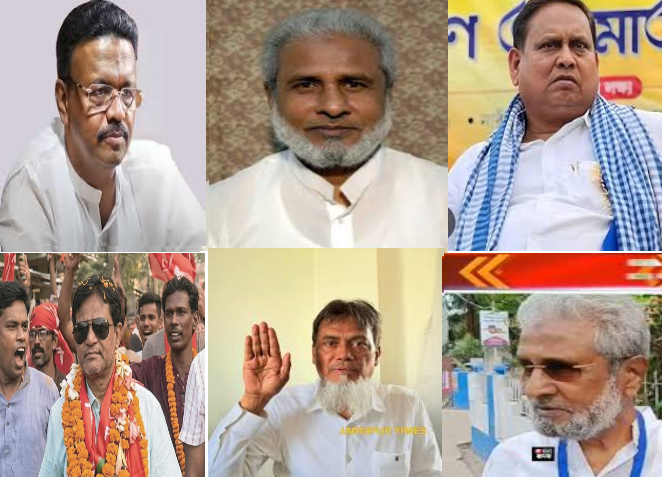
A significant picture of minority representation has emerged in this year’s West Bengal Assembly elections. Out of the 294-member Assembly, a total of 42 Muslim candidates have been elected. According to political analysts, Muslim representation has always played an important role in West Bengal’s electoral politics due to the state’s demographic and political realities. While that trend continued in this election, clear differences were visible in the strategies and performances of various political parties.
The ruling Trinamool Congress (TMC) secured the highest number of Muslim legislators. The party had fielded 47 Muslim candidates in the election, of whom 31 won their seats and entered the Assembly. The TMC leadership had placed special emphasis on retaining its minority vote bank from the beginning of the campaign. The party highlighted development initiatives, social security schemes, and welfare programs for minority communities during its election campaign, and the results reflected that strategy.
On the other hand, the main opposition party, the Bharatiya Janata Party (BJP), did not nominate a single Muslim candidate in this election. As a result, no Muslim legislator was elected from the BJP. The issue has generated widespread political debate. Some analysts believe the BJP chose not to nominate Muslim candidates because it prioritized its Hindutva-oriented political stance during the campaign. Opposition parties, however, argued that such a strategy conflicts with West Bengal’s long-standing pluralistic political culture.
The Indian National Congress also fielded a considerable number of Muslim candidates. The party nominated 70 Muslim candidates, but only two managed to win. Political observers believe the Congress failed to achieve better results due to organizational weakness and its declining political influence in the state. Similarly, the Left Front nominated 29 Muslim candidates, but its success remained limited. After a long period of political decline, only one Muslim candidate from the Left Front succeeded in winning a seat.
The Indian Secular Front (ISF) focused heavily on minority politics during the election campaign. The party fielded 24 Muslim candidates, and among them, Naushad Siddiqui won from the Bhangar constituency, once again drawing political attention. Centered around the religious and social influence of Furfura Sharif, the ISF attempted to consolidate minority votes but failed to achieve major statewide success.
A new political discussion also emerged around the “Am Janata Unnayan Party,” led by expelled Trinamool leader Humayun Kabir. The party fielded 90 Muslim candidates, one of the highest numbers among all parties. Although most of its candidates were unsuccessful, party chairman Humayun Kabir himself won from both the Rejinagar and Naoda constituencies in Murshidabad district. He later announced that he would resign from one seat in accordance with electoral rules, leading to a by-election there.
Among the notable winning Muslim candidates is Mohammad Siddiqui from the Amdanga constituency in North 24 Parganas. As a member of the influential Furfura Sharif family, he carries both political and religious influence. Trinamool Congress heavyweight Firhad Hakim won from the Kolkata Port constituency. A prominent figure in Kolkata municipal politics and state politics for many years, Hakim once again retained his strong political position.
Ahmed Javed Khan won from the Kasba constituency. He is known as a former state minister and an important Trinamool organizer. Alifa Ahmed secured victory from Kaliaganj in Uttar Dinajpur district. Nazrul Islam from Mothabari in Malda, Shamim Ahmed from Magrahat in South 24 Parganas, and Abdul Aziz from Lalgola in Murshidabad also won on Trinamool tickets.
In addition, Babar Ali from Jalangi and Niyamat Sheikh from Hariharpara were elected to the Assembly. Political observers believe that a large section of minority voters in these constituencies supported the Trinamool Congress.
From the Congress party, Zulfikar Ali won from the Raninagar constituency in Murshidabad, while Mohtab Sheikh secured victory from Farakka. Although the party’s overall performance fell short of expectations, it managed to retain its presence in these constituencies.
For the Left Front, the victory of Mostafizur Rahman after a long gap has been viewed positively by party supporters. Analysts say that although the influence of Left politics has diminished in West Bengal, the party still maintains some organizational strength in certain regions. Similarly, ISF leader Naushad Siddiqui’s victory has helped the party maintain its presence in minority politics.
According to political analysts, Muslim representation in West Bengal politics is important not only numerically but also in maintaining political balance. In many constituencies across the state, Muslim voters play a decisive role in determining election outcomes. As a result, political parties often adopt specific strategies to ensure minority representation and secure support from these communities.
Overall, the election of 42 Muslim legislators in this year’s Assembly elections reflects an important aspect of West Bengal’s political reality. At the same time, the differing approaches and electoral strategies of political parties have become more visible. In particular, the BJP’s decision not to nominate any Muslim candidate and the Trinamool Congress’s success with a large number of Muslim candidates have created fresh political discussions about the future electoral dynamics of the state.