

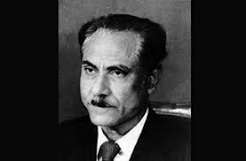
Justice Shahabuddin Ahmed remains a distinctive figure in the political and constitutional history of Bangladesh. He served as the country’s sixth Chief Justice and, at different stages of his career, also served as Acting President and head of an interim government in 1990–91 and as President from 1996 to 2001. His role in ensuring a peaceful transfer of power after the mass uprising of 1990, forming a neutral interim government and overseeing the national election of 1991 remains particularly significant in Bangladesh’s transition to democratic governance.
Shahabuddin Ahmed was born on February 1, 1930, in Pemol village of Kendua upazila in Netrokona district. His father, Talukdar Resat Ahmed Bhuiyan, was known locally as a social worker and philanthropist. Shahabuddin Ahmed completed his BA (Honours) in Economics from the University of Dhaka in 1951 and obtained a master’s degree in International Relations in 1952. In 1954, he passed the competitive examination for the then Civil Service of Pakistan (CSP) and subsequently received training at the Civil Service Academy in Lahore. He also undertook a special course in public administration at the University of Oxford.
He began his professional career in the administration cadre. He served in various administrative positions, including as Sub-Divisional Officer in Gopalganj and Natore and as an Additional Deputy Commissioner in Faridpur. In June 1960, he was transferred to the judicial service, a decision that eventually shaped the course of his distinguished career.
He subsequently served as an Additional District and Sessions Judge in Dhaka and Barisal and as District and Sessions Judge in Comilla and Chittagong. In 1967, he was appointed Registrar of the Dhaka High Court, marking an important step in his transition to the higher judiciary.
Following the independence of Bangladesh, Shahabuddin Ahmed was appointed a judge of the High Court Division of the Supreme Court on January 20, 1972. He also served as Chairman of the Labour Appellate Tribunal during 1973–74. On February 7, 1980, he was appointed a judge of the Appellate Division of the Supreme Court.
Several of his judgments and judicial observations contributed significantly to the constitutional and legal development of Bangladesh. His observations in the case concerning the Eighth Amendment to the Constitution were particularly noteworthy. He raised important questions regarding judicial independence, the rule of law, popular sovereignty and the limits of executive power. He also expressed concern over executive control over the appointment, promotion and transfer of judges and over the subordinate judiciary. These observations later became significant in the development of constitutional jurisprudence in Bangladesh.
In 1983, Shahabuddin Ahmed headed a commission formed to investigate the shooting of students during a protest at the University of Dhaka. Although the commission completed its investigation and submitted its report, the report was not made public by the government at the time. In 1984, he also served as Chairman of the National Pay Commission, whose recommendations subsequently contributed to changes in the country’s pay structure.
On January 14, 1990, Shahabuddin Ahmed became the Chief Justice of Bangladesh. At that time, the anti-autocracy movement against President H. M. Ershad was rapidly intensifying. On December 6, 1990, following Ershad’s resignation, the major political alliances reached a consensus on Shahabuddin Ahmed as a neutral figure capable of overseeing the country’s transition. He assumed the office of Vice-President and, on the same day, became Acting President.
Under his leadership, an interim government composed of neutral individuals was formed. The government’s principal responsibility was to restore political stability and create conditions for a free and fair parliamentary election. The national election held in February 1991 marked a crucial step in Bangladesh’s return to parliamentary democracy following years of authoritarian rule.
One of the significant initiatives during this transitional period was the restoration of greater freedom for the press. Several restrictive provisions of the Special Powers Act were amended or repealed, helping to expand the space for freedom of expression and journalism. These measures contributed to creating a more open political environment ahead of the 1991 election.
After the election, Shahabuddin Ahmed returned to his judicial responsibilities and resumed his position as Chief Justice on October 10, 1991. He continued to serve in that capacity until his retirement in 1995.
In 1996, Shahabuddin Ahmed was elected President of Bangladesh without contest on July 23 and took the oath of office on October 9. Although the President’s executive authority was limited under the parliamentary system, he maintained a reputation for independence, integrity and adherence to constitutional principles.
His relationship with the government was not always without disagreement. On some occasions, he took positions that reflected his concern for constitutional safeguards and individual rights. His initial reluctance to give assent to the controversial Public Safety Bill in 2000 was one such notable episode. He later gave his assent following assurances from the Prime Minister. The episode nevertheless became an example of his willingness to exercise independent constitutional judgment while serving as head of state.
Shahabuddin Ahmed completed his presidential term on November 14, 2001, after which he largely withdrew from public life. He lived a quiet and private life away from the media spotlight. In his personal life, he was the father of five children. His wife, Begum Anwara Ahmed, died in 2018. Earlier, in 2005, his eldest daughter, Professor Dr. Sitara Parveen of the University of Dhaka’s Department of Mass Communication and Journalism, died in a tragic road accident in the United States.
After spending his later years in seclusion, Shahabuddin Ahmed died on March 19, 2022, at the age of 92 while undergoing treatment at the Combined Military Hospital (CMH) in Dhaka. He was buried the following day at Banani Graveyard, beside the grave of his wife.
The life of Justice Shahabuddin Ahmed represents an important chapter in the political, constitutional and judicial history of Bangladesh. His commitment to constitutional values as a judge, his neutral role during the political crisis of 1990 and his contribution to restoring the country to democratic rule in 1991 earned him a distinctive place in Bangladesh’s history.
The defining feature of his career was his effort to uphold institutional integrity, the rule of law and political neutrality even when he occupied positions at the centre of state power. In moments of profound political uncertainty, Shahabuddin Ahmed emerged as a trusted figure who helped guide Bangladesh through a critical transition from authoritarian rule towards democratic governance.