

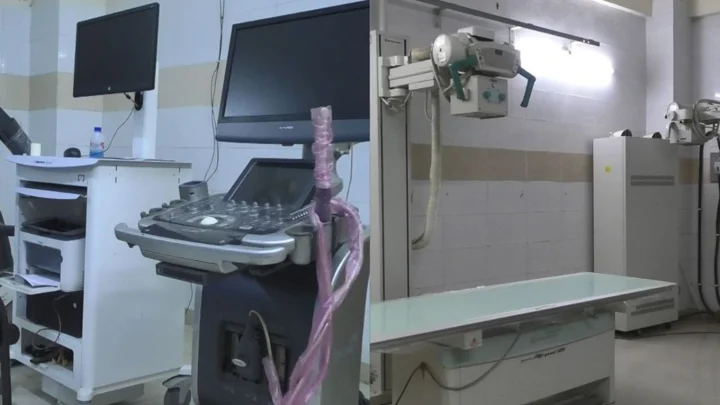
Government hospitals across Bangladesh possess modern diagnostic and medical equipment worth thousands of crores of taka. From upazila health complexes to district hospitals, divisional medical college hospitals and specialised facilities, 513 government hospitals collectively have medical and diagnostic equipment worth an estimated Tk 70.92 billion. However, due to shortages of skilled personnel, poor management and non-functional equipment, most patients are unable to benefit fully from these costly resources.
Laboratory and diagnostic services at government hospitals generally operate from around 8:00am to 1:00pm. This means patients have access to these services for only about five hours a day. After that, many laboratories, sample collection counters and diagnostic units are closed and locked. As a result, patients requiring urgent tests are often forced to turn to private hospitals and diagnostic centres.
According to data from the Directorate General of Health Services (DGHS), Bangladesh has around 16,000 healthcare facilities. Of these, more than 600 hospitals under the Ministry of Health and Family Welfare and the Ministry of Local Government have diagnostic facilities. Among them, 513 hospitals are under the Health Services Division.
Of these facilities, 426 upazila health complexes are equipped with services and equipment such as X-ray machines, electrocardiograms (ECGs), ultrasonography, urine analysers, pathology laboratories, operating theatres and blood banks. Each upazila hospital has an estimated average of Tk 20 million worth of medical equipment, meaning the total value of equipment at 426 such facilities stands at around Tk 8.52 billion.
Similarly, each of the 62 district hospitals has at least Tk 200 million worth of medical equipment. Collectively, these hospitals possess equipment worth approximately Tk 12.4 billion.
The eight divisional medical college hospitals are equipped with advanced facilities, including CT scanners, MRI machines, ventilators, intensive care units (ICUs), dialysis units, echocardiography and laparoscopic equipment. With an estimated Tk 2 billion worth of equipment at each hospital, the total value of equipment at these eight facilities is around Tk 16 billion.
In addition, 17 specialised hospitals focusing on cancer, kidney disease, orthopaedics, cardiovascular disease, respiratory illnesses and other conditions possess life-saving medical equipment worth an estimated Tk 34 billion.
Altogether, the 513 hospitals have medical and diagnostic equipment valued at approximately Tk 70.92 billion.
Despite this enormous investment, a significant portion of the equipment is not being used to its full capacity. A nine-month study conducted by the Power and Participation Research Centre (PPRC) at 22 government hospitals found that 52 percent of diagnostic equipment had not been used even once during the previous year. The proportion of patients receiving regular services had also fallen from 65 percent to just 25 percent.
The study revealed an even more concerning situation at the upazila level. X-ray services were unavailable at 101 of the 426 upazila health complexes, while ultrasonography was not available at 196 facilities. ECG services were also irregular at most upazila health complexes. Moreover, operating theatres at nearly two-thirds of upazila hospitals were reportedly non-functional.
One of the key reasons behind the crisis is the shortage of medical technologists. According to World Health Organization (WHO) standards, there should be three nurses and five medical technologists for every doctor. Based on this ratio, Bangladesh needs around 90,000 medical technologists. However, the country currently has far fewer than that number.
According to DGHS data, there are 6,406 approved posts for medical technologists in government hospitals, but only 3,892 are currently filled.
The shortage of personnel has made it particularly difficult to provide round-the-clock services. Healthcare professionals say that blood banks and emergency diagnostic units require continuous staffing, but the shortage of technologists places excessive pressure on the existing workforce. As a result, many services are forced to shut down after regular working hours.
The situation is also evident at the National Institute of Traumatology and Orthopaedic Rehabilitation (NITOR) in the capital. Patients often stand in long queues in the morning to consult doctors, but many are unable to undergo necessary diagnostic tests later in the day. Consequently, people who initially seek treatment at government hospitals are frequently compelled to have their tests performed at private facilities.
The PPRC study found that around 75 percent of patients were being forced to visit private diagnostic centres because diagnostic services at government hospitals were unavailable outside limited hours. A test that may cost around Tk 200 at a government hospital can cost three to five times more at a private facility.
This situation is increasing the financial burden on low- and middle-income families. According to the Health Economics Unit, citizens pay approximately 79 percent of the country's total healthcare expenditure out of their own pockets. Data from the Bangladesh Institute of Development Studies (BIDS) show that around 6.13 million people are pushed below the poverty line every year because of healthcare expenses.
Experts say that purchasing modern equipment alone cannot ensure quality healthcare. Hospitals must also have adequate skilled personnel and effective management systems to operate and maintain the equipment. In many cases, when a machine breaks down, lengthy administrative procedures delay repairs for years. Experts have therefore called for the recruitment of electro-medical technologists and the introduction of a faster and more efficient repair and maintenance system.
Professor Dr Rashid-i-Mahbub, former president of the Bangladesh Medical Association (BMA), believes that hospitals should provide services around the clock, as is standard in most countries. In Bangladesh, however, government hospital services remain largely confined to a limited number of hours each day. He argues that changing this situation requires policy reform and modernisation of the administrative structure of the health sector at the state level.
The government has meanwhile announced plans to introduce a two-shift system at government hospitals to expand healthcare services. Health Secretary Md Kamruzzaman Chowdhury said the government is considering introducing a second shift from around 2:30pm until the afternoon or evening.
He said the initiative would require not only additional doctors, nurses and medical technologists but also more diagnostic machines and other essential medical equipment.
State Minister for Health and Family Welfare Dr MA Muhit has also acknowledged the shortage of medical personnel and said the government has taken initiatives to recruit doctors, nurses and medical technologists.
Experts believe that if the billions of taka worth of equipment already available at government hospitals can be used efficiently and regularly, a large number of patients could receive affordable diagnostic and treatment services. To achieve this, however, the government must go beyond purchasing new equipment and ensure adequate recruitment of skilled personnel, introduce round-the-clock services, establish a rapid repair and maintenance system, and strengthen accountability and management across the public healthcare sector.