

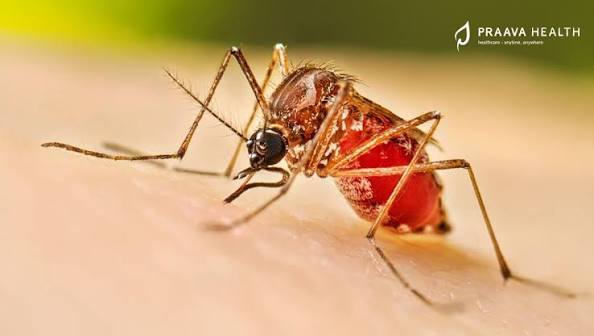
Despite increased spending on mosquito control, the Chattogram City Corporation (CCC) has failed to curb the mosquito menace. Instead, the spread of Aedes mosquitoes during the monsoon season has contributed to a rapid rise in dengue cases. Over the past 10 months, the CCC has spent around Tk 55 million on mosquito-control chemicals and equipment alone. Yet, a survey by the Directorate General of Health Services (DGHS) found Aedes larvae densities in several areas of the city several times higher than the safe threshold.
Between the 2022 and 2026 fiscal years, the CCC purchased mosquito-control chemicals and equipment worth nearly Tk 140 million. Of this amount, Tk 52.1 million was spent on adulticides, which kill adult mosquitoes, while Tk 74.8 million was spent on larvicides to destroy mosquito larvae. Another Tk 13 million was spent on fogging machines and hand-spray machines.
On June 30, the CCC announced an allocation of Tk 250 million for mosquito control in the 2026–27 fiscal year. City Mayor Dr Shahadat Hossain said the allocation was increased because of the rising incidence of dengue and other mosquito-borne diseases. In the previous fiscal year, the allocation for mosquito control was Tk 53.8 million.
According to DGHS data, 1,497 people in Chattogram district had been diagnosed with dengue as of August 19 this year. Three people had died, while 163 patients were undergoing treatment at different hospitals.
Data from the Civil Surgeon’s Office show that 663 people were infected with dengue during the first 19 days of August alone. In July, 536 cases were reported, indicating a rapid rise in infections over the two months.
July to October is generally considered the peak dengue season in Chattogram. During this period in 2022, 2,640 dengue cases were reported. The figure rose sharply to 12,003 in 2023. In 2024, 2,737 cases were recorded, followed by 3,060 cases in 2025.
The dengue situation over the past four and a half years also paints a worrying picture. In 2022, Chattogram recorded 5,445 dengue cases and 41 deaths. In 2023, cases reached a record 14,087, while 107 people died. In 2024, 4,323 cases and 45 deaths were reported. In 2025, 4,864 people were infected and 27 died. As of August 19 this year, nearly 1,500 cases and three deaths had been reported.
Survey Finds Alarming Aedes Presence
A pre-monsoon survey conducted by the DGHS found an alarming spread of Aedes mosquitoes in 18 wards of the city. Between June 8 and 18, survey teams inspected 370 houses and found Aedes larvae in 99 of them. They also examined 345 water containers and detected larvae in 114.
The survey recorded a Container Index of 33.04 percent, whereas the safe level is below 10 percent. The House Index stood at 26.76 percent, against a safe level of below 5 percent. The Breteau Index was 30.81 percent, while the safe level is below 20 percent.
North Kattali, Panchlaish, Jalalabad, West and South Bakalia, Patharghata, Anderkilla and South Halishahar were identified as high-risk areas.
Divisional entomologist Md Mofizul Haque Shah said 70 to 80 percent of the larvae found during the survey were Aedes aegypti. He said water stored in households because of water shortages, along with construction sites, had become major breeding grounds for Aedes mosquitoes.
355 Workers for a City of 7 Million
Over the 10-month period from July last year to April this year, the CCC spent around Tk 55 million on mosquito-control chemicals and equipment. In addition, approximately Tk 5 million is spent every month on the salaries of 355 mosquito-control operators. The mosquito-control budget for the 2025–26 fiscal year was Tk 90 million, while Tk 38 million was spent in the previous fiscal year.
A total of 355 workers are engaged in mosquito-control activities across the CCC’s 41 wards. The city corporation claims that insecticides are sprayed every 72 hours in each block. However, residents complain that mosquito-control activities are not carried out regularly in many areas.
CCC Chief Conservancy Officer Ikhtiar Uddin Ahmed Chowdhury said providing services to a city of around seven million people with just over 350 workers was difficult. Nevertheless, he said the corporation was making its best efforts. He added that destroying larvae was more effective than killing adult mosquitoes, and therefore greater emphasis was being placed on larvicidal activities alongside fogging.
Fogging Alone Cannot Solve the Problem
Experts say spraying insecticides alone cannot effectively control mosquitoes. Regular assessments are needed to identify which mosquito species are present in particular areas, where their breeding grounds are located and which insecticides are effective against them.
Md Ahsan Habib Siam, a lecturer in the Department of Zoology at the University of Chattogram, said entomologists should be more closely involved in mosquito-control programmes. Without scientific expertise, he said, it would be difficult to achieve the desired results even after spending large amounts of money.
Urban planner Md Delwar Hossain Majumdar said prolonged use of the same type of insecticide could cause mosquitoes to develop resistance. Therefore, the effectiveness of insecticides should be tested regularly in laboratories.
CCC Mosquito Control Officer Md Sharfhul Islam Mahi said a special programme had been launched to combat dengue. A 60-member team is working in high-risk areas, and sufficient quantities of larvicides and adulticides have been stocked for the next six months.
Experts also stressed that citizens must play an active role alongside the city corporation. Preventing water from accumulating in homes, rooftops, flowerpots, discarded containers and construction sites could significantly reduce Aedes mosquito breeding.