

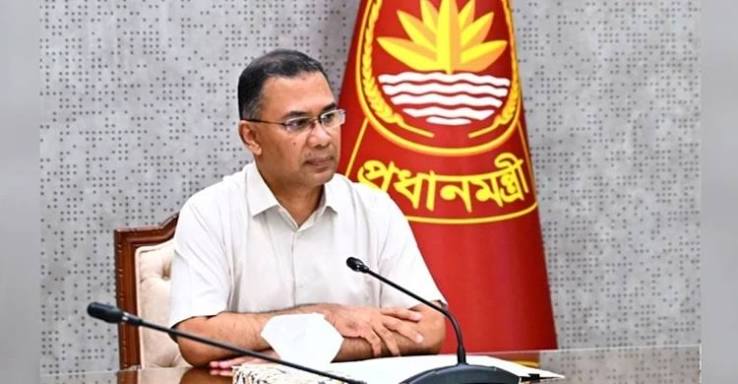
Bringing a politically unsettled country facing economic pressure and a range of administrative and institutional challenges back to a normal trajectory is no easy task. Against this backdrop, the government led by Prime Minister Tarique Rahman has completed 180 days in office. Over the past six months, the government’s performance, achievements, limitations and future plans have generated considerable discussion among political observers, experts and the general public.
According to information from the Prime Minister’s Office, Tarique Rahman took oath as Prime Minister on February 17, 2026. His government therefore completed six months in office on August 17. On the occasion, a special meeting was held on Monday at the “Shapla” Hall of the Prime Minister’s Office in Tejgaon to review the government’s activities during its first 180 days and discuss its plans for the future. Senior officials and representatives from various ministries attended the meeting.
Prime Minister’s Office spokesperson and adviser Mahdi Amin said one of the most significant aspects of the government’s first six months has been its continued efforts to implement the commitments made in the election manifesto. According to him, democratic values, good governance, transparency and accountability have been given priority in the government’s activities. He also said that the government is moving forward with a sense of responsibility while seeking to uphold public confidence and trust.
One of the key questions in assessing the government’s first six months is how much relief has been brought to the economy and people’s daily lives. High prices, employment, electricity and fuel supplies, and pressure on the banking sector remain major challenges. The government, however, has said that various initiatives are being taken to address these problems. Economic reforms, increased investment, simplification of the tax system and efforts to move away from excessive regulatory controls have been highlighted as important areas of focus.
The electricity and energy situation has also emerged as a major test for the government. Prime Minister Tarique Rahman has recently said that some decisions taken without adequate planning by the previous government contributed to the current energy challenges. At the same time, he has indicated that a long-term plan to address the country’s electricity problems over the next decade will be presented to Parliament.
The government has also highlighted a number of initiatives in agriculture and social protection. According to government statements, a “Farmer Card” has been introduced to help make farmers more economically self-reliant. Measures have also been taken to provide relief to farmers through agricultural loan waivers. The government has further announced initiatives to register fishermen, provide them with identification cards and bring them under the Vulnerable Group Feeding (VGF) programme during fishing bans. Continued state support for disadvantaged people, persons with disabilities and meritorious students has also been emphasized.
Law and order and administrative reform have likewise remained important issues during the government’s first six months. The government says it is working to establish a police and administration free from political harassment while strengthening the rule of law. However, the actual effectiveness of these initiatives will need to be assessed over time by examining the situation at the grassroots level, citizens’ rights, administrative neutrality and the overall law-and-order situation.
A section of political analysts believes that it is unrealistic to expect a country’s long-standing economic, administrative and infrastructure-related problems to be completely resolved within only six months. The government’s first six months can therefore be viewed as a period of laying the groundwork and reorganizing the foundations of governance. How effectively the decisions taken during this period are implemented will be one of the key measures of the government’s success in the years ahead.
Public expectations are another crucial factor. After years of political tensions and economic pressures, people want a stable life, affordable prices, reliable electricity and gas supplies, employment opportunities, security and an administration free from corruption. Although the government has claimed strong public support, maintaining that confidence will require visible and sustainable improvements in people’s everyday lives.
Overall, it would be premature to describe the first 180 days of the Tarique Rahman government as the final measure of its success. At the same time, the initiatives taken during this period cannot simply be overlooked. The government’s greatest challenge now is to translate its declared reforms and election commitments into tangible results.
It is not possible to take a country to the peak of development within six months. However, it is possible to establish the initial foundations for stability, good governance and economic recovery. From that perspective, supporters of the government view its first 180 days as an important opening phase in Bangladesh’s political and economic reconstruction.
The coming years will ultimately determine whether the initiatives of these first six months can be transformed into sustainable development, improved governance and greater public welfare. The government’s ability to deliver tangible results while maintaining democratic values, accountability and public confidence will be critical to determining whether Bangladesh can move from recovery toward long-term prosperity.