

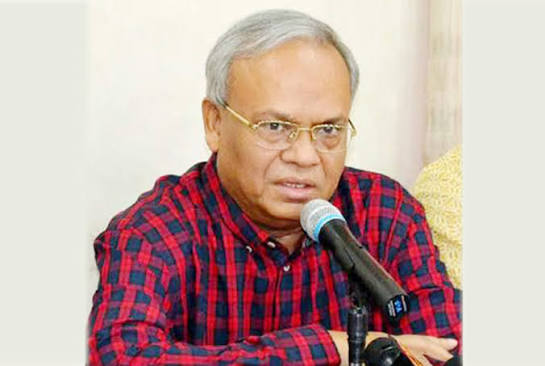
Among Bangladesh’s long-serving political figures, Ruhul Kabir Rizvi’s political journey has been closely associated with periods of crisis, personal sacrifice, and sustained organizational responsibility. As a senior joint secretary general of the Bangladesh Nationalist Party (BNP), he has played a prominent role in communicating the party’s positions to the media and maintaining organizational activities from the party’s central office. For party leaders and activists, much of Rizvi’s political identity has been shaped by his steadfast presence during difficult times and his dedication to the organization. Today, that long-standing commitment has culminated in his inclusion in the party’s Standing Committee, the BNP’s highest policymaking body.
One of the most remarkable chapters of Rizvi’s political career was his prolonged stay at the BNP’s central office in Naya Paltan between 2018 and 2020. Following the imprisonment of BNP Chairperson Khaleda Zia, Rizvi began staying at the party office and remained there for more than two years. He reportedly spent around 787 days at the office. After Khaleda Zia was released on March 25, 2020, Rizvi left the party office and returned home the following day, March 26.
During that period, the party office effectively became Rizvi’s home and workplace. From there, he regularly held press conferences, sent party statements and press releases to the media, maintained communication with party leaders and activists, and coordinated various political programmes and movements.
According to Rizvi, his decision to remain at the party office was driven by a sense of responsibility toward the organization and its activists. He wanted to ensure that party workers would always find someone at the office when they came seeking political guidance or communication during a period of intense political pressure.
During the BNP’s prolonged political crisis, Rizvi became one of the party’s most visible voices in the media. Particularly throughout the long tenure of the Awami League government, he regularly addressed the media on the BNP’s political programmes, reactions, demands and various developments. The Naya Paltan office consequently became one of the principal centres of his political activities.
Rizvi’s political career has also been marked by personal sacrifice. He was reportedly shot during a political demonstration in the 1980s while leading a movement. The bullet entered through the left side of his abdomen and exited through his back, leaving him with permanent physical injuries. The damage caused to his internal organs and ligaments has affected his mobility ever since. Even today, he is often seen walking with the support of a stick.
His continued political activism despite such physical limitations has added another dimension to his public image. To many of his supporters, his political career represents not only organizational commitment but also considerable personal sacrifice.
There is a familiar saying in politics that some politicians take the lead during periods of crisis primarily to secure advantages when conditions improve. Rizvi’s supporters, however, consider his career an exception to that conventional observation. They argue that his long-standing role during the BNP’s difficult years, his commitment to the party organization and his continued involvement despite personal hardship demonstrate a different kind of political dedication.
His organizational responsibilities remained significant even as the country moved toward the 2026 general election. Rizvi was appointed member-secretary of the BNP’s central election management committee, with Standing Committee member Nazrul Islam Khan serving as its chairman. The committee was responsible for coordinating and overseeing the party’s election-related activities.
Over the years, Rizvi has also remained closely involved in various organizational decisions, committee formations and the communication of the party’s official positions. His regular interaction with party activists and leaders has helped maintain a direct organizational link between the central leadership and the grassroots.
Rizvi’s political identity, therefore, extends beyond any particular title or position. It is rooted in years of organizational involvement, his close association with the party office, continuous communication with party workers, and his visible presence during periods of political uncertainty. His supporters particularly emphasize three qualities when describing his political career: sacrifice, loyalty and organizational dedication.
His relationship with the BNP’s Naya Paltan office is equally significant. It is not merely a workplace but a place deeply connected with years of political struggle, press conferences, protest programmes, communication with activists and countless personal memories. His decision to spend more than two years there remains one of the most distinctive chapters of his political life and an unusual example of organizational commitment in contemporary Bangladeshi politics.
Ultimately, Ruhul Kabir Rizvi’s political journey illustrates that a leader’s role during difficult times cannot be measured solely by speeches, positions or titles. At times, remaining beside the organization, maintaining communication with activists and continuing to shoulder responsibility in the face of adversity become the most meaningful expressions of political leadership.
For Rizvi, that sustained commitment has helped establish a distinct position within the BNP. His elevation to the party’s Standing Committee can therefore be viewed by his supporters as recognition of a long political journey defined by loyalty, sacrifice and unwavering commitment to the organization.