

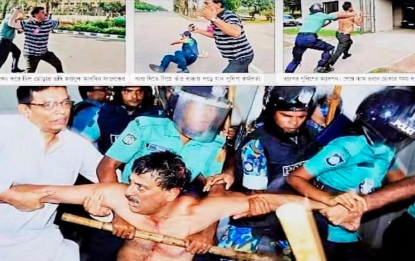
Jainul Abdin Faruk, a native of Senbagh in Noakhali, is a veteran leader of the Bangladesh Nationalist Party (BNP). Throughout his long political career, he has been involved in numerous movements and struggles. Yet July 6, 2011, remains one of the most painful and terrifying memories of his life. The incident was not only a traumatic chapter in his personal and political journey but also became a widely discussed episode in the history of political movements in Bangladesh.
On July 6, 2011, clashes broke out between police and activists during a programme organized by the then opposition party in the area surrounding the Jatiya Sangsad Bhaban, or National Parliament complex. Jainul Abdin Faruk was seriously injured during the police action. According to eyewitness accounts, tensions escalated between law enforcement agencies and the protesters, and at one point Faruk was subjected to severe baton charges. There were also allegations that he was struck with the butt of a rifle.
The scenes of that day were deeply disturbing. Faruk was seen lying on the road after being beaten, sustaining injuries to different parts of his body. The incident sparked widespread concern and strong reactions across the country. Political leaders, activists and members of the public expressed outrage over the violence. The opposition at the time alleged that excessive force had been used against Faruk with the intention of causing serious harm, even raising allegations that the attack was aimed at killing him.
More than a decade later, the memory of that terrifying day continues to haunt Faruk. The images of the violence and the ordeal he endured remain deeply etched in his mind. At times, the trauma resurfaces even in his sleep, causing him to wake up suddenly as if he has been transported back to that horrifying day. While many of his physical injuries have healed over time, the emotional scars left by the incident remain profound.
For Jainul Abdin Faruk, the BNP is more than simply a political organization; it represents a deeply rooted part of his political identity, convictions and lifelong commitment. He regards former BNP Chairperson Khaleda Zia as a central figure in his political ideals and considers Tarique Rahman a key symbol of the party's future leadership. Guided by these beliefs, Faruk has continued to remain involved in politics despite the many challenges and adversities he has faced throughout his career.
More than a decade has passed since July 6, 2011, but the events of that day remain an indelible memory in Jainul Abdin Faruk's life. Political differences are an inherent part of democratic society, but the protection of political expression and the right to peaceful political activity are equally important. At the same time, law enforcement agencies have a responsibility to exercise restraint and professionalism.
Faruk's experience on that fateful day is therefore more than a personal story of suffering. It also raises broader questions about political tolerance, democratic rights and the conduct of state institutions. His painful memories of July 6, 2011, continue to serve as a reminder of the human cost that political conflict and excessive use of force can inflict on individuals and society.