

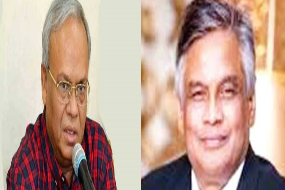
The Bangladesh Nationalist Party (BNP) has appointed four new members to its National Standing Committee, the party’s highest policy-making body. The announcement was made in a press release issued by the party on Saturday, August 15.The four newly appointed members are senior BNP Joint Secretary General and advocate Ruhul Kabir Rizvi Ahmed, BNP Chairperson’s Adviser Amanullah Aman, former government official Mohammad Ismail Zabiullah, and Dr. Farhad Halim Donar, chief adviser of the Doctors Association of Bangladesh (DAB).
According to the BNP, the appointments were made as part of the party’s decision to strengthen its organizational activities and enhance the effectiveness of its leadership. Among the four, Ruhul Kabir Rizvi and Amanullah Aman are veteran leaders who rose through the ranks of student politics. Both have built long political careers marked by participation in political movements, arrests, legal cases and periods of imprisonment.
Ruhul Kabir Rizvi: From the Streets of Political Movements to the Standing Committee
Ruhul Kabir Rizvi’s political journey began during his student years. After completing his higher secondary education, he entered student politics through the left-wing organization Revolutionary Students Union. He served as general secretary of the Rajshahi Government College unit of the organization before joining the Bangladesh Jatiyatabadi Chhatra Dal, the student wing of the BNP.
After joining Chhatra Dal, Rizvi became publicity secretary of its Rajshahi University unit and later served as the unit’s general secretary. He subsequently served as president of the central committee of Bangladesh Jatiyatabadi Chhatra Dal.
In the 1989–90 election of the Rajshahi University Central Students’ Union (RUCSU), Rizvi was elected vice-president (VP). His involvement in student politics and political movements subsequently brought him to the forefront of national politics.
Rizvi played an active role in the anti-Ershad movement of the late 1980s and early 1990s. According to accounts within the BNP, he was shot during the movement. His political career thereafter remained closely associated with the party’s various movements and struggles.
Over the course of his long political career, Rizvi has faced numerous arrests, periods of imprisonment and legal cases. During difficult periods for the BNP, he remained active in organizational activities and maintained close contact with party leaders and grassroots activists.
His political commitment continued even during periods of imprisonment. Rizvi has previously spoken about continuing his studies while in prison and sitting for his LL.M. examinations while incarcerated.
Following the BNP’s Sixth National Council in 2016, Rizvi was appointed Senior Joint Secretary General of the party. He subsequently became one of the BNP’s most recognizable public faces, regularly addressing the media, issuing party statements and communicating the party’s position on political developments and opposition movements.
His long political experience and role during the party’s difficult years eventually led to his appointment to the National Standing Committee. He was also entrusted with an important role in the BNP’s election-related activities in the most recent parliamentary election.
His elevation to the Standing Committee marks another significant milestone in a political career that began in student politics and developed through years of organizational work and political activism.
Amanullah Aman: From DUCSU Vice-President to National Politics
Like Rizvi, Amanullah Aman began his political career through student politics. While studying at the University of Dhaka, he became actively involved in the politics of Jatiyatabadi Chhatra Dal and played a prominent role in the anti-Ershad movement.
During the 1990–91 academic year, Amanullah Aman was elected vice-president of the Dhaka University Central Students’ Union (DUCSU). His leadership during the anti-autocratic movement helped establish him as a prominent figure in student politics.
He soon moved from student politics into national electoral politics. In the 1991 parliamentary election, Amanullah Aman was elected as a member of parliament from the Dhaka-3 constituency as a BNP candidate.
During BNP governments, he held ministerial responsibilities. He served as State Minister for Health and Family Welfare and, after the BNP returned to power in 2001, was appointed State Minister for Labour and Employment.
Over his long political career, Amanullah Aman has faced considerable political and legal challenges. Several cases have been filed against him at different times, including cases related to corruption and allegations of extortion.
In 2007, he was sentenced to seven years in prison in an extortion case filed at South Keraniganj Police Station. He was subsequently acquitted of the conviction by the High Court.
Aman and his wife, Sabera Aman, also faced a case filed by the Anti-Corruption Commission over allegations involving concealment of wealth information and acquisition of assets beyond known sources of income. A special court initially sentenced Aman to 13 years in prison in that case. The case subsequently went through different stages of the judicial process, and he was ultimately acquitted by the Appellate Division.
Despite facing legal proceedings, arrests and periods of imprisonment at various stages of his political career, Aman remained active in BNP politics. During the party’s prolonged period outside government, he played a role in its organizational activities and political movements.
He has also served as an adviser to the BNP Chairperson and as convener of the BNP’s Dhaka North City unit. His long involvement in politics, particularly in and around Keraniganj, has helped him establish a strong organizational base at the local level.
Aman’s political career reflects a long transition from student leadership to parliamentary politics, ministerial responsibility and, ultimately, a position in the BNP’s highest policy-making body.
Recognition of a Long Political Journey
Although Ruhul Kabir Rizvi and Amanullah Aman followed different paths in their political careers, both share a common history of involvement in student politics, political movements and organizational activities during difficult periods for the BNP.
Their journeys from student leaders to senior figures in national politics have spanned several decades. Both have experienced arrests, legal cases, political pressure and periods of imprisonment while remaining active in BNP politics.
Their appointment to the National Standing Committee therefore represents a significant new chapter in their political careers. As members of the party’s highest policy-making forum, they are expected to contribute their political experience, organizational knowledge and understanding of grassroots politics to the BNP’s future decision-making.
For BNP leaders and activists, the appointments are also viewed as recognition of the two leaders’ long-standing involvement with the party. Their rise from student politics to the highest level of the party’s policy-making structure reflects decades of political activism, organizational work and participation in movements.
For a new generation of political observers and activists, the careers of Rizvi and Aman offer an insight into the long and often difficult journey from student leadership to national politics in Bangladesh.