

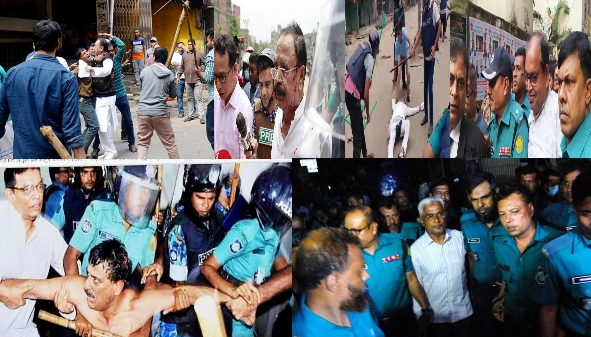
Bangladesh’s political landscape includes a number of leaders whose careers have been marked by prolonged struggle, legal cases, imprisonment, alleged harassment, and sustained participation in street politics. Among them are Mirza Abbas, Goyeshwar Chandra Roy, Shamsuzzaman Dudu, Zainul Abdin Faruk, and Syed Moazzem Hossain Alal. All five have held prominent positions in the Bangladesh Nationalist Party (BNP) and have remained involved in the party’s political activities for decades.
A significant part of their political lives has been shaped by the difficult realities of Bangladesh’s political arena. At different times, they have taken part in street demonstrations, faced arrest and imprisonment, and dealt with numerous legal cases and political pressures. Despite these challenges, they have continued their political activities and remained involved in the party’s programmes and movements.
A defining feature of their political careers has been their emphasis on party ideology, organisational loyalty, and the struggle for democratic rights. Their political journey, according to party leaders and supporters, has involved considerably more hardship than personal comfort. Arrests, imprisonment, legal proceedings and political pressure have been recurring features of their long careers.
Syed Moazzem Hossain Alal is particularly known among BNP supporters as an experienced and tested leader of the party’s street politics. Throughout his political career, he has faced arrests, imprisonment and numerous legal cases. A figure associated with his political career claims that he has faced 357 cases, been placed on remand 29 times and spent approximately 2,160 days in prison. However, such figures should be independently verified through official court and prison records before being presented as established facts.
Alal is not alone in having experienced legal and political pressure. Mirza Abbas, Goyeshwar Chandra Roy, Shamsuzzaman Dudu and Zainul Abdin Faruk have also spent decades in politics amid protests, arrests, legal proceedings and periods of imprisonment. Their supporters therefore regard them as veteran and tested leaders who have remained connected to the streets rather than withdrawing from active politics.
Although Bangladesh’s political landscape has passed through several phases of democratic movements, questions surrounding the institutionalisation and long-term consolidation of democracy remain significant. BNP leaders have repeatedly emphasised political rights, freedom of expression, the rule of law and voting rights as essential elements of a democratic system. Against this backdrop, the five veteran leaders have continued to participate in political activities despite their age and long experience.
Their political careers also raise a broader question: how should political service be measured—by personal gains or by sacrifice and commitment? Their supporters argue that the five leaders have placed greater emphasis on party principles and democratic movements than on personal political benefits. They have continued to follow party decisions and participate in political programmes, even when doing so involved considerable personal risk or hardship.
Another notable aspect of their political careers is their continued engagement with party activists during difficult periods. Even amid legal cases, arrests and political pressure, they have sought to maintain communication with grassroots leaders and supporters and encourage them to remain politically active.
Yet decades of political struggle inevitably bring fatigue and personal hardship. After years of facing cases, arrests and political pressure, these veteran politicians, like anyone else, may also seek moments of normalcy and relief. Time with family, freedom from political pressure and an opportunity to breathe freely are natural aspirations after a prolonged period of political struggle.
Despite this, there is little indication that Mirza Abbas, Goyeshwar Chandra Roy, Shamsuzzaman Dudu, Zainul Abdin Faruk and Syed Moazzem Hossain Alal have completely withdrawn from political life. For them, the struggle for democracy has become closely connected with their political identities and long-standing commitments. Rather than focusing solely on personal gain or loss, they continue to emphasise their party, political principles and democratic rights.
Ultimately, history will judge the extent of each politician’s contribution, sacrifice and commitment to democratic politics. What remains evident is that these five veteran BNP leaders have become associated with an important chapter of the party’s political struggles. Having spent decades navigating protests, legal cases, imprisonment and political pressure, they continue to remain active in politics, driven by the expectation that democracy will eventually become fully institutionalised and that their long years of struggle will find lasting meaning.