

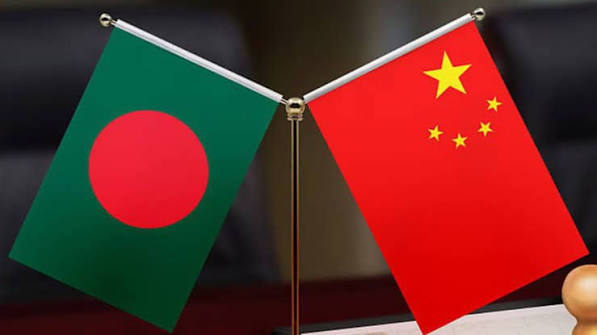
Bangladesh–China Corridor Plan Sparks Strategic Debate Bangladesh and China have taken significant steps toward deepening their bilateral strategic partnership following high-level talks between Prime Minister Tarique Rahman and Chinese President Xi Jinping at the Great Hall of the People in Beijing. The leaders held extensive discussions on regional connectivity, trade, infrastructure development, defence cooperation, the Rohingya crisis, and long-term regional economic integration. According to Prime Minister's Office spokesperson and adviser Mahdi Amin, one of the key issues discussed during the meeting was China's proposal to establish a Bangladesh–Myanmar–China Economic Corridor (BMCC). The proposed corridor would connect Bangladesh directly to mainland China through an integrated road and rail network passing through Myanmar. Officials said the project would expand Bangladesh's international trade, strengthen multimodal transport, enhance regional connectivity, and provide fresh momentum for the country's economic growth. As part of the proposed initiative, China also expressed interest in modernising Chattogram and Mongla ports. Beijing aims to develop Chattogram into a major maritime and logistics hub for South Asia while upgrading Mongla Port through technical assistance and infrastructure development. The proposal has also drawn attention from geopolitical analysts. According to geopolitical analyst Mostafizur Rahman, although Bangladesh is expected to benefit economically from the proposed Bangladesh–Myanmar–China Economic Corridor, China is likely to be the principal strategic beneficiary. He explained that once operational, the corridor could provide China with an alternative route for transporting crude oil and other strategic commodities, thereby reducing its dependence on the Strait of Malacca. Such an alternative would strengthen China's energy security and improve the resilience of its supply chains. Rahman said this strategic significance is precisely why the United States is likely to view the initiative as more than simply an economic project. Instead, Washington is expected to assess it within the broader context of Indo-Pacific geopolitics, where any expansion of China's strategic capabilities could raise concerns. However, he noted that the U.S. position will ultimately depend on the nature of the corridor, how the infrastructure is used, the security arrangements surrounding it, and whether any facilities have military or dual-use capabilities. If the project remains purely commercial and civilian in nature, international concerns are likely to remain limited. However, if it acquires a strategic or military dimension, it could become a new arena of geopolitical competition in South Asia and the wider Indo-Pacific region. Observers believe that while the proposed corridor offers Bangladesh considerable economic opportunities, the country will need to maintain a careful strategic balance. They argue that Bangladesh must safeguard its economic interests while simultaneously protecting its sovereignty and preserving an independent and balanced foreign policy.