

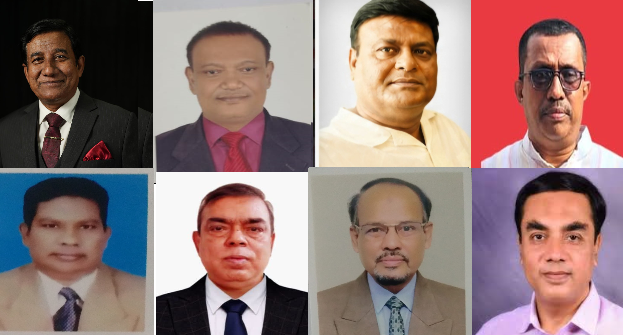
More than a hundred dedicated leaders of the Bangladesh Nationalist Party (BNP) are waiting for decisions from the party's high command regarding their future roles within the organization. Despite remaining without official positions for years, they have not abandoned the party. Once influential figures who played key roles in political movements and mobilized supporters across the country, many of these leaders now find themselves largely overlooked within the party's organizational structure.
Nevertheless, their loyalty and commitment to BNP remain unwavering. They believe that their years of sacrifice, struggle, and contribution to the party will eventually receive proper recognition. Driven by that belief, they continue to participate actively in party programs, rallies, meetings, and organizational activities without seeking positions or personal benefits. For them, BNP is not merely a political party; it is the foundation of their political identity and their ultimate source of hope and inspiration.
As one of Bangladesh's largest political parties, BNP has a long history marked by political movements, sacrifices, and repression. For more than fifteen years, the party remained out of power and faced numerous political challenges, including arrests, lawsuits, harassment, and crackdowns. During this difficult period, countless leaders and activists from BNP's affiliated organizations—including Jatiyatabadi Chhatra Dal, Jubo Dal, Swechchhasebak Dal, and Mohila Dal—played active roles in sustaining the party's political activities.
Many sacrificed their personal lives, families, careers, and future opportunities for the sake of the party. Some spent years in prison, lived in hiding, regularly attended court hearings, and endured the burden of multiple political cases while continuing their political struggle.
Over time, however, many of these leaders have been left without official positions within the party. Despite this, they have not distanced themselves from BNP. Instead, they remain committed to strengthening and organizing the party and continue to work actively at different levels.
According to party sources, more than 150 such dedicated and experienced leaders currently remain outside formal organizational positions. Most of them once held important responsibilities within the central committees of Chhatra Dal, Jubo Dal, and Swechchhasebak Dal. During critical periods of political struggle, they inspired party activists and mobilized supporters across the country. Today, many of them are known only as former leaders despite their continued political involvement.
Among those who played significant roles in BNP's movements is Mortazul Karim Badru, former Senior Vice President of the Jubo Dal Central Executive Committee. He also served as General Secretary of Jagannath University Chhatra Dal. Throughout his political career, he led numerous movements and faced considerable political adversity.
Another prominent figure is Abdul Khaleque Hawlader, former First Vice President of Jubo Dal and former Organizational Team Leader for Mymensingh Division. He previously served as Convener of Jagannath University Chhatra Dal and was twice elected Vice President of the Central Chhatra Dal. Throughout his political life, he led countless political programs and faced repeated political harassment.
Golam Mawla Shahin is another notable example. He served as Convener of Jagannath University Chhatra Dal, Vice President of the Central Chhatra Dal, and General Secretary of Dhaka Metropolitan South Jubo Dal for two consecutive terms. Although he currently holds no organizational position, his commitment to BNP remains unchanged. He continues to hold deep respect for BNP Acting Chairman Tarique Rahman and remains steadfast in his loyalty to the party. Despite facing numerous political cases and serving prison terms, he has never deviated from the political ideals of former President Ziaur Rahman.
Several other experienced Jubo Dal leaders currently remain outside the party's formal structure despite their long-standing contributions. They include Ali Akbar Chunnu, Organizational Team Leader for Khulna Division; Yusuf Bin Jalil Kalu, Team Leader for Chattogram Division; Golam Rabbani, Team Leader for Rajshahi Division; Tarikul Islam Bani, Team Leader for Dhaka Metropolitan Jubo Dal; Advocate Abu Selim Chowdhury, Team Leader for Faridpur Division; Shahid Ullah Talukder, Team Leader for Sylhet Division; Ruhul Amin Akil, Team Leader for Rangpur Division; Zakir Hossain Siddiqui, Team Leader for Cumilla Division; and Zakir Hossain Nannu, Team Leader for Dhaka Division.
Similarly, former Joint General Secretaries of Jubo Dal—Nurul Islam Khan Masud, G.M. Sabur Kamrul, and Masud Ahmed Milon—played important roles during BNP's most challenging years. Nurul Islam Khan Masud also served as Vice President of the Central Chhatra Dal and Acting General Secretary of Dhaka Metropolitan Chhatra Dal.
Former Acting President of Swechchhasebak Dal Mostafizur Rahman, former Senior Vice President Sarwar Hossain, and former Chhatra Dal General Secretary Saif Mahmud Jewel are among nearly 150 former central leaders who remain actively involved in BNP politics despite having no official positions.
One of the defining characteristics of these leaders is their loyalty during difficult times. Many face numerous political cases, with some reportedly accused in dozens or even hundreds of lawsuits. Long periods away from home, separation from family, living in hiding to avoid arrest, and frequent court appearances became part of their daily reality.
Many leaders recall periods when they were unable to spend months in their own homes due to political circumstances. Some were forced to remain in hiding, while others spent significant periods in prison. As a result, many experienced professional setbacks, financial hardship, and personal difficulties within their families.
Despite these challenges, most believe their sacrifices were not in vain. They remain convinced that sacrifices made for a political ideology and organization can never be meaningless. That conviction continues to inspire them to participate in party programs and organizational activities.
At the same time, many acknowledge a sense of disappointment after spending years without official recognition or responsibility. Leaders who once occupied prominent positions in national politics and inspired thousands of activists often feel excluded from decision-making processes despite remaining active in party affairs.
Some have experienced mental stress, while others have suffered health complications due to years of political pressure, legal battles, and uncertainty. Yet none of these hardships have driven them away from the party.
According to these leaders, BNP forms the foundation of their political identity. They dedicated their lives to the party because of their belief in its principles and ideology. For that reason, they continue to remain active and committed regardless of whether they hold official positions.
Many believe that BNP Acting Chairman Tarique Rahman is fully aware of the sacrifices and contributions made by dedicated leaders and activists from the grassroots to the central level. They remain hopeful that those who have devoted years to the party's struggles will eventually receive the recognition they deserve.
Political analysts argue that leaders forged through years of struggle and political activism represent a valuable asset for any political organization. Their grassroots experience, organizational skills, close relationships with activists, and ability to navigate crises could significantly strengthen the party if utilized effectively.
According to analysts, political parties should properly recognize the experience and contributions of tested and dedicated leaders and provide them with meaningful roles within organizational structures. Such recognition would not only boost morale but also strengthen the party's institutional foundation.
Despite remaining without official positions, these BNP leaders continue to stand firmly under the party banner. They remain committed without seeking personal gain, privilege, or status. Their hope is simple: that one day their years of sacrifice, struggle, and dedication will receive the recognition they deserve.
In politics, positions may change with time, but the history of sacrifice and struggle endures. These dedicated BNP leaders remain living witnesses to that history. They continue to dream of a stronger party, maintain close connections with grassroots activists, and prepare themselves for future political challenges.
For now, they continue to wait for one thing: official recognition of their unwavering dedication and contribution to the party. Whether and when that recognition comes may become one of the most important questions in BNP's future organizational politics.